


Transitioning from rigid containers to flexible packaging is a strategic move for modern brands. It drastically reduces freight costs and shrinks your overall warehouse footprint. However, you must first understand the strict structural limits of flexible materials before making this switch. A Stand Up Pouch (historically known as a Doypack, named after inventors Leon and Louis Doyen) is a flexible packaging format featuring a bottom gusset. This clever folded base allows the bag to stand vertically on retail shelves. This guide breaks down the engineering and material selection of these pouches. We will help procurement and brand teams make evidence-based transition decisions. You will learn exactly how to align physical load requirements with the right film structures.
Structural Engineering: Stand-up pouches rely on a "W-shaped" bottom gusset and multi-layer laminate films to balance product protection with upright stability.
Weight dictates design: Selecting the right pouch geometry is strictly a matter of physics—Doyen bottoms for under 1 lb, K-Seals for 1–5 lbs, and Plow bottoms for 5+ lbs.
Compliance Realities: A true food stand up pouch requires specific barrier thicknesses (e.g., 2–8 µm EVOH) and FDA-compliant contact layers, which limits some "100% recyclable" material options.
Understanding the physical construction of a pouch helps brands avoid costly packaging failures. You cannot treat flexible packaging like a simple plastic bag. It functions as a highly engineered, multi-layered environment designed to protect sensitive contents.
The entire concept of vertical display relies on the bottom gusset mechanics. Manufacturers fold a "W-gusset" into the base of the bag. As you fill the product, this folded material pushes outward. The inner contents exert downward pressure, forcing the gusset to flatten. This expansion immediately creates a stable, flat base. The weight of the product itself keeps the packaging upright.
A single type of plastic cannot provide all necessary protective properties. Therefore, manufacturers laminate different materials together. Each layer serves a specific purpose.
Outer/Print Layer: This is the exterior surface. It consists primarily of PET (Polyethylene Terephthalate) or Kraft paper. PET provides excellent scratch resistance and a smooth surface for high-resolution graphics. Brands typically utilize Flexo or Digital printing on this layer to maximize shelf appeal.
Barrier Layer: This middle layer determines your product shelf life. It blocks UV light, moisture, and oxygen. Manufacturers frequently use Aluminum foil, Metallized film, or EVOH (Ethylene Vinyl Alcohol). Industry standards dictate a standard thickness of 2–8 µm for EVOH to effectively block ambient gasses.
Inner/Sealant Layer: This is the direct contact layer. Manufacturers almost universally use food-grade LLDPE (Linear Low-Density Polyethylene). LLDPE melts uniformly when exposed to heat. This melting creates secure, hermetic seals around the edges of the bag.
You can customize pouches heavily, but each addition increases the unit cost. Transparent viewing windows remain highly popular. However, creating a window requires specific film treatments. Printers must use opaque white ink blocking to hide the inner contents everywhere except the designated window area. Other common add-ons include resealable zip strips for multi-use products, aroma degassing valves for coffee beans, and rigid pour spouts for liquid applications.
Do not guess when choosing a pouch base. Selecting the right structural base depends strictly on physical load. Using an incorrect base design often leads to seam ruptures during transit. Here is a hard-data evaluation framework to help you shortlist the right types based on physical product weight.
Bottom Type | Weight Limit | Seal Shape | Ideal Applications |
|---|---|---|---|
Doyen Bottom | Under 1 lb (0.45 kg) | U-shaped | Light snacks, cosmetics, single-serve items |
K-Seal Bottom | 1 lb to 5 lbs (0.45–2.25 kg) | 30-degree angle | Liquids, heavier dry goods, versatile foods |
Plow Bottom | Over 5 lbs (2.25+ kg) | Continuous folded film | Bulk flour, pet food, bath salts, proteins |
The Doyen bottom represents the original, classic design. It features a continuous U-shaped seal at the base. This U-shape pushes the product weight slightly upward, creating an aesthetically pleasing, rounded appearance. It remains highly popular for light snacks and cosmetics. However, the U-curve must perfectly match the width of the bag. Because of this exact geometric requirement, you need custom tooling for every different size you produce.
When products exceed one pound, the U-shaped seal begins to stress. A K-Seal bottom solves this problem. It seals the gusset at a 30-degree angle, rising outward from the center. This design provides a significantly stiffer base. It easily handles the fluid dynamics of liquids and the dense weight of heavier dry goods. It acts as a highly versatile Food Stand Up Pouch. Furthermore, manufacturers can often use the same K-Seal tooling for multiple different sizes, reducing upfront setup costs.
Heavy-duty applications demand a radically different approach. A Plow bottom (also called a folded bottom) does not feature a bottom seal seam. Instead, manufacturers construct the base from a single continuous piece of film. Since there is no welded seam at the lowest point, the bag cannot easily rupture under heavy pressure. You will find this mandatory for heavy-duty applications like bulk flour, commercial pet food, or dense bath salts.
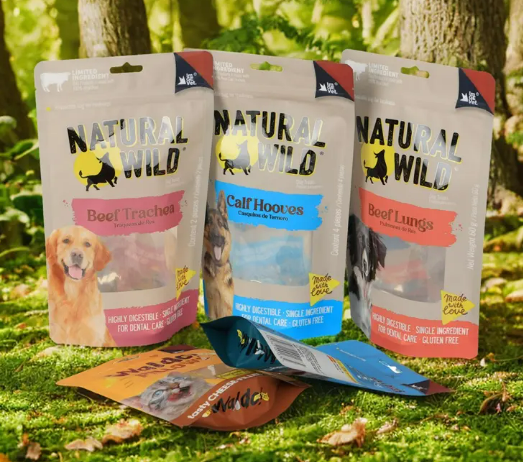
Legacy brands face unique challenges when modernizing their packaging lines. You must carefully frame the business problem before committing to a new format. This section provides a comparative evaluation against competing packaging styles.
The ROI Drivers: The primary argument for flexible packaging relies on massive space efficiency. Empty glass jars require enormous amounts of space. Pouches ship completely flat. Moving from glass to flexible films drastically reduces inbound freight costs. One truckload of empty pouches can equal fifteen truckloads of empty glass bottles. This space efficiency directly translates to a smaller warehouse footprint.
The Trade-offs: Rigid packaging still holds distinct advantages. Glass and metal offer superior physical crush protection for highly fragile items. Additionally, traditional materials enjoy simpler, single-stream recycling paths globally. Consumers easily understand how to recycle an aluminum can.
Stability & Branding: Flat bottom pouches (often called box pouches) offer a premium alternative. They feature five distinct printable panels (front, back, two sides, and the bottom). They also possess a perfectly flat base, creating elite upright stability. High-end coffee roasters often use this premium aesthetic.
Cost & Versatility: Stand-up pouches win easily on economic grounds. They are far more cost-effective to manufacture. They utilize fewer web rolls on the forming machines. They also expand better to accommodate irregular product shapes, like large jerky pieces or clustered granolas. This flexibility allows them to serve a much wider range of Fast-Moving Consumer Goods (FMCG) categories.
Navigating FDA requirements, barrier performance, and the sustainability dilemma requires precise technical knowledge. You must specify the exact structural films required for your specific product chemistry.
Any packaging touching consumables must follow strict laws. Ensuring the inner sealant layer meets direct food-contact compliance is your absolute baseline. You must demand technical data sheets from your film converters. These sheets confirm the LLDPE layer contains no harmful plasticizers or restricted chemical additives. Failure to verify this compliance can result in immediate product recalls.
Film thickness utilizes a measurement called "Mil" (one-thousandth of an inch). Thicker does not always mean better. The specific composition dictates performance.
Standard clear films: An industry standard configuration (e.g., 4.6 mil PET/EVOH Coex) provides baseline oxygen barriers. This works perfectly for fast-turnaround retail items requiring standard shelf life.
Metallized films: High-barrier configurations (e.g., 3.1 mil MET PET) provide ultimate moisture and light protection. Though inherently thinner than some clear laminates, the microscopic metal layer blocks almost all UV radiation. However, modern recycling facilities cannot process these mixed metal-plastic structures in standard streams.
Common Mistake: Brands often over-engineer their packaging. Paying for a high-barrier metallized film for a product consuming within two weeks wastes valuable capital. Always match the barrier specifications to your actual supply chain timeline.
Modern consumers demand eco-friendly options. However, you face a difficult sustainability trade-off. True recyclability requires Mono-materials. A structure built purely from polyethylene (e.g., PE/EVOH/PE) can enter specialized store drop-off recycling programs. Brands must weigh the marketing benefits of "recyclable" or "compostable" labels against potential compromises in barrier longevity. Mono-materials generally offer lower oxygen and moisture resistance compared to robust foil laminates.
A stand-up pouch is not a one-size-fits-all commodity. It is a highly engineered solution balancing complex material science with supply chain economics. Success requires matching gusset shapes to product weights and aligning film barriers with required shelf life.
Actionable Next Step: Procurement teams should start by precisely identifying their product's target weight and barrier requirements (especially oxygen and moisture sensitivity). Gather this baseline data first. Then, request physical samples or film structural data from flexible packaging converters to run real-world transit tests.
A: The optimal sealing temperature usually falls between 180°C to 200°C. You typically apply this heat for 0.5 to 1.0 seconds. However, the exact parameters depend entirely on the mil thickness and the specific polymer composition of your inner sealant layer.
A: They are only recyclable if manufactured using mono-material structures (like all-PE laminates). Multi-layer mixed laminates (such as PET mixed with aluminum foil) cannot be easily separated. These mixed films typically require specialized drop-off recycling programs or are unfortunately destined for landfill.
A: They are functionally the same exact product. "Doypack" is a trademarked term derived from the Doyen brothers who invented the bottom-gusset pouch in 1963. Over the decades, the term became the genericized industry standard for this style of flexible packaging.
A: Yes, you certainly can. Manufacturers can integrate specialized child-resistant (CR) zippers directly into the pouch assembly process. These complex closures require two-handed manipulation. This addition ensures you meet pharmaceutical, supplement, or specific regulated market compliance standards.


