
Views: 50 Author: Site Editor Publish Time: 2026-04-23 Origin: Site


Coffee packaging covers far more than one bag style. In the coffee market, packaging can include flexible bags, single-serve formats, rigid containers, and capsule systems, but flexible bag packaging remains the most widely used approach for retail coffee. The reason is simple: coffee packaging has to protect aroma, resist oxygen and moisture, present the product clearly, and work across different fill sizes without creating unnecessary complexity.
Coffee packaging also changes according to the product inside. Whole bean coffee, ground coffee, filter coffee, single-serve coffee, and bulk coffee do not behave in the same way, so the same packaging format cannot always serve every need equally well. That is why a complete understanding of coffee packaging starts with types, then moves into materials, features, and product fit.
● Coffee packaging includes flexible bags, single-serve packs, rigid containers, and capsule formats.
● The most widely used coffee packaging types are stand-up pouches, flat bottom bags, side-gusset bags, and other flexible bag formats.
● Different coffee packaging types suit different products, including whole bean coffee, ground coffee, filter packs, and single-serve portions.
● Material choice, valve use, barrier structure, and pack size all affect how coffee packaging performs.
● Flexible bag-based coffee packaging dominates much of the specialty coffee market because it balances freshness, shelf impact, and customization.
Coffee packaging has to slow down the loss of aroma and flavor. Oxygen, moisture, and light all reduce coffee quality over time, especially after roasting, so packaging is not only about appearance. In practice, strong coffee packaging depends on barrier materials, dependable seals, and the right structural format for the product.
Coffee packaging is also a display surface. A package that stands upright, prints well, and presents product information clearly will perform differently from a package that collapses easily or offers limited branding space. That is one reason flexible coffee packaging formats remain so common in both mainstream and specialty coffee markets.
Coffee packaging needs to survive transport, warehousing, and daily handling. A format that looks attractive on screen may not perform well if it lacks structural support, seal strength, or efficient carton packing. Packaging choice therefore connects directly to storage efficiency, shipping reliability, and retail handling.
Stand-up pouches are one of the most common types of coffee packaging. They can stand upright on the shelf, use material efficiently, and support features such as zippers, valves, and windows. For many coffee products, this format offers a strong balance between freshness protection, branding space, and practical filling.
Flat bottom bags are widely used in premium coffee packaging. Their stable base and multiple printable panels create a more structured retail appearance, which is why they often appear in higher-end whole bean coffee lines. This type of coffee packaging also supports efficient shelf display and clear separation of front, side, and back panel information.
Side-gusset bags remain a major type of coffee packaging, especially for traditional retail and larger-volume fills. Their shape expands well, gives the pack a solid body, and supports efficient storage and transport. In many markets, side-gusset coffee packaging is closely associated with classic coffee presentation.
Pillow packs are simpler flexible formats often used where cost control and high packing efficiency matter. Filter packs belong to a more specific segment, often intended for portioned brewing formats rather than broad retail shelf presentation. These coffee packaging types are not always the most visually prominent, but they remain important in certain product categories.
Pods and K-cup style formats belong to the single-serve side of coffee packaging. They focus on convenience, dosing consistency, and machine compatibility rather than broad front-panel branding. This packaging type has a very different logic from bag-based coffee packaging because it is tied directly to brewing systems.
Glass and plastic jars appear less often in specialty coffee than flexible bags, but they still exist in some instant coffee and premium gift-oriented categories. This type of coffee packaging offers rigid protection and a distinct visual presence, though it is heavier and usually less space-efficient. Jars also change shipping economics because they increase weight and volume.
Coffee cans made from aluminum or tinplate are another long-standing packaging type. They offer strong structural protection and a familiar mass-market look, especially in traditional ground coffee categories. Even so, modern coffee packaging has shifted heavily toward flexible bags because they offer more versatility across different product lines.
Coffee packaging type | Typical use | Main strengths |
Stand-up pouch | Retail whole bean and ground coffee | Shelf display, feature flexibility, efficient material use |
Flat bottom bag | Premium retail coffee | Strong stability, multiple panels, premium appearance |
Side-gusset bag | Larger fills and traditional retail | Efficient volume, structured body, transport stability |
Pillow or filter pack | Portion packs or simpler fills | Packing efficiency, compact format |
Pod or capsule | Single-serve brewing systems | Convenience, fixed dosage |
Jar or can | Instant coffee or rigid-pack categories | Strong body, familiar container form |
Ground coffee has more exposed surface area than whole beans, which increases sensitivity to oxygen and moisture. Because of that, coffee packaging for powder often depends heavily on barrier performance and sealing reliability. A weak structure may still look acceptable from the outside, but the internal protection level becomes much more important once the coffee is ground.
Whole bean coffee packaging often focuses more on valve compatibility, shelf presence, and structural integrity. Freshly roasted beans can release carbon dioxide after filling, so packaging design often needs to account for internal gas movement. This makes features such as one-way valves more relevant in whole bean coffee packaging than in some powder applications.
The difference between powder and beans shows why no single format fits everything equally well. A bag chosen for powder may prioritize barrier intensity and reclosure, while a bag chosen for whole beans may place more emphasis on valve function and upright display. Good coffee packaging selection begins with product behavior, not only with visual preference.
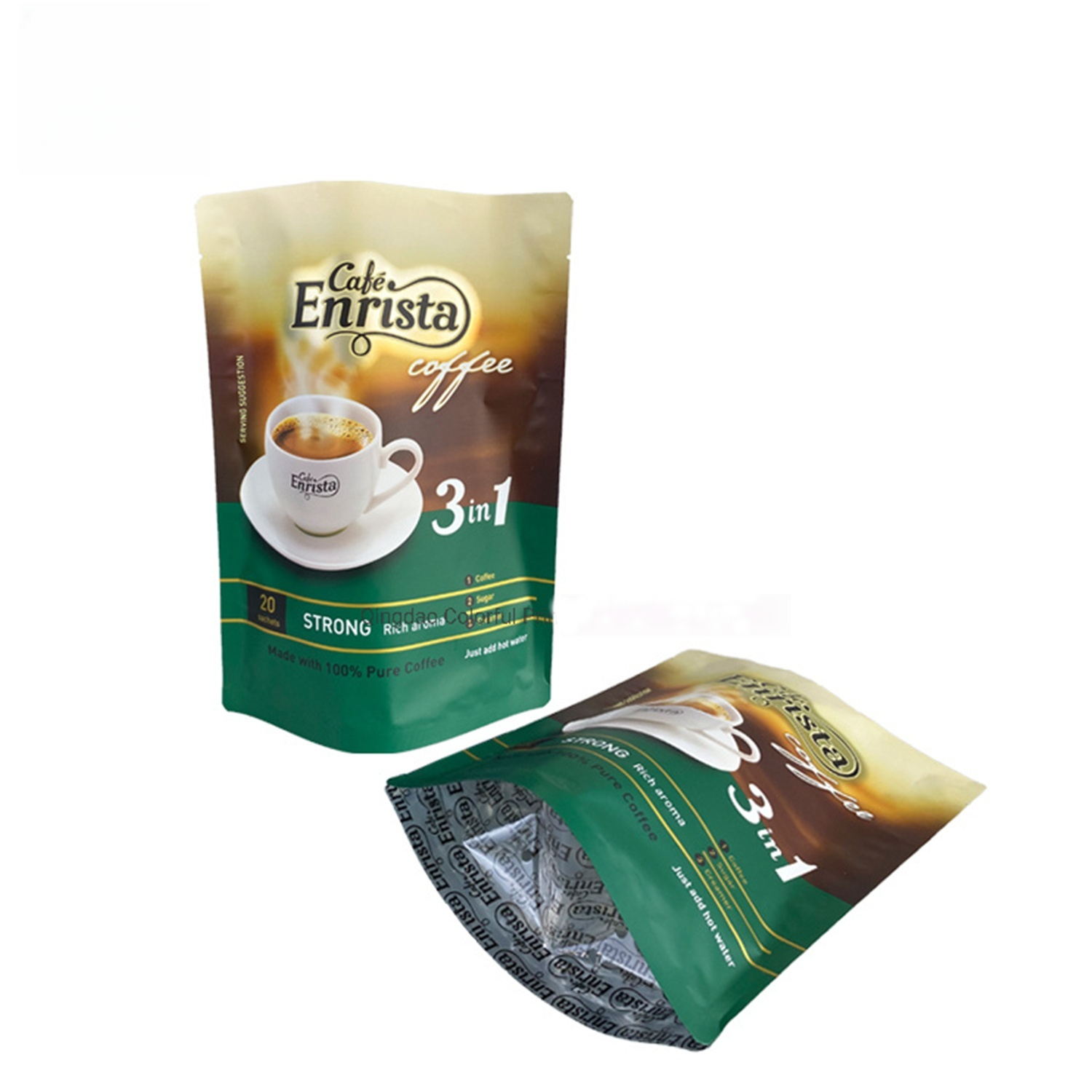
Bag-based coffee packaging can be scaled across many sizes and product types. A brand can use the same general structure family for whole beans, ground coffee, seasonal releases, and limited editions with only changes in dimensions, materials, or print design. That adaptability keeps flexible coffee packaging highly competitive.
Modern coffee packaging often requires more than a basic container. One-way valves, zippers, tear notches, matte finishes, gloss areas, and strong print surfaces are easier to integrate into flexible bags than into many rigid formats. That compatibility has helped bag packaging become the dominant format in specialty coffee.
Specialty coffee packaging needs to look refined without becoming impractical to produce or ship. Flexible bags offer a strong visual result while still remaining lighter and easier to store than jars or cans in most cases. This combination of appearance, efficiency, and feature integration explains why bag formats lead such a large share of the market.
Aluminum foil laminates are common in coffee packaging where strong oxygen and light protection are needed. They are especially relevant for products that require longer shelf life or more demanding barrier performance. In many cases, foil-based coffee packaging is chosen because freshness retention is the top priority.
Metallized films are also widely used in coffee packaging. They often provide a more balanced trade-off between barrier performance, appearance, and cost than full foil constructions. This makes metallized structures common in many mainstream flexible coffee packaging applications.
Kraft paper laminates are often selected for visual reasons as much as technical ones. They create a more natural or craft-oriented appearance, which is popular in specialty coffee packaging, while the internal laminated layers still handle much of the protective work. This type of packaging is therefore as much about market positioning as it is about structure.
Sustainable coffee packaging continues to expand, especially in recyclable mono-material and lower-impact structure discussions. Even so, the barrier demands of coffee remain strict, so sustainable direction cannot ignore protection. The strongest solutions are the ones that balance environmental direction with real product stability.
Coffee packaging material | Common role | Key characteristic |
Aluminum foil laminate | High-barrier coffee packaging | Strong oxygen and light protection |
Metallized laminate | Mainstream flexible coffee packaging | Balanced barrier and cost |
Kraft paper laminate | Natural-look coffee packaging | Visual appeal with layered structure |
Recyclable mono-material | Sustainability-focused coffee packaging | Simpler material stream with performance limits to consider |
A one-way valve is one of the most recognized functional elements in coffee packaging for freshly roasted beans. It allows carbon dioxide to escape while reducing outside oxygen entry. This feature is especially relevant when coffee is packed soon after roasting.
Zippers make coffee packaging more practical after opening. They support repeated use and are particularly common in household retail formats for beans and ground coffee. For products consumed over time rather than immediately, resealability changes how useful the original packaging remains.
Tear notches improve opening convenience, while windows increase product visibility. Both features can be useful, but they need to be evaluated against barrier goals and brand positioning. In coffee packaging, convenience and presentation often need to be balanced against long-term freshness requirements.
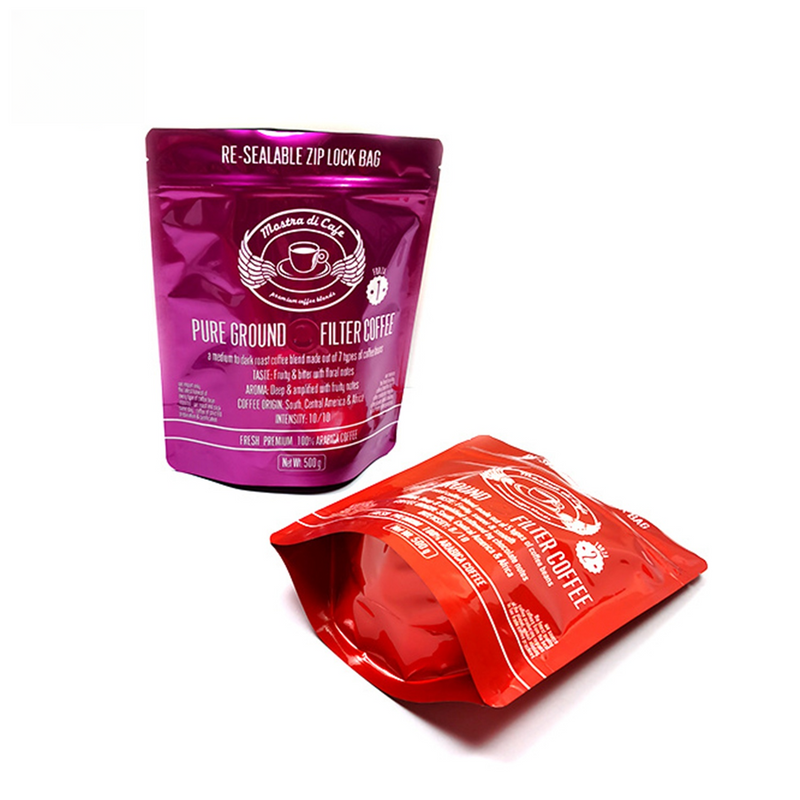
Recyclable coffee packaging is appearing more frequently as environmental concerns influence packaging decisions. The challenge is that coffee still needs reliable protection from oxygen, moisture, and light. The result is a market where sustainability is growing, but performance still sets the baseline.
Paper-look packaging remains highly visible in coffee categories that want a craft or natural image. This trend is especially strong in specialty coffee, where visual identity is closely tied to product story. In practice, however, the paper layer often works alongside other functional barrier materials.
Coffee packaging cannot be judged by appearance alone. A visually appealing structure with weak protection can shorten usable shelf life and reduce product consistency. That is why barrier performance continues to remain central even as sustainable packaging conversations expand.
Coffee packaging includes a wide range of types, from stand-up pouches and flat bottom bags to side-gusset bags, pillow packs, pods, jars, and cans. Even so, flexible bag-based coffee packaging remains the most important category in today’s market because it combines freshness protection, strong print surfaces, practical storage, and compatibility with valves, zippers, and barrier laminates. For many coffee products, especially whole bean and ground coffee, bag packaging remains the most adaptable and commercially practical solution.
Qingdao Colorful Printing Packaging Co., Ltd. focuses on coffee packaging systems built around flexible structures, barrier materials, functional features, and custom presentation. In practical market terms, the broad world of coffee packaging is easiest to understand when flexible bags are treated as the core category, with other formats serving more specific product, channel, or consumption needs.
The main types of coffee packaging include stand-up pouches, flat bottom bags, side-gusset bags, pillow packs, filter packs, pods, jars, and cans. Flexible bag formats are the most widely used across retail coffee. Different types serve different products and sales channels.
The most common coffee packaging type is usually the flexible retail bag, especially the stand-up pouch. It is widely used because it combines shelf display, print flexibility, and feature compatibility. Flat bottom and side-gusset bags are also common in many segments.
Coffee bean packaging often focuses on valve use, structure, and retail display. Coffee powder packaging usually places even greater pressure on barrier strength and seal integrity because of the larger exposed surface area of the product. Both require protection, but they do not always prioritize the same features.
Not all coffee bags require a one-way valve, but many whole bean coffee packs benefit from one. The need depends on roast freshness, gas release, product type, and distribution conditions. Valve use is especially common in freshly roasted whole bean coffee packaging.

