
Views: 0 Author: Site Editor Publish Time: 2026-07-31 Origin: Site


The pet food market has aggressively shifted toward premiumization, with consumers expecting human-grade ingredients, specialized diets, and high-end presentation. Brands struggle to differentiate high-cost, premium kibble on crowded retail shelves using traditional, flimsy packaging that tips over, limits branding space, or fails to convey product quality. In the industry, you will hear several terms used interchangeably: the flat bottom bag, the block-bottom bag, and the box pouch. These all refer to the same structural format designed to solve these exact merchandising challenges. To align perceived value with actual product quality, packaging procurement and brand managers are standardizing on custom flat bottom bags. This guide evaluates the structural, operational, and merchandising mechanics that make this format the definitive choice for premium pet food lines.
Structural Stability: Flat bottom bags (or block-bottom bags) mimic a rigid box, providing superior weight distribution that prevents tipping, even when the bag is half-empty.
Maximized Brand Real Estate: The format offers five distinct printable panels, allowing for uninterrupted branding, nutritional information, and compliance data without visual clutter.
Volume Efficiency: The gusseted design allows for 15-30% more product volume within the same dimensional footprint compared to standard stand-up pouches.
Supply Chain Optimization: The uniform, box-like shape improves palletization density, reducing shipping costs and warehouse footprint.
Establishing the baseline requirements for premium pet food packaging means looking past basic containment. You need a structure that protects sensitive ingredients, engages the buyer on the shelf, and performs without failure on automated filling lines. When you formulate a high-protein, grain-free, or freeze-dried raw diet, the packaging must act as a fortress against environmental degradation. If the bag fails, the product spoils, and brand trust evaporates.
Premium pet foods contain high-fat kibble, air-dried meats, and freeze-dried raw foods. These ingredients are highly susceptible to rancidity if exposed to oxygen, moisture, or UV light. You must specify multi-layer films with strict Oxygen Transmission Rate (OTR) and Moisture Vapor Transmission Rate (MVTR) tolerances. Grease resistance is non-negotiable. If fats migrate through the inner sealant layer, they compromise the lamination, leading to delamination, exterior staining, and a ruined shelf presentation. Flavor preservation directly impacts palatability; if the food loses its aroma, the pet refuses to eat, and the owner switches brands.
Ingredient Profile | Primary Degradation Risk | Required Barrier Property | Recommended Film Structure |
|---|---|---|---|
High-Fat Kibble | Lipid oxidation (rancidity) | High Oxygen & Grease Barrier | PET / VMPET / PE |
Freeze-Dried Raw | Moisture absorption (sogginess) | Extreme Moisture Barrier | PET / AL / PE |
Air-Dried Meats | UV degradation & moisture loss | UV & Moisture Barrier | Matte OPP / VMPET / PE |
Standard Premium | General staling | Standard OTR/MVTR Barrier | PET / NY / PE |
Buyers expect reliable, multi-use resealability. A standard consumption cycle for a mid-sized bag of dog food spans four to six weeks. If the zipper fails on day three, the consumer is forced to transfer the food to a secondary plastic bin, completely removing your brand from their daily routine. You need closure systems that withstand repeated opening and closing without tearing the film tracks or clogging with meat dust and kibble crumbs.
Packaging must stand perfectly upright on shelves, regardless of the fill level. Retailers allocate specific shelf heights and widths for premium categories. Bags that slouch, fold over, or tip backward look disorganized and fail to maintain brand visibility. A rigid, box-like structure ensures the primary display panel always faces the aisle, capturing consumer attention instantly.
Comparing the primary flexible packaging options used in the pet food industry highlights why specific formats dominate the premium tier. You cannot expect a basic pouch to perform like a structured box.
Stand-up pouches rely entirely on the weight of the product to push the bottom gusset open and maintain their base. As the consumer scoops out the kibble, the pouch loses its internal support. It begins to lean, sag, and eventually tip over in the pantry. Flat Bottom Bags maintain structural independence. They stand straight like a rigid carton regardless of how much product remains inside, providing a vastly superior user experience.
Quad-seal bags feature four sealed corners, giving them a somewhat structured appearance, but they lack a completely flat, independent bottom panel. Operators often have to fold over and tape down the bottom tail of a quad-seal bag just to get it to stand upright on a shelf. Flat bottom formats utilize a completely separate piece of film for the bottom web. This creates a true, flat block-bottom shape that sits flush against the shelf, offering unmatched stability.
Rigid plastic tubs and buckets offer great protection but fail miserably in supply chain efficiency. They ship empty, taking up massive amounts of truck space. Flexible flat bottom formats ship flat, allowing you to fit thousands of unformed bags onto a single pallet. They offer a massive reduction in plastic usage by weight, lower shipping mass, and improved sustainability metrics, aligning with modern consumer expectations for reduced packaging waste.
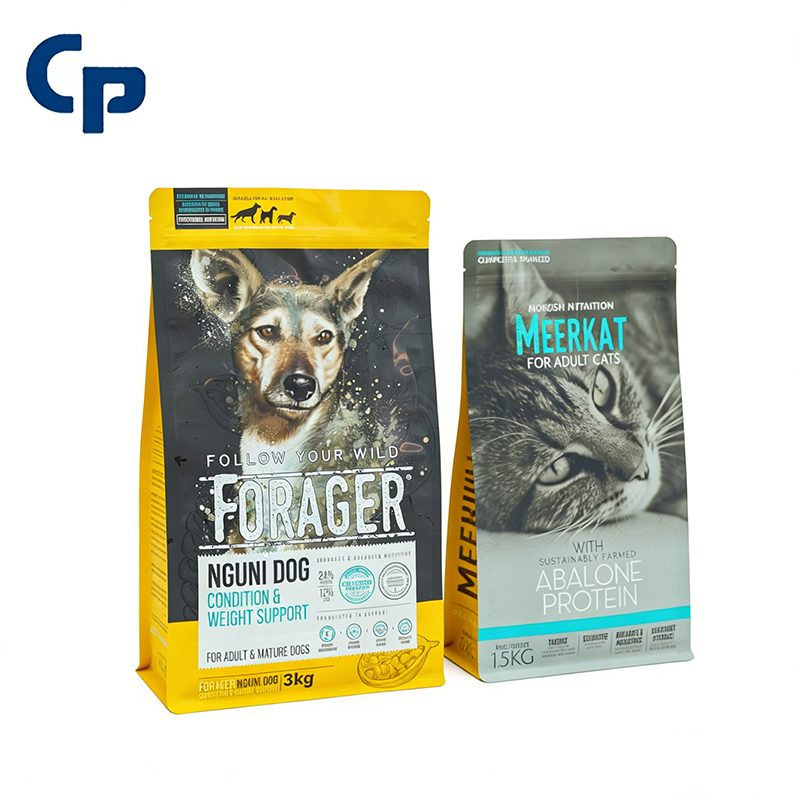
The physical design of the bag dictates its operational limits. Understanding the mechanics of the pouch helps you optimize your filling lines and distribution networks.
The physics of the flat base combined with side gussets provide an exceptionally low center of gravity. This structural design is ideal for dense, heavy products. When you fill a bag with heavy kibble, the weight distributes evenly across the flat bottom panel rather than pushing against a single bottom seal. This prevents the bag from rocking or tipping, ensuring it remains stable during transit, on the retail shelf, and in the consumer's home.
Squared edges eliminate wasted internal space. Traditional pouches pinch at the top and bottom, creating dead zones where product cannot settle. The volumetric efficiency of a flat bottom design allows you to pack more weight into a visually smaller package. You get a tighter, denser fill. This means you can reduce the overall dimensions of the bag while maintaining the same net weight, saving on material costs and shelf space.
Reduced Headspace: The box shape allows product to settle uniformly, reducing the amount of empty air at the top of the bag before sealing.
Optimized Shelf Footprint: Retailers can fit more units per linear foot of shelving because the bags sit flush against one another without bulging at the waist.
Improved Material Yield: You use less square footage of film per pound of product packaged compared to a standard stand-up pouch.
Structural rigidity prevents micro-punctures and flex-cracking during transit. When bags shift and vibrate in the back of a trailer, loose, floppy films fold and crease. Repeated creasing fractures the aluminum or metalized barrier layers, creating microscopic holes that let oxygen in. The tight, box-like structure of a flat bottom format restricts film movement, maintaining the integrity of the internal barrier layers from the manufacturing facility all the way to the feeding bowl.
Marketing teams demand maximum visual impact. The format you choose directly influences your marketing ROI on the retail shelf.
Standard pouches often have a bottom seal that creeps up onto the front face, interrupting the artwork. The flat bottom format removes the bottom seal from the primary faces entirely. This allows for clean, high-resolution graphics that run seamlessly from the top zipper down to the absolute bottom edge. This uninterrupted space is mandatory for premium brands that rely on striking visual appeal to justify their retail positioning.
You have two massive side panels at your disposal. Use them strategically. Move your secondary information—feeding guidelines, ingredient sourcing maps, guaranteed analysis, and brand story—onto these side gussets. This keeps the front panel uncluttered, allowing your logo, product name, and primary protein claims to stand out boldly without visual noise.
The flat bottom itself serves as a fifth printable surface. Do not leave this blank. Brands use this space for barcodes, batch numbers, expiration dates, and recycling symbols. Moving these mandatory compliance marks to the bottom of the bag frees up valuable consumer-facing real estate on the back and side panels for marketing copy and cross-promotional messaging.
Upgrading your packaging format involves financial realities. Procurement teams must balance the increased unit cost against the operational and marketing benefits.
Producing these bags requires specialized, slower-running pouch-making machines. The equipment must precisely align and seal three separate webs of film (front/back, side gussets, and bottom panel). This complexity results in higher per-unit costs compared to basic stand-up pouches. You are paying for the structural engineering and the precision required to ensure all four bottom corners seal perfectly without leaking.
High-end organic, therapeutic, or freeze-dried diets are often packaged in smaller, high-ticket sizes ranging from two to eight pounds. If you put an expensive, specialized diet in a cheap, floppy pouch, the consumer feels cheated. These smaller bag sizes desperately need the rigid structure of a flat bottom format to avoid looking flat, empty, or cheap on retail shelves. The packaging must physically represent the premium nature of the product inside.
The increased packaging cost is absorbed by the higher retail price point of the food itself. When a consumer walks down the aisle, they subconsciously evaluate the weight, feel, and structure of the bag. The elevated perceived value generated by a structured, high-quality package justifies the premium price tag. If the bag looks like a premium product, the consumer is willing to pay a premium price.
Custom-printed formats often carry higher MOQs due to the extensive manufacturing setup requirements. Threading three separate webs of film through a pouch machine generates significant setup waste. You can navigate this by leveraging digital printing for short runs, market testing, or seasonal flavors. For large-scale, high-volume production, rotogravure printing remains the most cost-effective method, provided you can meet the higher volume thresholds.
Transitioning to a new pouch format requires preparation. Operations teams must anticipate changes on the factory floor and in the warehouse.
Automated fill-and-seal equipment may require recalibration or new tooling. The square opening of a flat bottom bag behaves differently than the oval opening of a standard pouch. Suction cups and mechanical grippers must be adjusted to pull the bag open squarely without tearing the side gussets. Assess your equipment compatibility early. Run blank prototype bags through your existing lines to identify any feeding, opening, or sealing bottlenecks before ordering printed rollstock or pre-made pouches.
The transition points where the side gussets meet the flat bottom panel are notorious for weak seals. You have multiple layers of film overlapping in a very small area. If the heat-sealing jaws do not apply uniform pressure and temperature, you will get capillary leaks. Mitigating this risk requires partnering with manufacturers utilizing advanced heat-sealing technology and strict quality control protocols, including underwater vacuum leak testing for every production batch.
The uniform shape prevents the "waterfall effect" on pallets. Standard pouches tend to slide over one another, causing the pallet load to bulge outward and lean. Flat bottom bags stack like bricks. This allows for tighter stretch wrapping, safer transit, and optimized warehouse space. You can stack pallets higher in the racks without fear of the load collapsing, directly improving your warehouse utilization metrics.
Technical specifications dictate safety and performance. You must select materials that handle the specific chemical makeup of your pet food.
Fats and oils oxidize rapidly. You need specific layers, such as PET/AL/PE (aluminum foil) or metalized structures (VMPET), to block oxygen and light. The inner sealant layer (usually LLDPE) must be formulated to resist grease penetration. If the kibble has a high fat coating applied post-extrusion, you must increase the thickness and density of the sealant layer to prevent the oils from migrating through the film and destroying the lamination bonds.
Evaluating zipper options is critical for user experience. Standard string zippers fail quickly when exposed to kibble dust. You need robust closure systems.
Pocket Zippers: These are hidden behind a tear-away front panel. They offer a wide opening for easy scooping and keep the zipper tracks protected from product dust during the filling process.
Hook-and-Loop Closures: Often referred to as Velcro-style closures, these do not require precise alignment to close. They easily crush through kibble crumbs and meat dust, providing a reliable seal every single time.
Press-to-Close Double Tracks: A heavy-duty version of the standard zipper, featuring two interlocking tracks for added security against aggressive handling.
The industry is aggressively exploring recyclable, mono-material PE structures. However, achieving the high-barrier requirements necessary for greasy pet foods using only polyethylene remains a severe technical challenge. Mono-material films often lack the rigidity and heat resistance of traditional PET/PE laminations, making them harder to run on high-speed pouch machines. You must carefully weigh the trade-offs between claiming recyclability and ensuring the required barrier performance for your specific product formulation.
You cannot build a premium brand on substandard packaging. The structural integrity, barrier performance, and merchandising power of this format make it the definitive choice for high-end pet food lines. To execute a successful transition and upgrade your retail presence, follow these immediate steps:
Audit your current automated filling equipment to verify gripper and suction cup compatibility with square-opening pouch formats.
Calculate your exact Oxygen Transmission Rate (OTR) and Moisture Vapor Transmission Rate (MVTR) requirements based on the fat content of your specific kibble formulation.
Request unprinted, physical prototypes from your packaging supplier to conduct drop tests, vacuum leak tests, and volumetric fill trials.
Redesign your artwork to fully utilize the side gussets and bottom panel, moving all regulatory text off the primary display face.
A: A flat bottom bag uses a completely separate bottom gusset piece of film, creating a flat, rigid, box-like base for superior stability. A stand-up pouch relies on a single folded bottom web and the weight of the product to stand, which often causes it to lean or tip over as the product is consumed.
A: Yes. In the flexible packaging industry, flat bottom bags, block-bottom bags, and box pouches all refer to the exact same 5-panel, flat-based structural format.
A: Yes, but they require heavy-duty, thick laminations to handle the structural stress of 15 to 30 pounds of product. Side-gusset handles or reinforced top handles are strictly required for larger weights to assist the consumer with carrying and pouring.
A: Premium, preservative-free diets require careful preservation and carry a much higher retail price point. The rigid flat-bottom shape optimizes the shelf presence of these smaller sizes, preventing them from looking cheap, flimsy, or half-empty on the shelf.
A: Yes, using mono-material PE (polyethylene) structures. However, achieving the extreme high-barrier requirements necessary to prevent rancidity in greasy pet foods using only recyclable materials remains a significant technical challenge.
A: They often do. The square opening and rigid presentation of the bag on automated fill-and-seal lines usually require different tooling, specialized grippers, or recalibration compared to running standard two-seal pouches.
A: Pocket zippers and hook-and-loop closures are highly recommended. They resist clogging from kibble dust and meat particulates, ensuring reliable resealability throughout the entire consumption cycle of the product.

