
Views: 0 Author: Site Editor Publish Time: 2026-08-21 Origin: Site


Freeze-dried pet treats present a unique packaging challenge for modern brands. Their extremely low moisture content makes them highly hygroscopic. They eagerly absorb ambient moisture from the air. Simultaneously, their high fat content makes them susceptible to rapid lipid oxidation. Standard solutions for regular kibble simply fail under these strict conditions. Using the wrong barrier materials leads to rapid product degradation and staleness. This failure ultimately results in negative customer experiences and costly brand damage. You cannot rely on basic bags to protect these premium treats. Instead, brands must rigorously evaluate material specifications. We aim to provide a technical and commercial framework for evaluating, specifying, and sourcing optimal packaging for freeze-dried pet products. You will learn how to navigate barrier properties, select durable structures, and balance sustainability with product shelf life. By understanding the physical demands of these sensitive treats, you can confidently protect your margins and customer trust.
Moisture and Oxygen Control are Non-Negotiable: Successful freeze-dried packaging requires materials with rigorously tested Water Vapor Transmission Rates (WVTR) and Oxygen Transmission Rates (OTR).
Structure Drives Shelf Performance: The Pet Stand Up Pouch remains the industry standard for combining high-capacity filling, retail display stability, and barrier integrity.
Sustainability Requires Trade-offs: Transitioning to recyclable or sustainable materials must be balanced against the absolute barrier requirements of freeze-dried proteins to prevent shelf-life reduction.
Resealability Dictates Consumer Trust: A high-barrier bag is useless if the zipper fails after the first opening. Premium closure systems are a critical evaluation metric.
Freeze-dried treats fundamentally differ from traditional baked kibble. They lack the residual moisture and chemical preservatives commonly found in standard pet foods. Because the freeze-drying process removes nearly all water through sublimation, the remaining cellular structure acts like a dry sponge. These treats aggressively pull humidity from their surrounding environment. When exposed to even minor humidity, they lose their signature crunch. They become chewy, unappetizing, and prone to bacterial growth.
The cost of failure in this category is exceptionally high. Premium freeze-dried proteins like beef liver or wild salmon carry high retail price points. Customers expect pristine quality upon opening the bag. Inadequate barriers lead to premature spoilage and lipid oxidation. Fats oxidize rapidly when exposed to oxygen, creating rancid odors. Rancidity immediately triggers negative customer reviews. Shoppers will not repurchase a premium product if it smells off. Retailers will quickly notice shortened shelf lives, which strains your wholesale relationships.
To succeed, brands must define strict functional criteria for their pet food packaging. You need an airtight microclimate. The solution must achieve three primary goals. First, it must deliver structural durability during transit to prevent crushing. Second, it must maintain a completely isolated internal atmosphere on the retail shelf. Third, it must preserve freshness throughout the entire consumer usage cycle. An optimal design addresses all three phases seamlessly.
Protecting sensitive treats requires advanced material science. Multi-layer laminated structures remain the industry standard. Common configurations include PET/AL/PE (polyethylene terephthalate/aluminum foil/polyethylene) or PET/VMPET/PE (using vacuum-metallized PET). The outer PET layer provides an excellent surface for high-quality printing. The middle aluminum or metallized layer acts as the primary defense against moisture and oxygen ingress. The inner PE layer serves as the food-safe sealant.
You must evaluate vendor specifications carefully. Always demand technical data sheets for Oxygen Transmission Rate (OTR) and Water Vapor Transmission Rate (WVTR). These metrics quantify how much gas or moisture passes through the film over 24 hours. A lower number indicates a stronger barrier. For freeze-dried applications, you should target an OTR of less than 0.1 cc/m² and a WVTR near 0.1 g/m². Below is a comparative look at common barrier types.
Material Structure | Primary Application | OTR (cc/m²/24h) | WVTR (g/m²/24h) |
|---|---|---|---|
PET/PE | Standard baked kibble (Short shelf life) | High (>50) | High (>10) |
PET/VMPET/PE | Premium treats (Medium-high barrier) | < 1.0 | < 1.0 |
PET/AL/PE | Freeze-dried proteins (Ultimate barrier) | < 0.1 | < 0.1 |
Form factor directly influences both shelf presence and physical protection. The Pet Stand Up Pouch, commonly known as a Doypack, is highly recommended for freeze-dried items. It features a bottom gusset that expands when filled. This creates excellent vertical stability on retail shelves. Furthermore, this design provides an efficient shelf footprint while allowing optimal internal space for nitrogen flushing. Nitrogen flushing removes residual oxygen before sealing, which significantly delays fat oxidation.
When selecting pouch architecture, you must weigh different styles against your fill volume and display needs.
Feature | Standard Stand-Up Pouch (Doypack) | Block Bottom Pouch (Flat Bottom) |
|---|---|---|
Shelf Stability | Good. Relies on bottom gusset expansion. | Excellent. Completely flat base prevents tipping. |
Volume Efficiency | Moderate. Tapers near the top zipper. | High. Box-like shape maximizes internal volume. |
Cost Profile | Highly cost-effective for most treat lines. | Premium cost due to complex manufacturing. |
Nitrogen Flush Suitability | Very Good. Easy to flush and seal on standard lines. | Good, but requires precise alignment during sealing. |
A high-performance barrier film loses its value if the bag fails to seal after the first use. Consumers often open a bag of treats multiple times a week. Standard press-to-close zippers frequently fail in this specific application. Freeze-dried treats tend to crumble. They leave a fine, dry dust along the interior walls of the bag. This dust settles into the tracks of standard zippers. Once the tracks fill with debris, the zipper cannot interlock.
To maintain barrier integrity, you must specify premium closures. Pocket zippers (often called front-panel zippers) are an excellent alternative. They hide the zipper track behind a tear-away strip, keeping dust out during the initial fill. Alternatively, hook-and-loop closure systems perform exceptionally well. Hook-and-loop closures easily crush through treat dust and establish a secure hold. They give consumers an audible, reassuring sound when closing. Evaluating these resealable options ensures the product stays fresh long after the initial opening.
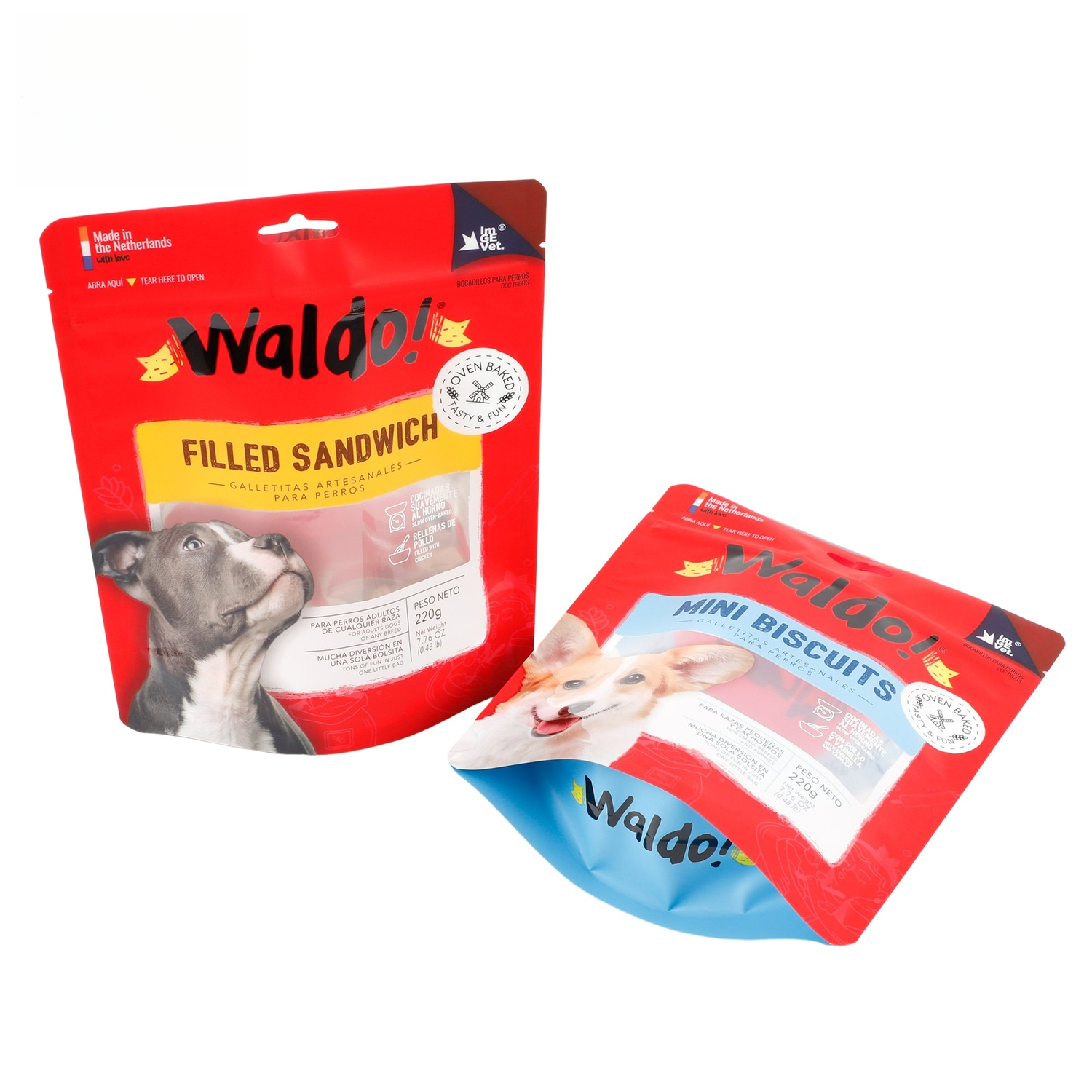
Marketing teams naturally want to showcase premium ingredients. The "clear window" trade-off presents a major point of friction during design. A transparent window allows shoppers to see the whole pieces of freeze-dried chicken or beef. However, UV light aggressively degrades exposed animal fats. Direct light exposure causes photochemical rancidity. If you insist on a window, you must apply specific solutions. You can use UV-blocking transparent films like ALOx (aluminum oxide) or SiOx (silicon oxide) coated PET. Alternatively, you can place the window strategically at the bottom gusset. This placement minimizes direct light exposure on the shelf while still allowing shoppers to peek inside.
Print and finish realities also impact performance. You must evaluate matte, gloss, and tactile finishes. A soft-touch matte finish signals a premium, artisanal product. However, matte finishes can show scuff marks more easily during shipping. Gloss finishes resist scuffs better but may look cheaper to some demographics. You must balance the desired aesthetic against the harsh realities of supply chain handling.
Physical protection extends beyond gas barriers. Puncture resistance is vital for freeze-dried proteins. Items like freeze-dried minnows, chicken necks, or bone-in treats possess sharp edges. The freeze-drying process makes these edges rigid. During transit, vibration forces these sharp treats against the inner walls. If the inner sealant layer is too thin, the treats will cause micro-leaks. These invisible holes destroy the oxygen barrier. You must evaluate the thickness and durability of the internal layer. Specifying a robust Linear Low-Density Polyethylene (LLDPE) sealant layer prevents these catastrophic micro-leaks.
Brands face immense pressure to adopt eco-friendly materials. However, sustainability introduces complex challenges for sensitive products. The core problem lies in traditional multi-layer structures. High-barrier bags use mixed plastics bonded with aluminum foil. Facilities cannot easily separate these distinct materials. Consequently, standard foil pouches almost always end up in landfills. They are notoriously difficult to recycle.
The industry is actively developing viable sustainable alternatives. The most promising option involves Mono-Material Recyclable structures. These pouches use only polyethylene (PE) for every layer. Because they consist of a single polymer family, consumers can drop them off at store recycling bins. To match the barrier properties of metallized films, manufacturers coat the PE with EVOH (Ethylene Vinyl Alcohol). EVOH provides an exceptional oxygen barrier while maintaining recyclability.
You must approach these innovations with a careful risk assessment. EVOH-coated mono-materials are advancing, but they still struggle to match the absolute moisture blockade of pure aluminum. Furthermore, compostable materials currently fall short. Bio-based plastics break down when exposed to heat and moisture. They cannot sustain the extreme barrier requirements needed for a 24-month shelf life. We recommend a phased adoption approach. Do not switch your entire line overnight. Run rigorous accelerated shelf-life testing on EVOH mono-materials before commercial rollout.
Selecting the right supplier is just as important as selecting the right material. Machinability and automation are common stumbling blocks. A pouch might look beautiful on a desk but fail miserably on the production line. You must ensure the specified material runs efficiently on your automated filling and sealing machines. Some sustainable films lack heat resistance. They might stretch, curl, or melt under standard sealing jaws. Weak seals instantly ruin the modified atmosphere created by nitrogen flushing.
You must scrutinize your vendor's Quality Assurance protocols. Do not accept verbal promises. Shortlist vendors who provide documented proof of their testing methodologies. You should follow a clear logic when evaluating partners:
Request Technical Data: Ask for updated OTR and WVTR sheets specific to the laminated structure they propose.
Verify Leak Tests: Ask how they conduct burst testing and vacuum leak testing on their pouch seams.
Assess Drop Test Data: Ensure the bottom gussets can survive standard retail drop tests without splitting.
Review Seal Strength Metrics: Confirm the tensile strength of the zipper attachments and side seals.
Finally, you must navigate supply chain realities. Minimum Order Quantities (MOQs) dictate your financial flexibility. Custom rotogravure printing offers the highest quality but requires massive MOQs and expensive printing plates. If you launch a new flavor, evaluate vendors offering digital printing. Digital printing allows for lower MOQs and faster lead times. You must also weigh domestic versus overseas sourcing risks. Overseas suppliers often provide cost advantages, but shipping delays can leave your automated lines idle.
Designing packaging for freeze-dried pet treats is an exercise in strict risk mitigation. Standard bags cannot handle the hygroscopic and fat-rich nature of these premium products. Material specs, particularly barrier properties and closure integrity, must take precedence over pure aesthetics. You must balance structural durability, shelf appeal, and the growing demand for sustainability.
Your next steps should focus on technical validation. Begin the shortlisting process by requesting technical data sheets (TDS) for WVTR and OTR from potential suppliers. Once you verify the numbers, order unprinted sample pouches. Use these blank samples to conduct internal filling, heat sealing, and shelf-life stress tests. Only launch your product once the pouch proves it can protect your treats through harsh environmental conditions.
A: Yes, but it introduces risks. UV light can degrade fats in the treats, leading to rancidity. If a clear window is required, it must be paired with high-barrier transparent films (like ALOx or SiOx PET) and kept away from direct sunlight.
A: A multi-layer laminated Pet Stand Up Pouch with a high-quality resealable zipper and a metallized or foil barrier layer is the industry standard for balancing protection, cost, and consumer convenience.
A: Nitrogen flushing displaces oxygen to prevent lipid oxidation. To maintain this modified atmosphere, the packaging material must have an exceptionally low Oxygen Transmission Rate (OTR), and the initial heat seal must be flawless.
A: Recyclable mono-material PE pouches with EVOH barriers are advancing rapidly, but they still require rigorous real-world shelf-life testing before replacing traditional metallized films for highly sensitive freeze-dried products.

