
Views: 0 Author: Site Editor Publish Time: 2026-07-29 Origin: Site


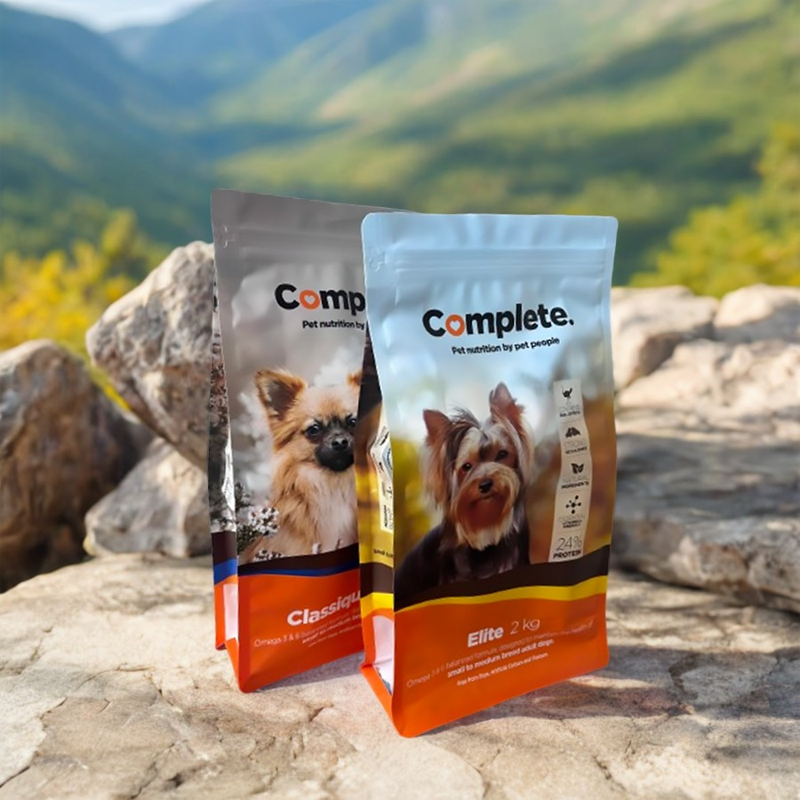
Box pouches provide five distinct printable surfaces—front, back, bottom, and two side gussets. This structure offers maximum shelf visibility and stable standability for products like coffee, pet food, and premium snacks. Maximizing this 360-degree branding real estate introduces significant technical complexity. Selecting the wrong printing method can result in misaligned gusset graphics, compromised barrier properties due to ink curing issues, or exorbitant tooling costs that erode margins. This guide evaluates the technical capabilities, volume thresholds, and quality trade-offs of the primary printing methods for flat bottom bags. We provide a framework to align your packaging strategy with your operational realities.
Volume Dictates Technology: Digital printing is the most viable solution for multi-SKU short runs (under 5,000 units), while rotogravure and flexographic printing become mathematically necessary for high-volume, continuous production.
The Printing Sequence Matters: High-quality industrial printing is executed on flat rollstock before the bag is formed and sealed, ensuring seamless graphic alignment across all five panels.
Alternative Solutions: Utilizing blank flat bottom bags paired with custom sleeves and labels offers a low-risk, zero-tooling-cost entry point for market testing, seasonal variations, or ultra-low MOQs.
Integration of Accessories: Features like degassing valves, tear notches, and resealable zippers must be factored into the design layout early to avoid interfering with print zones and sealing jaws.
Understanding how printing processes and associated heat curing or UV drying affect multi-layer laminate structures is mandatory. Box pouches often utilize combinations of PET, VMPET, PE, and Kraft Paper. You must ensure ink chemistry does not react with lamination adhesives. Such reactions can cause the layers to separate under stress, leading to delamination and product spoilage. When running solvent-based inks on a gravure press, operators monitor the drying tunnel temperatures to prevent warping the polyethylene sealant layer. If the web gets too hot, the film stretches, ruining the registration for subsequent color stations.
Lamination bond strength is another major factor. Inks applied heavily in the gusset fold areas can interfere with the adhesive's ability to grip the adjacent film layer. Converters often use specialized two-part polyurethane adhesives to overcome the slick surface of heavy ink coverage. Testing the bond strength with a tensile tester after a 48-hour cure time confirms whether the printed rollstock will survive the pouch-making process without splitting at the seams.
Ensuring continuous, unbroken graphics across the sharp folds of the side and bottom gussets presents a major challenge. Printing on flat web material prior to pouch formation is essential for precise registration. Post-printing on pre-formed bags often results in misalignment and distorted imagery along the gusset edges. The web tension control systems on modern presses keep the film taut, allowing each color station to lay down ink within fractions of a millimeter of the previous color.
When designing artwork, operators must account for the physical fold lines. A graphic that spans across the front panel and into the side gusset requires exact trapping tolerances. If the web shifts even slightly during the pouch converting phase, a continuous image will look disjointed. We recommend keeping critical text, barcodes, and logos at least 5mm away from any intended fold line to accommodate normal machine variance.
Evaluating surface printing versus reverse printing is necessary to prevent transit scuffing and preserve premium aesthetics. Reverse printing traps ink between laminated layers, offering superior protection. The outer layer, typically clear PET or BOPP, acts as a physical shield against abrasion during shipping and handling. Surface printing, while common on Kraft paper substrates, requires a protective overprint varnish (OPV) to prevent the ink from rubbing off onto adjacent bags in the shipping carton.
Meeting FDA and international standards for direct and indirect food contact is also mandatory, particularly regarding ink migration. Even with reverse printing, low-molecular-weight compounds in certain inks can migrate through the inner polyethylene sealant layer and taint the product. Converters must use low-migration ink systems and conduct rigorous extraction testing when producing packaging for sensitive items like roasted coffee or pet treats.
Designing print layouts must accommodate the physical thickness of zippers and press-to-close tracks. This prevents ink distortion and heat-seal failures. The sealing jaws on the pouch-making machine apply intense heat and pressure to fuse the zipper profiles to the film. If heavy ink coverage exists in this seal zone, the heat can cause the ink to boil or smear, weakening the hermetic seal and causing leaks.
Ensuring graphic-free zones around degassing valves and tin ties prevents ink peeling or structural seal weakness around the valve punch areas. When the machine punches the hole for a one-way degassing valve, the surrounding film must be pristine. Any ink or varnish in this immediate area can prevent the valve's base from welding completely to the inner film layer, allowing oxygen to bypass the valve and stale the coffee.
Digital printing uses direct-to-substrate CMYK digital presses without physical plates, applying ink directly onto the web before lamination. It is ideal for high SKU counts, variable data packaging, fast-to-market testing, and short-to-medium runs. It offers rapid turnaround times, photographic image quality, and effortless design changes. Operators simply load the new artwork file into the raster image processor (RIP) and begin printing the next SKU without stopping the press for mechanical changeovers.
The technology relies on electrophotography or industrial inkjet heads. HP Indigo presses, for example, use liquid electrophotography (LEP) to achieve high-resolution prints that rival gravure. However, digital printing has a limited ability to run true metallic inks or highly specific Pantone spot colors. While extended color gamuts (CMYK + Orange + Violet + Green) can simulate many Pantone shades, exact brand color matching for fluorescent or heavy metallic hues remains a challenge.
Flexo printing uses flexible photopolymer plates wrapped around rotating cylinders to transfer ink onto the packaging film. It suits medium-to-high volume runs where speed and versatility are prioritized. Flexo provides an excellent balance of output and adaptability to various substrates. Modern central impression (CI) flexo presses hold the web tightly against a single large drum, allowing for excellent registration control even on thin, stretchy films.
The process requires an upfront investment in physical printing plates, which wear over time. Plate mounting is a highly skilled task; operators use video mounting systems to align the microdots on the plates to the cylinder axes. While high-definition (HD) flexo plates have drastically improved dot reproduction, the method still struggles with ultra-fine gradients dropping off to zero percent compared to digital or gravure. You will often see a hard edge where a fade is supposed to blend smoothly into the background.
Rotogravure engraves the image onto steel copper-plated cylinders, which transfer ink directly to the substrate via an intaglio process. It is best for ultra-high volume runs requiring flawless, highly consistent color reproduction. Gravure is the gold standard for image quality, exact Pantone matching, and specialized finishes. The engraved cells on the cylinder hold precise volumes of ink, ensuring that the one-millionth impression looks exactly like the first.
This method involves long lead times and inflexibility to design changes. If a brand updates an ingredient list or a regulatory logo, the converter must strip the chrome plating, re-engrave the copper base, and re-chrome the entire cylinder for that specific color. This makes gravure highly impractical for brands that frequently update their packaging artwork or run seasonal promotions.
Applying printed pressure-sensitive labels or sliding printed paper sleeves over unprinted stock bags is highly effective for prototyping, seasonal limited editions, and startups. Custom Sleeves and Labels bypass direct-print minimums entirely and allow bulk purchasing of blank bags. You can order thousands of blank kraft or matte black pouches and apply different labels as you roast different coffee origins or mix new snack flavors.
Manual or secondary automated application adds labor time, and this method does not utilize the full 5-sided branding potential of the bag. A label typically only covers the front and back panels, leaving the side and bottom gussets blank. However, for localized compliance labeling or covering up a misprinted ingredient on an existing batch of bags, pressure-sensitive labels are an indispensable tool on the production floor.
This method transfers printed designs from a carrier film onto pre-formed Flat Bottom Bags using heat and pressure. It is suitable for micro-runs or local market testing on stock bags. Operators use a specialized heat press equipped with platens designed to accommodate the thickness of the bag's gussets and zippers.
While it offers a low entry barrier, it is highly manual and carries a risk of heat damaging the bag's internal barrier film or sealing layers. If the heat press temperature is set too high, or the dwell time is too long, the inner polyethylene layer will melt and fuse together, rendering the bag useless. The printable area is strictly limited to flat, unobstructed zones away from the side seams, bottom seals, and top zipper assemblies.
Mapping the break-even points helps determine when rotogravure becomes more efficient than digital. Multi-SKU orders significantly change the math. Gang-running digital designs together is often more efficient than buying separate plates or cylinders for each SKU in flexo or gravure. If you have ten different flavors of a snack product, digital printing allows you to print them all sequentially on the same roll of film without stopping the press.
With flexo or gravure, each of those ten flavors requires its own set of plates or cylinders for the black text plate (if only the text changes) or a full set of cylinders if the background colors change. The downtime required to wash up the ink decks and swap cylinders between each flavor run adds massive overhead to the production schedule. Converters will mandate high minimum order quantities per SKU to justify this machine downtime.
Ink absorption rates on Kraft paper dictate why flexo, digital, or custom sleeves and labels work best for a natural look without bleeding. Kraft paper has a porous, uneven surface. Flexo plates can compress slightly to push ink into the valleys of the paper texture. Gravure cylinders, being solid steel, struggle to transfer ink cleanly onto rough paper without missing dots (a defect known as snowflaking).
Utilizing opaque white under-printing makes colors pop on foil and metallized films. Without a solid layer of white ink laid down first, the metallic sheen of the VMPET layer will show through the CMYK inks, altering their appearance. Reverse-printing via gravure or digital is critical for high-gloss or matte-laminate finishes. Matching water-based or soy-based inks with compostable and recyclable barrier films ensures adhesion and barrier properties are maintained throughout the product lifecycle.
Substrate Type | Recommended Printing Method | Common Challenges | Technical Solution |
|---|---|---|---|
Natural Kraft Paper | Flexo, Surface Digital | Ink bleeding, dot gain, snowflaking | Use high-viscosity inks, adjust plate pressure, apply OPV |
Metallized PET (VMPET) | Gravure, Reverse Digital | Colors appearing dull or metallic | Apply a double bump of opaque white ink behind graphics |
Clear BOPP/PET | Gravure, Flexo, Digital | Scuffing during transit | Reverse print on the inside of the clear layer before lamination |
Compostable PLA | Digital, Flexo (Water-based) | Heat sensitivity during curing | Use low-temperature UV curing or specialized water-based inks |
Designing cohesive brand narratives that flow from the front panel to the side and bottom gussets maximizes the 5-sided canvas. The stable flat bottom structure reduces shelf space while maximizing front-facing branding compared to lay-flat pouches. A stand-up pouch with a bottom gusset tends to lean forward or backward on the shelf depending on how the product settles inside. A box pouch sits perfectly square, ensuring the front panel always faces the consumer directly.
Leveraging the space-saving benefits of flat bottom bags, which ship flat and compress tightly, optimizes shipping and storage relative to the printing run volume. You can fit thousands of unformed, printed rollstock impressions onto a single pallet. Even pre-formed flat bottom bags pack much denser in corrugated shippers than rigid containers like glass jars or composite cans, drastically reducing inbound freight requirements.
Risk: Color Registration Variance and Seam Misalignment. Mitigation involves designing artwork with proper trapping tolerances for flexo, requesting physical press proofs, and keeping critical text and logos away from the gusset fold lines.
Risk: Heat-Seal Contamination (Ink in the Seal Zone). Mitigation requires ensuring the converter designs graphics with unprinted margins (knockouts) where the heat-seal jaws fuse the laminate layers.
Risk: Barrier Delamination from Incompatible Inks. Mitigation mandates compatibility testing between the specific ink system and the lamination adhesives.
Risk: Barcode Unreadability on Textured or Metallic Films. Mitigation includes printing high-contrast, solid-color white backgrounds beneath all UPC barcodes and avoiding printing barcodes across gusset folds or near seams.
Risk: Web Stretching During Heat Curing. Mitigation involves utilizing chill rollers immediately after the drying ovens to stabilize the polyethylene film before it reaches the next color station.
Risk: Odor Retention from Solvent Inks. Mitigation requires proper ventilation and adequate drying tunnel dwell times to ensure all ethyl acetate and other solvents flash off completely before the roll is rewound.
The printing method for flat bottom bags depends entirely on scale, artwork complexity, and timeline. Digital printing handles short runs and multi-SKU agility. Rotogravure dominates high-volume, premium quality demands. Flexo offers a versatile middle ground. Custom sleeves and labels provide the lowest barrier to entry for market testing. Evaluate your volume projections and graphic requirements carefully before committing to a printing technology.
Audit your current SKU count and projected annual volumes to determine if digital or analog printing aligns with your production scale.
Request physical film proofs from your converter to verify color accuracy and barcode readability before authorizing full production runs.
Collaborate with your packaging engineer to map out exact knockout zones for zippers, tear notches, and degassing valves on your artwork files.
Conduct a transit test using filled, sealed bags to evaluate the scuff resistance of your chosen ink and lamination structure.
A: Digital printing is the most efficient method for short runs (typically under 5,000 units) because it eliminates the need for physical printing plates or cylinders, allowing for rapid changeovers between different SKUs.
A: Yes, using heat transfer or applying custom sleeves and labels. However, direct industrial printing like digital, flexo, or gravure must be executed on flat rollstock before the bag is formed to ensure high quality and proper registration.
A: Reverse printing traps the ink between the laminated layers of the bag. This protects the graphics from scuffing, scratching, and fading during transit, handling, and retail display.
A: Degassing valves require a graphic-free zone around the punch area. Ink or varnish in this zone can cause peeling or weaken the structural heat seal between the valve base and the inner film layer.
A: Custom sleeves and labels allow for ultra-low minimum order quantities, rapid prototyping, and easy seasonal updates without the high tooling minimums associated with direct industrial printing.

