
Views: 0 Author: Site Editor Publish Time: 2026-08-09 Origin: Site


Packaging failure carries severe financial and reputational stakes. While structural design attracts consumers on the retail shelf, material composition remains the sole factor preventing oxidation, moisture ingress, and premature spoilage. Specifying the wrong laminate layers leads to stale products, compromised brand trust, and high return rates. This holds true regardless of the bag's physical format or visual appeal. Brands often face a tension between shelf-appeal and functional preservation. You want a package that looks premium but performs flawlessly under transit and storage conditions. To achieve this, you need a strict technical evaluation framework. Selecting the exact barrier films and structural layers is mandatory to maximize shelf life in flat bottom bags.
Barrier vs. Structure: Freshness is dictated by multi-layer laminations; structural layers provide rigidity for the flat base, while internal barrier layers (like EVOH or Foil) block oxygen and moisture.
Product-Specific Matching: There is no universal material. Coffee requires absolute barriers with degassing capabilities, while dried snacks and baking mixes prioritize moisture control, wide-mouth scoopability, and resealability.
Seal Geometry Benefits: Flat bottom bags inherently provide tighter seals and reduced internal headspace compared to traditional stand-up pouches, lowering the amount of trapped ambient oxygen.
The Sustainability Trade-off: Emerging compostable materials (PLA, cellulose, sugarcane waste) offer eco-friendly marketing advantages but currently present measurable trade-offs in long-term barrier performance compared to traditional polymers.
A functional pouch must meet strict success criteria on the filling line and the retail shelf. It must stand upright independently, distribute weight evenly across its base, and maintain a hermetic seal under pressure. Achieving this requires a precise combination of flexible packaging materials engineered into a single composite web. We see many brands focus heavily on the outer graphics while neglecting the internal engineering. That mistake leads to blown seals and stale food.
Modern flexible packaging relies on a standard three-to-four tier lamination structure. Each layer performs a specific, non-negotiable function. You cannot skip a layer without compromising the entire package.
Outer Layer: Provides the print surface and mechanical protection. Common materials include PET (Polyethylene Terephthalate) or Kraft paper. This layer takes the abuse during shipping.
Structural Layer: Adds rigidity and puncture resistance. Nylon (BOPA) is frequently used here for heavy-fill applications to stop sharp edges from piercing the bag.
Barrier Layer: The core component for freshness. This layer blocks oxygen, moisture, and UV light. It dictates the actual shelf life of your product.
Sealant Layer: The innermost layer that touches the food. It melts under heat to form the closure integrity. LLDPE (Linear Low-Density Polyethylene) is the industry standard because it flows well into the gusset folds during heat sealing.
The gusseted, flat-bottom design requires stiffer outer materials to function correctly. Heavy-duty PET or thick Kraft paper helps evenly distribute the weight of the contents. This prevents the bag from sagging or tipping over on the shelf. More importantly, this rigidity prevents mechanical stress on the internal barrier layers. When filled with heavy volumes like pet food, grains, or bulk coffee, a weak outer layer will stretch. Stretching causes micro-tears in the delicate foil or EVOH barriers inside, instantly compromising product freshness. We test this on the floor by drop-testing filled bags. If the outer layer lacks rigidity, the inner barrier fractures upon impact.
Geometry plays a massive role in food preservation. Flat bottom bags often provide superior long-term freshness over standard stand-up pouches. The box-like shape features tighter, more uniform seals at the gusset intersections. These quad-seal corners minimize micro-leak paths where oxygen typically enters. When we run these through the heat sealers, the flat bottom configuration allows for more consistent pressure across the sealing jaws.
Furthermore, the geometric box shape reduces unnecessary internal headspace. Excess internal air space traps ambient oxygen during the filling process. By conforming more closely to the volume of the product, flat bottom designs limit initial oxygen exposure for sensitive goods. Less trapped air means less oxidation before the package even leaves your facility.
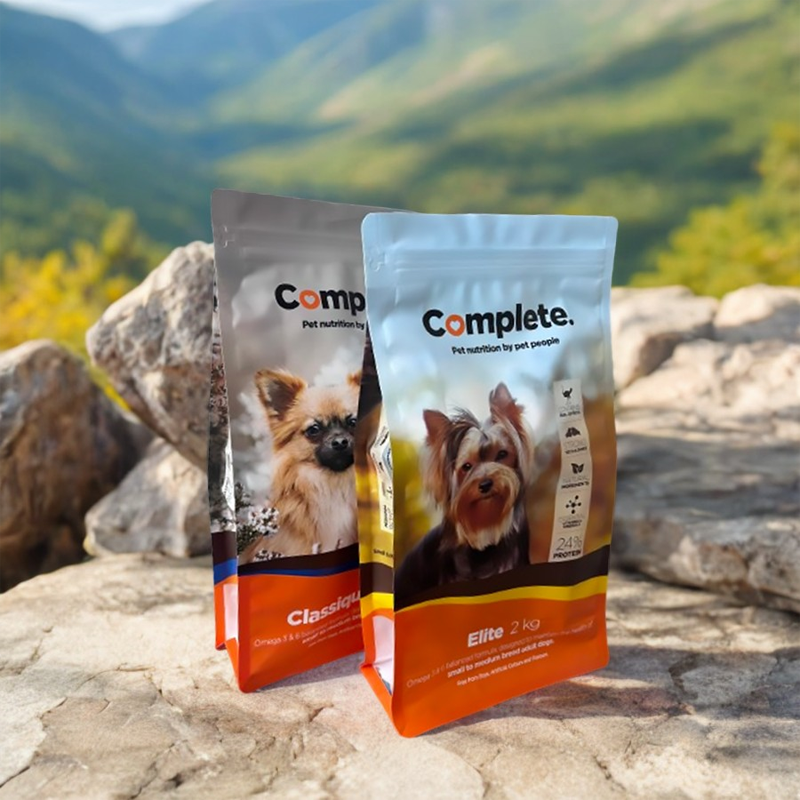
Preserving freshness requires managing two primary metrics: Oxygen Transmission Rate (OTR) and Water Vapor Transmission Rate (WVTR). The lower the transmission rate, the longer the product stays fresh. Selecting materials for High Barrier Flat Pouches depends entirely on these numbers. You have to match the barrier to the specific degradation profile of your food product.
Aluminum foil remains the gold standard for highly sensitive products. It boasts near-zero OTR and WVTR. Solid foil completely blocks UV light, oxygen, and moisture. Manufacturers specify pure foil laminates for roasted coffee, sensitive pharmaceutical powders, and premium tea blends. However, foil lacks transparency, meaning you cannot incorporate product viewing windows. It also requires careful handling on the packaging line to prevent flex-cracking.
VMPET involves a vacuum-metallization process where a microscopic layer of aluminum is vaporized onto a PET film. This creates a highly reflective, metallic appearance. VMPET serves as a middle-ground solution. It offers excellent light and moisture barriers. It is highly suitable for most dry snacks, crackers, and standard baking mixes that do not require the absolute zero-transmission of solid foil. We use VMPET extensively for products targeting a six-to-nine month shelf life.
Brands that demand transparent product windows rely on EVOH. This clear polymer offers superior oxygen-blocking capabilities, rivaling metalized films. However, EVOH is highly susceptible to moisture degradation. If exposed to high humidity, its oxygen barrier properties plummet. Therefore, packaging engineers must sandwich EVOH between highly protective, moisture-resistant polymer layers (like PE or PP) to maintain its efficacy. When we extrude these films, the layer consistency is monitored strictly to ensure the EVOH remains protected.
Advanced clear coatings like Aluminum Oxide (ALOx) and Silicon Oxide (SiOx) provide next-generation barrier performance. These microscopic ceramic coatings are applied to clear films. They allow brands to design high-visibility windows without sacrificing barrier performance. They are ideal for premium snacks where visual product inspection drives consumer purchases. Handling these films requires precision, as the ceramic coating can fracture if the web tension on the packaging machine is too high.
Material Type | OTR (Oxygen Barrier) | WVTR (Moisture Barrier) | Visual Clarity | Ideal Application |
|---|---|---|---|---|
Aluminum Foil (AL) | Excellent (Near Zero) | Excellent (Near Zero) | Opaque | Coffee, Sensitive Powders |
Metalized PET (VMPET) | High | High | Opaque / Reflective | Dry Snacks, Granola |
EVOH | Excellent | Moderate (Needs Protection) | Transparent | Nuts, Jerky (with window) |
ALOx / SiOx | High | High | Transparent | Premium Windowed Snacks |
You cannot use a one-size-fits-all approach. Material combinations must map directly to distinct product types based on their unique degradation risks. We see failures constantly when a brand tries to use a snack food laminate for a heavy pet food application.
Freshly roasted coffee beans release significant amounts of carbon dioxide. If trapped, this gas will rupture the bag. Coffee requires Aluminum Foil laminates paired with one-way degassing valves. The foil locks out oxygen and UV light to prevent staling, while the valve allows CO2 to escape without letting ambient air back in. The valve insertion process must be calibrated perfectly on the line to ensure the seal around the valve remains airtight.
Kibble and pet treats are heavy, abrasive, and high in fat. This requires high puncture resistance. Nylon (BOPA) layers are mandatory to prevent sharp kibble from piercing the bag. Additionally, strong grease barriers are necessary to prevent oil migration. Oil seeping through the laminate causes rancidity and ruins the external packaging print. Structural weight-bearing requirements are also critical to maintain a stable, display-ready flat base under heavy loads. We often reinforce the bottom gusset seals specifically for bags holding over five pounds.
Pancake mixes, cookie mixes, and spices are highly sensitive to moisture. Clumping ruins the product experience. The utility of the flat bottom bag's wide top opening shines here. It makes it simple to scoop out powdery ingredients without spilling. To maintain freshness after opening, these bags must feature airtight press-to-close zippers paired with high-WVTR barrier films like VMPET. The zipper track must be welded securely to the inner PE layer to withstand repeated opening and closing.
Dehydrated apples and homemade granola require protection from ambient humidity to retain their crunch. VMPET or high-barrier clear films (EVOH) work perfectly here. The critical component for these items is the integrated resealable zipper. Press-to-close or Velcro-style closures maintain the internal atmosphere after the initial opening, extending the usable life of the product in the consumer's pantry. We test zipper retention strength to ensure it does not peel away from the film after multiple uses.
Market demand for eco-friendly packaging is surging. However, brands must navigate the technical reality of shelf-life preservation when moving away from traditional plastics. You have to balance environmental goals with the physical limitations of current biopolymers.
Manufacturers are increasingly utilizing materials like PLA (derived from corn or potato starch), regenerated cellulose, agricultural waste like rice husks, and sugarcane waste. These materials offer a compelling environmental narrative and reduce reliance on fossil fuels. They run differently on packaging equipment, often requiring lower sealing temperatures and longer dwell times to form a proper bond.
You must objectively assess the performance gaps. Current compostable films generally exhibit higher OTR and WVTR than traditional plastics or foil. They let oxygen and moisture pass through more rapidly. Therefore, utilize these materials strictly for high-turnover products with shorter required shelf lives. Artisan baked goods, local market snacks, or small-batch coffee meant for immediate consumption are ideal candidates. Do not use current compostable films for products requiring a 12-to-18 month retail shelf life. The barrier simply will not hold up over that duration.
Even the best materials fail if incorrectly specified or manufactured. Understanding these risks helps you audit your packaging suppliers effectively. We track these failures on the production floor to adjust machine settings and material specs.
Delamination occurs when the individual layers of the composite film separate. This usually stems from incompatible adhesive layers or improper curing times during manufacturing. Similarly, improper heat-sealing temperatures on the packaging line lead to weak closures. Both issues create micro-leaks, destroying the internal atmosphere and leading to rapid spoilage. We perform burst testing on random samples off the line to catch weak seals before they ship.
Rigid barrier layers, particularly pure foil, can develop microscopic pinholes if subjected to excessive folding or vibration during shipping. This is known as flex-cracking. To mitigate this, engineers incorporate flexible Nylon (BOPA) layers into the laminate. The Nylon absorbs kinetic stress and protects the brittle foil layer from fracturing. We simulate transit vibration in the lab to ensure the laminate structure can survive cross-country freight.
Packaging materials can absorb a product's flavor (odor scalping) or leach plastic tastes into the food (chemical migration). This ruins the consumer experience. Emphasize the need for food-grade, inert sealant layers. Specialized Polyethylene (PE) blends are formulated specifically to remain chemically neutral, ensuring the product tastes exactly as intended. We run sensory panels on water stored in sample pouches to detect any off-notes from the film.
To ensure your packaging line runs smoothly, you must establish a rigorous testing protocol. Here are the standard tests we run on incoming film rolls:
Tensile Strength Testing: Measures the force required to break the film, ensuring it can handle the weight of the product.
Seal Strength Testing: Pulls apart welded seams to verify the heat sealer settings are correct.
Coefficient of Friction (COF) Testing: Checks how slippery the film is. If it is too sticky, it jams the forming tubes on the packaging machine.
Puncture Resistance Testing: Uses a probe to simulate sharp product edges, verifying the Nylon layer's effectiveness.
Dye Penetration Testing: Injects a colored liquid into the sealed pouch to visually identify microscopic leaks in the gusset folds.
Balancing technical requirements with procurement realities requires a calculated approach. You must align your material choices with your actual distribution model. Specifying the thickest foil available is a waste of resources if your product sells through within three weeks.
Evaluate whether upgrading your barrier material actually saves money. For instance, moving from VMPET to pure Foil increases the unit cost of the bag. However, if that upgrade extends retail viability by six months and drastically reduces spoiled inventory and retailer chargebacks, the return on investment is positive. Calculate the acceptable loss rate against the premium paid for higher barrier films. We always recommend running a small batch with the upgraded material to track real-world spoilage rates before committing to a massive order.
Highly specialized multi-layer laminates, especially those featuring custom ALOx coatings or proprietary compostable blends, require higher Minimum Order Quantities (MOQs). They also carry longer lead times compared to standard stock materials. Factor these supply chain constraints into your launch timelines and inventory holding strategies. You do not want to halt production because a custom EVOH film is stuck on a cargo ship.
When working with suppliers for Flat Bottom Bags, demand transparency regarding their material sourcing. Ask for the specific resin grades used in the sealant layer. Request the technical data sheets for the adhesives used in the lamination process. This level of detail prevents unexpected failures when you switch products or alter your filling process.
Freshness in flat bottom bags is entirely dependent on engineering the correct multi-layer laminate for your specific product's vulnerabilities. Structural rigidity gets the bag on the shelf, but the barrier layers keep the product viable.
Request detailed Material Data Sheets (MDS) from your packaging supplier to verify OTR and WVTR specifications.
Conduct accelerated shelf-life testing using physical prototypes before committing to mass production.
Audit your product's weight and transit conditions to determine if flexible Nylon layers are required to prevent flex-cracking.
Match your closure mechanism directly to consumer usage habits.
A: The optimal material is a multi-layer laminate featuring an Aluminum Foil core. Foil provides an absolute barrier against oxygen, moisture, and UV light. This must be paired with a one-way degassing valve to allow roasted coffee to release carbon dioxide without letting ambient air inside.
A: Yes. To maintain freshness while offering a transparent window, manufacturers use EVOH films or advanced ALOx/SiOx ceramic coatings. These materials provide high oxygen and moisture barriers without the need for opaque metal layers, keeping snacks visible and fresh.
A: Current compostable bioplastics, such as PLA, cellulose, and sugarcane waste, have higher transmission rates for oxygen and moisture. They offer a shorter optimal shelf life compared to traditional plastics or foil. They are best suited for high-turnover products consumed quickly.
A: Yes, they often do. Flat bottom bags provide tighter, more uniform seals at the quad-gusset joints, reducing micro-leak risks. Their box-like geometry also reduces internal headspace, which limits the amount of trapped ambient oxygen during the filling process.
A: Seal failures typically result from improper heat-sealing temperatures during packaging, incompatible adhesive layers causing delamination, or flex-cracking. Flex-cracking happens when rigid foil layers develop pinholes due to excessive vibration or folding during transit.
A: Kraft paper alone offers zero barrier protection; it is highly porous. To preserve freshness, Kraft paper must be laminated with an internal polymer or foil barrier layer (like VMPET or LLDPE) to block moisture and oxygen.
A: Aluminum Foil is a solid metal sheet offering near-zero transmission rates for maximum protection. VMPET is a plastic film (PET) coated with a microscopic layer of vaporized aluminum. VMPET is more cost-effective and flexible but offers slightly lower barrier strength than pure foil.

