
Views: 0 Author: Site Editor Publish Time: 2026-08-12 Origin: Site


Product degradation driven by oxygen ingress, moisture transfer, and UV exposure directly impacts brand reputation and bottom-line profitability. While the structural format of packaging dictates shelf presence, the underlying material composition dictates shelf life. Selecting the optimal barrier material for quad seal bags requires balancing absolute protection with material costs, machinability, and sustainability mandates. Over-engineering destroys margins; under-engineering destroys the product. This guide deconstructs the technical specifications of high-barrier laminations, providing a framework to evaluate Oxygen Transmission Rates (OTR), Water Vapor Transmission Rates (WVTR), and structural integrity to match material stacks to specific product requirements.
Barrier Metrics Dictate Material: Material selection must be anchored in empirical OTR and WVTR thresholds specific to the product's degradation profile, not generalized industry assumptions.
Foil vs. Alternatives: Aluminum foil remains the absolute standard for barrier protection, but metallized films (VMPET) and clear coatings (ALOx/SiOx) offer viable, cost-effective alternatives for medium-to-high sensitivity products.
Structural Demands of the Format: The four-corner seal design of quad seal bags requires specific rigidity in the outer web and high-performance sealant layers to prevent capillary leaks at the gusset intersections.
The Sustainability Trade-Off: Transitioning to recyclable, mono-material quad seal bags introduces distinct compromises in barrier performance and processing windows that require rigorous pilot testing.
The construction of quad seal bags relies on two side gussets and four vertical seals. This specific architecture provides superior shape retention and maximizes billboard space for branding on retail shelves. To maintain this freestanding structure, the outer material layers must possess high stiffness, measured as the modulus of elasticity, alongside the necessary barrier properties. If the material is too soft, the bag sags and loses its premium appearance.
When comparing formats, the material rigidity and layer-thickness requirements differ significantly. For instance, High Barrier Flat Pouches rely less on material stiffness for structural integrity but demand similar internal barrier performance to protect the contents. The folding and heat-sealing of multiple material layers in a quad seal format—often up to four layers thick at the top and bottom gusset junctions—creates intense stress points. These junctions directly impact the barrier continuity of the film stack. You need specialized, high-flow sealant webs to fill the microscopic gaps at these intersections and prevent capillary leaks.
Understanding the mechanical stress applied during the form-fill-seal process is critical. The film web is pulled over forming collars, folded, and subjected to high heat and pressure. If the barrier layer lacks flex-crack resistance, the mechanical action of forming the bag will create pinholes, instantly compromising the OTR and WVTR specifications you paid for.
Oxygen Transmission Rate (OTR) measures the volume of oxygen gas that passes through a specific area of film over a given period. It is defined in cc/m²/24hr at specific temperature and humidity levels per ASTM D3985. Oxidation directly affects fats, oils, and active ingredients. For example, oxygen exposure leads to rapid coffee staling, pet food rancidity, and the degradation of active pharmaceutical ingredients.
Water Vapor Transmission Rate (WVTR) measures moisture transfer, defined in g/m²/24hr per ASTM F1249. Moisture ingress compromises hygroscopic powders, baked goods, and chemical formulations by causing clumping, mold growth, or loss of efficacy. Additionally, photo-oxidation caused by UV exposure necessitates opaque or UV-blocking layers in the material stack to prevent light-induced degradation.
Relying on generic material data sheets is a common failure point. You must test the barrier properties of the finished, converted pouch, not just the flat roll stock. The heat sealing and folding processes inherently degrade the barrier performance of the raw film.
Material Type | OTR (cc/m²/24hr) | WVTR (g/m²/24hr) | Primary Application |
|---|---|---|---|
Aluminum Foil (AL) | ~ 0 | ~ 0 | Premium Coffee, Pharmaceuticals |
EVOH (encapsulated) | < 0.1–0.5 | ~ 1.0–3.0 | Visible Premium Foods |
VMPET | ~ 0.5–1.5 | ~ 0.5–1.0 | Snacks, Standard Pet Food |
SiOx/ALOx | ~ 0.5–2.0 | ~ 0.5–1.5 | High-End Treats, Granolas |
Mono-Material PE (with barrier) | ~ 1.5–5.0 | ~ 1.0–2.5 | Recycle-Ready Applications |
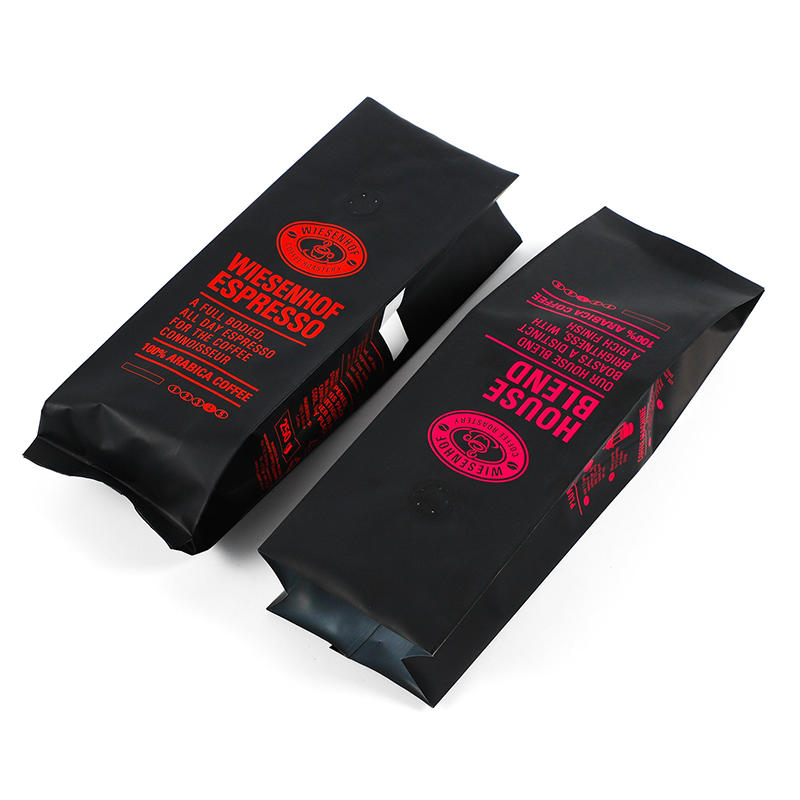
Aluminum foil delivers zero OTR and WVTR when structurally intact, alongside a complete light block. It serves as the absolute standard for premium coffee, highly sensitive pharmaceuticals, and products requiring multi-year shelf stability. However, foil is highly susceptible to flex cracking. When the material is folded or crushed, microscopic pinholes form in the aluminum layer, breaking the hermetic seal. It also carries a higher carbon footprint and eliminates any possibility of product visibility.
Metallized films achieve high barrier properties by vapor-depositing a microscopic layer of aluminum onto a polymer substrate like PET or CPP. They offer significantly lower OTR and WVTR than standard plastics, providing a cost-effective middle ground. These films suit snack foods, standard pet foods, and fast-moving consumer goods. However, the metallized layer can be compromised by aggressive stretching during the packaging process and offers lower puncture resistance compared to true foil laminates.
Ethylene Vinyl Alcohol (EVOH) provides excellent oxygen barriers. Aluminum Oxide (ALOx) and Silicon Oxide (SiOx) coatings deliver combined moisture and oxygen barriers while remaining transparent. These materials fit premium products where consumer visibility drives retail conversion. EVOH remains highly moisture-sensitive and requires encapsulation between poly layers to function correctly. ALOx and SiOx coatings are brittle and demand careful handling during converting to prevent micro-fracturing.
BOPA offers exceptional puncture resistance, gas barrier properties, and flex-crack resistance. It is critical for heavy-fill applications ranging from 5kg to 15kg, where drop resistance and transport stability matter most. Because nylon is highly hygroscopic, it absorbs moisture from the environment. It must be shielded from moisture within a multi-layer structure to maintain its oxygen barrier properties and structural integrity.
Lamination methods dictate how the individual film layers are bonded together. Options include solventless adhesive, solvent-based, and extrusion lamination. Each method presents different cure times, bond strengths, and volatile organic compound (VOC) compliance profiles. Solventless lamination is widely used for standard food packaging, while aggressive chemical products often require solvent-based adhesives to prevent delamination.
The outer layer typically utilizes PET (Polyester) or BOPP (Biaxially Oriented Polypropylene). PET provides superior scuff resistance, high heat resistance for sealing, and excellent print fidelity. BOPP offers a softer feel and lower density but lacks the heat resistance of PET. Both contribute to the structural stiffness required for the bag to stand upright.
The middle layer integrates AL, VMPET, BOPA, or EVOH based on the specific OTR and WVTR success criteria established during product testing. The inner layer acts as the sealant. LLDPE (Linear Low-Density Polyethylene), mPE (Metallocene Polyethylene), or CPP (Cast Polypropylene) play a critical role in ensuring hermetic seals. Metallocene PE is particularly valuable for its high hot-tack strength and ability to flow into the complex intersections of the four corner seals.
The physical integration of one-way degassing valves directly affects the overall barrier envelope. For freshly roasted coffee packaging, valves allow off-gassing carbon dioxide to escape without letting oxygen in. Selecting valves with compatible sealant materials prevents leak paths around the valve perimeter. The heat-sealing process used to apply the valve must be calibrated to avoid warping the surrounding barrier film.
Managing the transitions between reclosable zipper profiles and the side-gusset seals requires precision. The zipper flanges add extra thickness to the top seal area. When the sealing jaws clamp down, the transition from the thick zipper area to the thinner side gusset creates a high-risk zone for channel leaks. Specialized sealing jaws with custom reliefs are often required to apply even pressure across these varying thicknesses and maintain barrier integrity post-opening.
Calculating the return on investment for upgrading from VMPET to AL involves analyzing reduced spoilage and expanded geographic distribution ranges. If a product currently experiences a 3% spoilage rate due to moisture ingress during ocean freight, upgrading the barrier layer can eliminate that loss, directly offsetting the higher material cost.
Machinability and seal integrity depend heavily on material stiffness, total thickness, and sealant activation temperatures. Thicker, high-barrier laminates require more dwell time or higher temperatures to transfer heat through the outer layers to melt the sealant. This directly impacts line speeds on Form-Fill-Seal (FFS) equipment. Evaluating the physical durability, including puncture and tear resistance, prevents transit failures in heavy-fill applications, ensuring the product arrives intact.
Traditional high-barrier laminates containing PET, AL, and PE are generally non-recyclable due to mixed material streams. Municipal recycling facilities cannot separate the aluminum from the plastic layers. Emerging mono-material solutions evaluate MDO-PE (Machine Direction Oriented Polyethylene) combined with EVOH for recycle-ready classifications. By keeping the entire structure within the polyethylene family, the pouch can be recycled in store drop-off programs.
Current limitations of mono-materials include narrower sealing windows, reduced heat resistance during packaging, and slight drops in absolute barrier performance. Because the outer layer is PE instead of heat-resistant PET, the sealing jaws can easily melt the outside of the bag if temperatures are not perfectly controlled. Converters and brands must conduct rigorous pilot testing to adjust machinery settings when transitioning to sustainable materials.
Transitioning to new barrier materials introduces specific manufacturing and distribution risks. Addressing these proactively prevents costly product recalls and line downtime.
Gusset Seal Leakers: The intersection of multiple material layers at the bottom and top creates a high risk for capillary leaks. Specify high-flow sealant webs like metallocene PE and conduct vacuum chamber testing per ASTM D3078 during prototyping.
Flex Cracking During Transit: Foil layers can fracture under vibration and impact during transit, compromising the barrier. Utilize nylon (BOPA) in the lamination stack to absorb shock, and mandate ISTA drop testing prior to full-scale production.
Chemical Interaction: Aggressive product ingredients like essential oils, acidic components, or solvents can attack the adhesive layers, delaminating the packaging. Require product-package compatibility testing and specify chemically resistant aliphatic polyurethane adhesives.
Machinery Jamming: Changes in film stiffness or coefficient of friction (COF) can cause the film to track poorly over forming collars. Ensure the outer web has the correct slip additives to maintain a consistent COF.
There is no universal best material; optimal barrier selection is a calculated equation of product sensitivity, required shelf life, and budget constraints. Default to Aluminum Foil for maximum protection and zero-risk tolerance. Utilize Metallized films for cost-optimized, medium-term shelf life. Specify ALOx/EVOH when product visibility is a non-negotiable marketing requirement, and integrate BOPA/Nylon for heavy-fill durability.
Audit current product degradation data to establish hard OTR and WVTR targets based on actual failure modes.
Request specific material data sheets (TDS) and prototype samples from packaging converters for compatibility testing.
Conduct rigorous vacuum chamber testing and ISTA transit trials before scaling production.
Calibrate form-fill-seal equipment to accommodate the specific heat transfer rates of the new laminate stack.
A: Barrier performance is dictated by the material lamination, not the pouch style. However, quad seals require stiffer outer webs to support their structural shape, which influences the final material stack selection and overall thickness.
A: Consult food scientists, conduct accelerated shelf-life testing, and benchmark against current packaging failures using established ASTM testing standards to define precise, data-backed barrier thresholds.
A: While aluminum foil offers the highest absolute barrier against oxygen and moisture, it is prone to flex cracking, is completely opaque, and carries a higher environmental footprint compared to alternative films.
A: Current mono-material structures using MDO-PE and EVOH provide excellent barriers but generally fall slightly short of the absolute zero transmission rates offered by intact aluminum foil.
A: Leaks typically occur where multiple layers of film overlap and fold. Using high-flow sealant layers like metallocene PE helps fill these capillary gaps during the heat-sealing process.

