
Views: 0 Author: Site Editor Publish Time: 2026-07-10 Origin: Site


For roasters and tea merchants, packaging must solve two conflicting operational realities. First, you need aggressive barrier protection against oxygen, light, and ambient moisture. Second, you must achieve premium tactile and visual appeal on crowded retail shelves. These dual demands often compete during the supplier selection process. Substandard packaging degrades specialty flavor profiles within just a few short weeks. This rapid degradation leads directly to compromised brand reputation and costly retail returns. Conversely, over-engineering packaging materials drives up unit costs without providing a proportional return on investment. This guide provides a technical and commercial framework for evaluating tea and coffee packaging. It helps you accurately balance product preservation, shelf impact, and procurement efficiency. You will discover actionable steps to align material science with practical retail display demands. Ultimately, you will learn how to protect your sensitive products while scaling your wholesale and retail operations effectively.
Coffee and tea require distinctly different barrier structures: roasted coffee demands one-way degassing valves, while tea requires absolute airtight seals to prevent aroma cross-contamination.
Material selection (Foil, VMPET, EVOH) directly dictates shelf-life limits, particularly in extreme seasonal or transit conditions.
Structural choices—such as a stand up coffee pouch versus a flat-bottom bag—impact both filling line efficiency and retail shelf footprint.
Successful procurement requires testing physical prototypes for seal integrity, barrier performance, and print registration before committing to high-volume minimum order quantities (MOQs).
Treating tea and coffee as identical packaging challenges leads directly to accelerated staling. You compromise product integrity when you ignore their unique chemical structures. They interact with their surrounding environments quite differently. Understanding these scientific realities helps you select appropriate protective films. The correct technical choice prevents rapid flavor loss.
Freshly roasted beans off-gas significant volumes of carbon dioxide. This intense chemical process continues for several weeks after the initial roast date. Without a high-quality one-way degassing valve, sealed pouches will bloat rapidly. They eventually rupture under the immense internal pressure. The valve consists of a small plastic disk holding a rubber membrane. When internal pressure builds up, the membrane flexes outward to release the gas. Once internal pressure equalizes, the membrane snaps shut instantly.
Ambient oxygen and ultraviolet light act as the primary enemies of roasted coffee oils. Prolonged exposure causes rapid oxidation. This lipid oxidation creates highly rancid, stale flavor profiles. Specialty coffee industry frameworks emphasize blocking UV light entirely. Opaque, multi-layered materials serve this vital purpose best. You must protect the delicate lipid structures trapped inside the beans.
Cured tea leaves behave very differently from roasted coffee beans. They are highly hygroscopic, meaning they absorb environmental moisture incredibly fast. They also act like molecular sponges for external odors. If stored near strong-smelling goods, delicate white or green teas absorb those surrounding scents within days.
A high-quality tea packaging pouch requires absolute hermetic sealing. Degassing valves are completely unnecessary for leaf tea. More importantly, they are actively detrimental to long-term tea preservation. Even the best mechanical valves can allow microscopic amounts of oxygen or moisture to penetrate over time. An absolute airtight seal prevents any cross-contamination.
Protecting unroasted green coffee during bulk transit requires a completely different strategy. Green beans do not off-gas carbon dioxide like roasted beans do. Instead, the operational focus shifts entirely to moisture regulation. You must also prevent destructive pest infestations during long ocean freight journeys. Specialized hermetic liners handle these heavy-duty tasks effectively. They stabilize the internal moisture content rather than venting internal gases.
Analyzing flexible packaging material stacks reveals several distinct commercial solution categories. Modern production relies on highly specific composite material combinations. Each layer combination dictates your maximum retail shelf-life limit. Material selection forms the ultimate foundation of your product protection strategy.
Aluminum foil remains the gold standard for maximum barrier protection. It blocks atmospheric oxygen, humidity, and UV light completely. It is ideal for an extended retail shelf life. Foil laminates offer unmatched preservation for sensitive, high-value specialty blends. However, this dense material limits your corporate sustainability claims. Traditional foil composite structures cannot be recycled easily in standard municipal waste systems.
Metalized PET serves as an excellent cost-effective middle ground. It offers very strong barrier properties for standard retail environments. It suits high-turnover consumer products perfectly. However, VMPET remains somewhat vulnerable to aggressive environmental shifts. Winter shipping extremes can cause sudden temperature drops inside transit vehicles. These fluctuations sometimes cause damaging condensation inside poorly constructed VMPET barriers.
Brands targeting sustainability frequently utilize high-barrier recyclable films. Materials combining Polyethylene (PE) with an EVOH barrier layer offer modern preservation solutions. Ethylene Vinyl Alcohol (EVOH) provides a highly resilient, clear protective barrier. It rivals metalized layers in its oxygen blocking capability. These structures fit smoothly into standard soft-plastic recycling streams. They help you meet strict eco-friendly consumer demands.
You must avoid generic marketing fluff when selecting sustainable packaging materials. Transitioning to mono-material or compostable films requires honest operational evaluation. You often must accept a moderately reduced shelf-life window. Alternatively, you will face significantly higher unit costs. Industrial compostable barriers currently degrade faster than traditional foil stacks. Prepare to adjust your inventory turnover expectations accordingly.
Flexible Film Structure | Oxygen Transmission Rate (OTR) | Water Vapor Transmission (WVTR) | Sustainability & Recyclability Profile |
|---|---|---|---|
Standard Aluminum Foil (AL) | Excellent (Near Zero) | Excellent (Near Zero) | Low (Complex multi-material laminate) |
Metalized PET (VMPET) | Very Good | Very Good | Low (Mixed plastic and metal layers) |
Mono-Material (PE + EVOH) | Good to Very Good | Good | High (Widely accepted in PE streams) |
Industrial Compostable (PLA) | Moderate | Moderate | Moderate (Requires commercial facilities) |
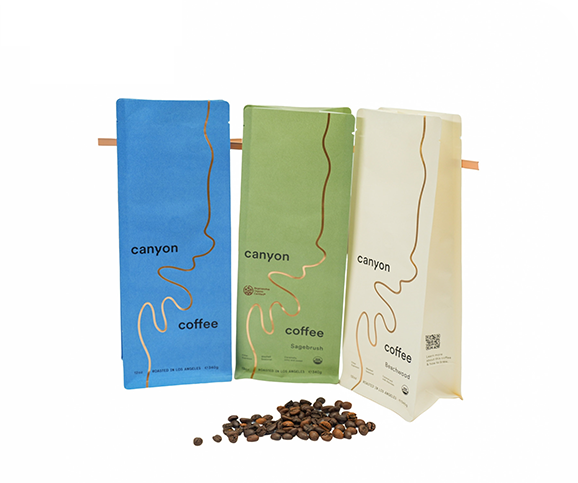
The physical shape of your pouch dictates your ultimate retail success. It determines how your product commands attention on crowded supermarket shelves. It also impacts how efficiently the empty bags run through your automated packing facility. You must balance ambitious visual goals with stubborn operational realities.
The stand up coffee pouch represents an excellent entry-level commercial option. It remains highly cost-effective for growing independent brands. Consumers find this functional format very familiar and exceptionally easy to use. It utilizes minimal raw material compared to larger box formats. However, it offers slightly less printable billboard space than flat-bottom designs. The curved bottom gusset restricts some typography placement.
Box pouches deliver a highly premium, modern aesthetic. They maximize your shelf footprint effectively. They provide five distinct printable panels for deep brand storytelling. The bag stands perfectly square on any retail display, preventing messy shelf presentations. The primary drawback involves a higher production unit cost. Suppliers also typically demand much higher minimum order quantities for this complex, folded structure.
Side gusset bags provide a highly traditional specialty aesthetic. The quad seal design reinforces all four vertical corners. This prevents unseemly bulging and maintains a crisp, rectangular profile. They are highly efficient for bulk product volumes. Many wholesale roasters use them for large 1kg or 5lb distribution bags. They stack incredibly well on wooden pallets. However, they lack built-in resealability features. You will require secondary closure equipment if consumers need to seal them daily.
Choosing the correct closure depends entirely on average consumer consumption speed. You should evaluate these physical options carefully:
Pocket Zippers: These offer a very clean exterior appearance. They provide a wide, unobstructed opening for easy scooping. They work exceptionally well for premium retail lines.
Standard Press-to-Close Zippers: The most common flexible packaging solution. They keep manufacturing costs low. They work reliably for standard weekly consumer volumes.
Tin Ties: Ideal for traditional side gusset bags. They create a distinctly artisanal look. However, they provide the weakest oxygen barrier after the initial heat seal breaks.
Your beautiful visual design must survive the rough journey from the roastery to the end consumer. Trendy aesthetic choices often conflict directly with functional durability. You must prioritize exterior materials that withstand harsh transit conditions.
Matte finishes and spot UV gloss currently dominate modern retail shelves. They create striking, tactile visual contrasts. Kraft paper exteriors communicate an artisanal, organic brand feel. However, you must evaluate these specific finishes for physical durability. Unprotected kraft paper scuffs incredibly easily during tight shipping. Matte finishes easily show oily fingerprints during the manual packing process. Consider adding a protective transparent varnish layer to preserve the original visual integrity.
Selecting the correct printing method impacts your operational budget heavily. Consider your current production scale before choosing a specific route.
Digital Printing: Ideal for managing dozens of unique SKUs. It handles short-run seasonal blends effortlessly. It serves perfectly for low-MOQ market testing. There are zero expensive printing plates required.
Rotogravure Printing: Highly cost-effective at massive commercial scale. It utilizes etched metal cylinders. It offers vastly superior color consistency across huge, continuous production runs. Use this exclusively for your flagship products with stable, predictable demand.
Your packaging design must accommodate mandatory regional labeling regulations. You must display precise roast dates clearly. Origin information and nutritional data remain mandatory for flavored blended teas. The FDA mandates clear net weight declarations on the lower portion of the principal display panel. Ensure your pouch dimensions allow for required legal text comfortably. You should never compromise the primary brand aesthetic. Always integrate necessary compliance text during the initial structural design phase.
Procuring custom flexible packaging involves substantial operational and financial risk. You must vet international and domestic suppliers rigorously before committing capital. Small, unnoticed errors in mass production lead to massive commercial losses.
Misaligned oxygen barrier specifications ruin fresh specialty products quickly. Faulty degassing valves allow continuous oxygen infiltration. Weak, poorly pressed bottom seals result in catastrophic batch losses during transit. You must treat procurement as a serious technical engineering challenge, not just a casual design purchase.
Ask potential packaging vendors highly specific technical questions. Do they offer custom structural sizing? Your specific fill weights dictate the required bag dimensions. For example, 250g of dense, light-roasted Ethiopian coffee takes up much less physical space than 250g of voluminous white silver needle tea. Ask about their internal quality control protocols. How precisely do they test automated degassing valve insertion? How do they measure zipper adhesion strength across different material layers?
Follow a strict, methodical protocol when evaluating new packaging partners. This logical testing sequence minimizes your financial risk significantly.
Request Material Data Sheets (MDS): Material Data Sheets serve as your technical baseline. Do not accept vague descriptions like "high barrier." Verify the exact Oxygen Transmission Rates (OTR). Confirm the precise Water Vapor Transmission Rates (WVTR). Compare these numerical figures against your target shelf-life expectations.
Order Physical Prototypes: Request blank physical samples immediately. Test fill your actual product to verify the internal volume. Check the top closure mechanism repeatedly for stiffness. Stress-test the heat seals manually by dropping filled bags onto concrete floors.
Conduct a Transit Test: Evaluate how the filled pouches perform under real-world, aggressive shipping conditions. Send sealed packages across the country via standard ground freight. Check for exterior ink scuffing or microscopic seal bursts before committing to full, high-volume production runs.
Premium packaging acts as a highly measurable, critical business asset. It directly influences your perceived product quality, retail shelf velocity, and long-term brand trust. You simply cannot afford to treat it as a secondary operational thought. The right material choices protect your delicate flavor profiles seamlessly from the factory floor to the kitchen counter.
Base your vital packaging decisions on strict technical requirements first. Carefully analyze your specific barrier needs, degassing valve requirements, and automated sealing capabilities. Evaluate structural display formats second. Finally, consider visual aesthetics third. Technical functionality must always precede visual form in successful food preservation.
Take immediate action to secure your product's market quality. Request a physical sample pack from your newly shortlisted suppliers today. Download comprehensive technical specification sheets to compare precise material metrics. Contact a flexible packaging specialist to calculate your exact material thickness needs based on your daily production volume and target shelf life.
A: No. Tea does not emit carbon dioxide after the curing and drying process. A valve compromises the absolute airtight seal required to keep ambient moisture and external odors out. Using a valve on tea packaging actively harms the product's delicate shelf life and long-term flavor integrity.
A: Extreme temperature fluctuations during winter shipping can cause immediate condensation inside poorly constructed material barriers. This trapped internal moisture leads directly to premature staling. Utilizing high-barrier composite materials like thick Aluminum Foil or robust EVOH structures mitigates this unpredictable environmental risk effectively.
A: While technically possible for bag sizes up to 1kg, side gusset or flat bottom box bags are generally preferred for bulk wholesale. They offer vastly superior structural stability. They also provide significantly better palletizing efficiency for large-scale warehouse distribution and wholesale handling.
A: Most commercial kraft bags contain a hidden inner laminated layer of foil or plastic (like PE or PLA). Manufacturers include this to provide the necessary oxygen barrier. True mono-material recyclable options require specialized PE/EVOH structures rather than simple, porous paper layers.

