
Views: 0 Author: Site Editor Publish Time: 2026-07-20 Origin: Site


Premium food brands constantly battle for consumer attention in crowded retail aisles. This highly competitive landscape drives a massive shift toward innovative packaging formats. Brands now demand solutions maximizing both shelf presence and volume efficiency. Consumers expect visual perfection alongside ultimate product freshness.
Enter the highly engineered quad seal pouch. It features four distinct sealed corners and two expanded side gussets. This unique construction heavily appeals to premium sectors like specialty coffee, artisanal pet food, and high-end snacks. Why? Because the rigid corners prevent unsightly bulging. The bag presents a remarkably clean, upright profile.
Selecting the right packaging requires careful navigation of material science and production constraints. We will provide a comprehensive technical framework for specifying, evaluating, and purchasing these pouches. You will learn how to optimize barrier integrity effectively. Finally, we will align your packaging choices with automated production timelines seamlessly.
Quad seal bags offer a 360-degree billboard effect, providing five printable surfaces (front, back, two side gussets, and bottom) for maximum premium branding.
The structural integrity of four reinforced side seals prevents bulging, allowing heavier premium foods to stack cleanly and maintain shape.
When comparing quad seal bags to flat bottom bags, the primary differences lie in the bottom folding process, stand-up stability, and unit cost.
Successful implementation requires balancing barrier material requirements (moisture/oxygen) with automated filling line compatibility and minimum order quantity (MOQ) realities.
Brands invest heavily in graphic design. However, poor packaging structure quickly ruins great artwork. You need a format maximizing visibility. This is where the structural engineering of specific pouches truly shines.
Traditional pouches often feature a disruptive back seal. This seal splits your rear design panel right down the middle. Eliminating this back seal creates completely unbroken front and back panels. You gain massive, uninterrupted canvases for your primary branding.
Furthermore, you acquire two dedicated side gussets. These side panels provide perfect real estate for nutritional information, brand storytelling, or barcode placement. You do not have to clutter your primary front graphics. quad seal bags essentially deliver a 360-degree billboard effect. Shoppers easily identify your product from any angle on a retail shelf.
Packaging efficiency matters deeply in high-volume production. The gusseted design allows for significantly higher product volume. It uses less overall film compared to standard stand-up pouches. When you expand the side gussets, the internal cubic capacity grows exponentially.
This efficient volume-to-film ratio reduces your overall plastic usage per ounce of product. It lowers material waste. It also improves shipping densities. You fit more filled product into a standard corrugated master carton. This translates directly into logistics savings and improved sustainability metrics.
Heavier products often distort flimsy packaging. A standard pouch filled with dense coffee beans might slump over. It loses shelf appeal instantly. The four corner seals provide essential structural rigidity.
These welded vertical edges act like building pillars. They ensure the bag holds its shape rigidly. Even when filled with dense, heavy products like artisanal granola or premium kibble, the walls remain taut. The package resists bulging outward. It stacks cleanly on shelves, maintaining a premium aesthetic until the consumer opens it.
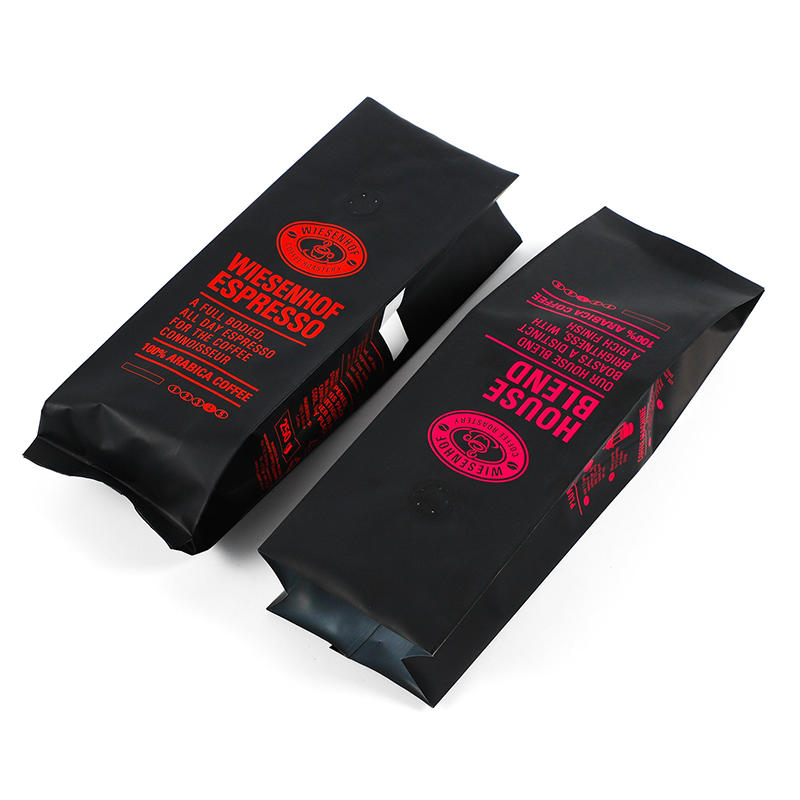
Brand managers frequently confuse different premium pouch formats. Understanding the technical nuances between them prevents costly purchasing errors. You must evaluate structural mechanics alongside manufacturing complexities.
Let us look closely at bottom construction. A quad seal pouch folds flat at the bottom until you fill it. The weight of your product pushes the bottom gusset outward. This action creates the flat base necessary for standing upright. Before filling, these pouches lay entirely flat in shipping boxes.
Conversely, flat bottom bags (also known as box pouches) feature a pre-formed, completely flat base. The bottom is welded distinctly from the sides. It resembles a traditional cardboard box. The visual shelf footprint is similar, but stability differs slightly. A box pouch offers maximum stability even when half-empty. A quad seal format requires a certain fill level to maintain optimal standing posture.
Manufacturing complexity dictates pricing. Creating a pre-formed flat base requires highly specialized, expensive converting equipment. Web routing and sealing processes are slower and much more intricate.
This complexity generally leads to higher unit costs. Packaging converters also demand higher Minimum Order Quantities (MOQs) to justify machine setup times. In contrast, four-corner sealed pouches process faster on standard converting lines. They serve as a high-capacity, cost-efficient alternative. They deliver a nearly identical premium aesthetic without the severe MOQ hurdles of box pouches.
| Feature | Quad Seal Design | Box Pouch Design |
|---|---|---|
| Bottom Construction | Folds flat; forms base upon filling | Pre-formed flat base |
| Empty Storage Space | Highly compact (lays flat) | Moderately compact |
| Manufacturing Speed | Faster web processing | Slower, complex web routing |
| Relative Cost | Moderate | High |
| Minimum Order Quantity | Standard to Medium | Typically High |
Premium aesthetics mean nothing if the food spoils prematurely. You must engineer your packaging materials to defend against environmental threats. Material selection represents the most critical phase of packaging development.
Food degradation occurs rapidly when exposed to atmospheric elements. You must build a defensive shield. We categorize these defenses into specific barrier structures.
Oxygen and Moisture Barriers: You must frame your material choices around strict shelf-life targets. Roasted coffee requires absolute defense against oxygen to prevent staling. For this, Aluminum foil (AL) or high-grade metallized PET (VMPET) layers are mandatory. Conversely, dry snacks might only need moisture protection to stay crisp. In these cases, clear EVOH coatings often provide sufficient barrier defense while allowing transparency.
Puncture Resistance: Certain foods fight back against their packaging. Sharp-edged products like bone-in pet treats or large rigatoni pasta can pierce standard films. You must specify robust sealant layers. Linear Low-Density Polyethylene (LLDPE) provides excellent flex-crack and puncture resistance. Thickening the LLDPE layer drastically reduces transit rupture rates.
Navigating food safety regulations requires diligence. Your inner sealant layer must be explicitly FDA or FSA-approved for direct food contact. Always demand certification documentation from your supplier.
Sustainability now dominates packaging conversations. Brands increasingly evaluate the trade-offs of recyclable structures. Monomaterial PE (Polyethylene) structures offer excellent recyclability (often Store Drop-Off approved). However, monomaterials typically sacrifice some rigidity. They also provide lower barrier performance compared to traditional multi-layer, mixed-material laminates. You must weigh shelf-life requirements against your brand's environmental commitments carefully.
Consumer convenience drives repeat purchases. Modern shoppers expect premium functionality built directly into the bag. You should consider adding specific mechanical features to enhance user experience.
Degassing Valves: Freshly roasted coffee releases significant amounts of carbon dioxide. If trapped, this gas causes bags to balloon and rupture. You must specify one-way degassing valves. These small plastic devices vent internal gas outward. Crucially, they block external oxygen from entering. Specify valve opening pressures matching your specific roast profiles.
Resealability Options: Multi-serve premium foods require freshness retention after opening. You have two main choices. Press-to-close (PTC) zippers are cost-effective and familiar. However, pocket zippers (also known as front-tear zippers) offer a cleaner aesthetic. Pocket zippers hide the closure mechanism behind a tear-away front panel. This prevents product from clogging the zipper tracks during filling.
Clear Windows: Consumers love seeing the product before buying. Integrating transparent display windows presents a severe technical challenge when using metallized or foil-lined structures. You must use specialized demetallization processes. Alternatively, you can use clear barrier films (like AlOx or SiOx coated PET) printed with high-opacity inks to simulate a foil look while leaving a clear window area.
Moving from a beautiful design file to a physical, filled pouch involves numerous risks. Overlooking manufacturing realities inevitably leads to expensive production delays.
Artwork shifting causes massive headaches during pouch forming. The bag utilizes four distinct panels wrapping around the sides. During the folding and heat-sealing process, the film web can shift microscopically.
Common Mistakes to Avoid:
Designing rigid geometric patterns spanning across the corner folds. A one-millimeter shift makes lines look broken.
Placing critical text within 5mm of a heat seal. The melting process distorts typography.
Ignoring eye-mark placement. Web tracking relies on clear sensor marks.
You must advise your graphic designers on tolerance levels. They should use continuous, organic patterns across side gussets. Bleed colors over the edge folds slightly to mask minor registration shifts gracefully.
You must map out how you will physically fill the product. Manual filling works for startups, but volume demands automation. Transitioning from pre-made pouch filling to Vertical Form Fill Seal (VFFS) rollstock operations changes your entire procurement strategy.
If you purchase pre-made pouches, detail the challenges of automated pouch opening. Four-corner sealed bags carry high structural tension. They are physically harder to pry open than standard stand-up pouches. Your automated packaging machinery requires specific, high-suction vacuum cup placements. If your co-packer's machine cannot securely grip and open the stiff gussets, your filling line will jam constantly. Always send physical samples to your facility for rigorous machine testing before placing bulk orders.
Selecting premium packaging requires a deliberate, engineered approach. You must prioritize quad seal formats when you desperately need high volumetric capacity, dedicated side-gusset branding, and robust structural rigidity on the retail shelf. They offer an unparalleled balance of visual impact and cost-effective material usage.
Before proceeding, utilize a strict shortlisting checklist for evaluating potential packaging suppliers. Ask them for physical sample tear-downs. Request detailed barrier data sheets for their films. Most importantly, demand filling machine compatibility specifications to ensure smooth automated runs.
Your immediate next step should be tangible. Request a custom structural prototype from your converter. Ask for a specific material recommendation based exactly on your product's weight, edge sharpness, and targeted shelf-life requirements. Moving forward with prototypes prevents costly failures during full-scale production runs.
A: A standard gusseted bag only folds the side panels inward, leaving the edges unsealed and prone to bulging. A quad bag reinforces those folds by welding all four vertical corners. These four corner seals act as structural pillars, ensuring the package remains rigid, square, and highly attractive on retail shelves.
A: Yes, they stand securely once filled with product. The weight of your food pushes the bottom folds outward to create a base. However, when completely empty, they lay flat. They lack the rigid, pre-formed cardboard-like base found in specific flat bottom pouch formats.
A: Standard industry minimums depend entirely on the printing technology. For modern digital printing, MOQs typically range from 1,000 to 5,000 units per SKU. For traditional rotogravure printing, which utilizes expensive etched cylinders, expect MOQs between 10,000 and 30,000 units. Rotogravure offers lower per-unit costs at high volumes.
A: Yes, but they require specific machine calibrations. Because the four welded corners create high surface tension, pre-made pouch fill-and-seal machinery needs robust vacuum cups. The suction cups must be placed precisely to pull the stiff gussets open without tearing the film or causing line jams.

