
Views: 0 Author: Site Editor Publish Time: 2026-07-09 Origin: Site


High-quality beans and delicate tea leaves require pristine conditions to maintain their intricate flavor profiles. Once they leave the roaster or drying rack, time becomes the ultimate enemy of freshness. Packaging serves as the only barrier between your premium product and accelerated staling. We often see brands struggle to balance this functional necessity against the need for striking retail presentation. Your chosen pouches must block oxygen and moisture. Simultaneously, they act as a silent salesperson on crowded grocery shelves. Choosing the wrong pouch material or format leads directly to flavor degradation and lost sales.
This guide provides a comprehensive framework to help you navigate these critical design decisions. You will learn how to evaluate barrier requirements, structural formats, and operational compatibility. Ultimately, we will show you how to select tea and coffee packaging that protects product integrity and drives retail conversions.
Coffee requires one-way degassing valves to release CO2; tea requires absolute airtight environments to prevent aroma loss and moisture ingress.
Structural formats, particularly flat bottom coffee bags, offer superior billboard space and shelf stability compared to traditional gusseted bags.
Material selection must balance Oxygen Transmission Rate (OTR) and Water Vapor Transmission Rate (WVTR) with brand sustainability goals.
Evaluating Minimum Order Quantities (MOQs) and filling-machine compatibility is critical before finalizing structural design.
Roasters and blenders face entirely different chemical challenges. You cannot use a universal approach to flexible packaging here. Understanding the specific degradation triggers for each product is essential. We will look at how outgassing, moisture, and light interact with your blends.
Freshly roasted coffee beans are highly active. They release massive amounts of carbon dioxide immediately after roasting. If you seal fresh beans inside an airtight pouch, the trapped gas will cause the package to balloon. Eventually, it will rupture. You must integrate one-way degassing valves. These small plastic vents allow CO2 to escape safely. More importantly, they prevent ambient oxygen from entering the bag. Oxygen rapidly stales coffee oils. It destroys the nuanced tasting notes your customers expect.
Tea leaves present the opposite challenge. They do not emit gasses. Instead, they act like sponges. Dried tea leaves easily absorb ambient moisture and surrounding odors. You must provide an absolute airtight environment. High-barrier films prevent essential oil evaporation. They also block external contaminants from altering the tea's delicate flavor profile. Even minor moisture ingress can lead to mold growth or staleness.
Both products suffer when exposed to ultraviolet light. Photodegradation breaks down organic compounds. It strips away vibrant aromas and vibrant colors. Opaque films offer the highest level of protection. However, marketers often request clear windows to showcase the product visually. You must weigh this trade-off carefully. Clear windows severely reduce retail shelf life. If you choose windowed pouches, you should expect a faster inventory turnover requirement.
Product safety is non-negotiable. All inner sealing layers must use FDA-approved, food-safe materials. This prevents chemical leaching into the organic matter. Furthermore, you must verify ink safety. Migration-resistant inks ensure external branding materials never taint the enclosed product. Always request compliance certificates from your packaging manufacturer.
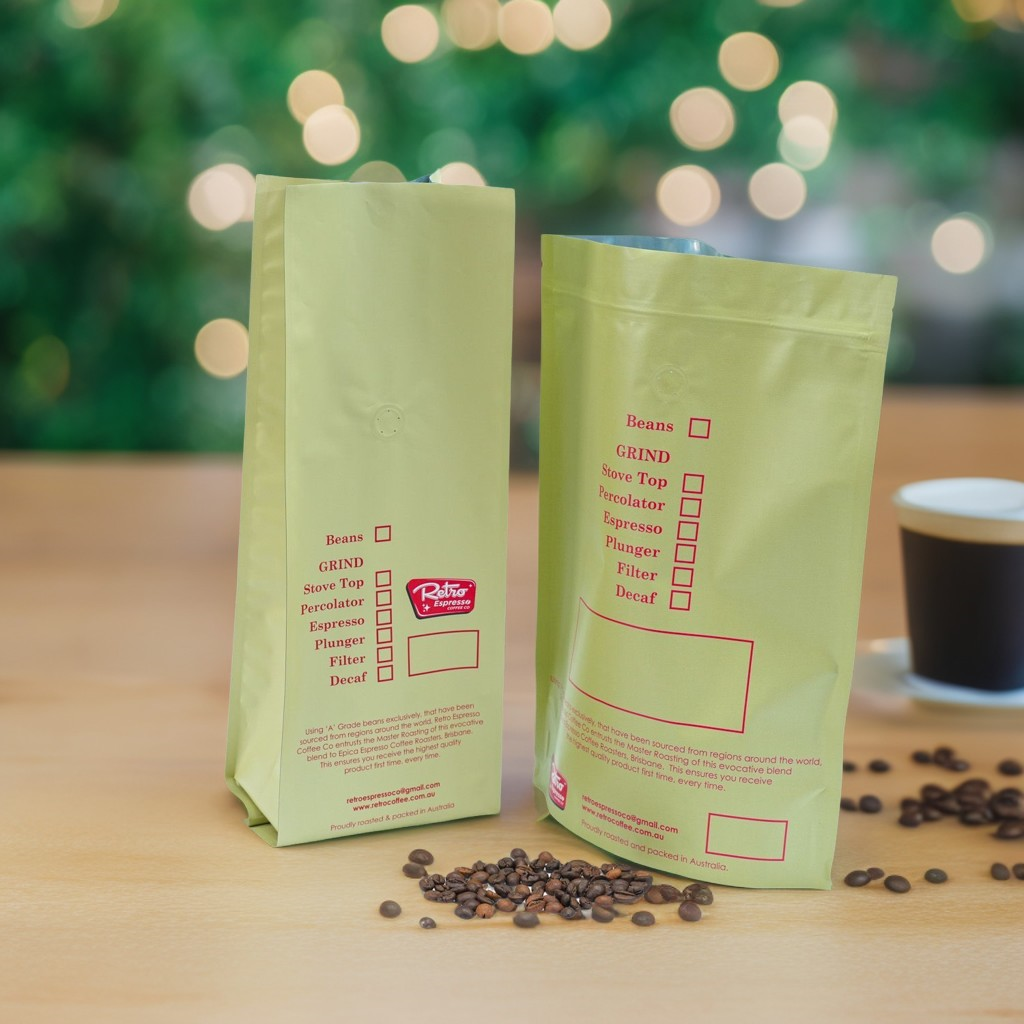
Once you secure the functional barrier, you must consider physical presence. Retail shelves are highly competitive environments. The structural format dictates how much volume the bag holds. It also determines how well it stands up visually.
These are the premium standard in modern retail. Flat bottom coffee bags feature five distinct printable panels. This maximizes your branding space to create a powerful billboard effect. They boast a perfectly flat base. This makes them highly stable on retail shelves. They will not tip over easily.
However, they come with drawbacks. They require complex manufacturing processes. This results in a higher cost per unit. Additionally, they often require specialized filling equipment due to their rigid box-like structure.
Stand-up pouches remain incredibly popular. They are highly versatile and cost-effective. You can adapt them easily for various dry goods. They feature a bottom gusset which allows them to stand vertically.
The main downside is interior volume. Relative to their physical footprint, they hold less product than box pouches. If operators overfill them, the bottom gusset bulges. This creates a distorted, unprofessional appearance on the shelf.
This format delivers a traditional, rustic aesthetic. Roasters have used side gusset bags for decades. They fold flat before filling. This makes them highly efficient for bulk packing and shipping logistics. They maximize carton space perfectly.
Yet, they struggle in modern retail settings. Once a consumer opens a side gusset bag, it rarely stands upright independently. They also offer limited built-in reclosability options. Consumers often must fold the top down manually.
Format Type | Primary Advantage | Primary Disadvantage | Best Used For |
|---|---|---|---|
Flat Bottom Box Pouch | Maximum stability and branding space | Higher unit cost | Premium retail lines |
Stand-Up Pouch (SUP) | Versatile and cost-effective | Lower volume-to-footprint ratio | Standard retail and samplers |
Side Gusset Bag | Excellent shipping efficiency | Poor standalone stability once open | Wholesale and bulk distribution |
Your material choices dictate the shelf life. They define the Oxygen Transmission Rate (OTR) and Water Vapor Transmission Rate (WVTR). Today, brands also face immense pressure to adopt sustainable materials. Balancing these demands requires careful analysis.
Aluminum foil laminates represent the industry gold standard. They provide absolute maximum defense against oxygen and moisture. Foil effectively drops OTR and WVTR to zero. If you need extended retail shelf life, this remains your safest choice. However, multi-layer foil laminates are nearly impossible to recycle. They typically end up in landfills.
VMPET offers a lighter, cost-effective alternative to pure foil. Manufacturers apply a micro-thin layer of aluminum to a polyester film. It delivers moderate to high barrier protection. It works exceptionally well for fast-moving inventory. If your product sells and consumes quickly, VMPET provides sufficient protection without the heavier cost of pure foil.
The industry is rapidly shifting toward eco-friendly options. You have two primary paths to explore.
Recyclable Mono-materials: These use a single polymer family, usually Polyethylene (PE). To achieve the necessary barriers, manufacturers incorporate High-Barrier EVOH (Ethylene Vinyl Alcohol) layers. This creates a fully recyclable structure that still blocks oxygen effectively.
Compostable Films: These rely on plant-based polymers like PLA. They break down in industrial composting facilities.
Transparent assumption: Fully compostable materials currently present significant trade-offs. They often exhibit higher moisture permeability. They simply do not block oxygen as well as foil. If you choose compostable films, you must accelerate your supply chain turnover. You cannot expect a 12-month shelf life from plant-based plastics.
The consumer experience does not end at the checkout counter. How the package behaves in the kitchen matters deeply. Effective reclosability locks in freshness between brews. It directly impacts customer satisfaction and brand loyalty.
These are the standard plastic tracks found on most pouches. They are cheap to implement and widely understood. However, they have a major flaw. Fine coffee grounds or powdery tea dust easily get trapped inside the track. Once fouled, the zipper fails to seal. This exposes the product to ambient air.
Pocket zips offer a massive upgrade. They feature a clean, tamper-evident tear-off top. The zipper sits concealed behind the front panel. Consumers pull a tab to access the zipper. It feels highly premium. Furthermore, the design minimizes the chance of product spilling into the tracks during the initial filling process.
You typically find tin ties applied to side-gusset bags. Consumers roll the bag down and bend the metal tabs to hold it shut. They work adequately for short-term use. However, they never create a truly airtight seal. Tape-down adhesives face similar limitations. They lose their stickiness quickly. You should avoid these for any premium coffee tea packaging intended for prolonged kitchen storage.
Do not underestimate the power of a good seal. We constantly see a strong correlation between ease of resealing and repeat purchase rates. Frustrated customers rarely buy the same package twice. If they struggle to close your pouch, they will blame your brand for stale coffee.
Beautiful designs mean nothing if you cannot fill them efficiently. You must align your structural choices with your operational realities. Missteps here cause massive production bottlenecks.
Assess your machinery first. How do your bag styles interact with Form-Fill-Seal (FFS) equipment? FFS machines pull film off a continuous roll. They form the pouch, fill it, and seal it simultaneously. If you use pre-made pouches, you likely use semi-automatic or hand-filling operations. Box pouches require different grip mechanics than standard stand-up pouches. Always send physical samples to your machinery operators before placing a bulk order.
Your production volume dictates your printing strategy. We recommend breaking this down into three distinct tiers.
Stock Pouches + Labels: This works best for low-volume seasonal teas. It is ideal for micro-lot coffees. It severely limits upfront financial risk. You simply buy blank bags and apply custom stickers.
Digital Printing: This technology changed the industry. It offers exceptionally low MOQs. It allows for variable data printing. You can print multiple SKUs in a single run without expensive setup fees.
Rotogravure or Flexographic: These utilize physical printing plates. They require high MOQs. The initial setup costs are significant. However, they drive down the per-unit cost dramatically at scale. Use this for your flagship, high-volume blends.
You must anticipate realistic production timelines. Stock bags ship in days. Custom printing takes much longer. Expect 6 to 12 week lead times for custom structural modifications. Specialized degassing valves or unique pocket zips often add extra transit time. Build robust inventory buffers to prevent stockouts during peak holiday seasons.
Selecting the ideal flexible pouch requires a methodical approach. First, identify your strict barrier needs based on product outgassing and moisture sensitivity. Next, select a bag format that maximizes your retail shelf presence. Then, ensure those physical dimensions align flawlessly with your operational filling capacity. Finally, always prototype and test your designs rigorously before full production.
Your most vital next step is highly practical. Contact your packaging supplier today. Request detailed material specification sheets that explicitly list OTR and WVTR metrics. Demand physical, unprinted samples. Run these blank pouches through your existing filling lines to verify compatibility immediately.
A: No. Unlike freshly roasted coffee, tea does not emit CO2. A valve is an unnecessary expense and a potential vector for oxygen ingress.
A: They require more complex manufacturing processes to seal the five separate panels, though the ROI is often recovered through premium retail pricing.
A: Unopened foil-lined or EVOH bags can maintain commercial freshness for 6 to 12 months, depending on the seal integrity and storage conditions.
A: Yes, but shelf-life expectations must be adjusted. Brands must verify the specific barrier properties of the compostable film with their packaging partner.

