
Views: 0 Author: Site Editor Publish Time: 2026-07-15 Origin: Site


Food and beverage manufacturers face immense pressure today. You must constantly balance packaging material costs against consumer demands for on-the-go convenience. Optimizing freight efficiency also remains a top priority across the supply chain. Rigid formats like glass bottles, hard plastic jugs, and metal cans used to dominate store shelves. However, they introduce significant operational friction. They weigh more, break easily, and consume vast amounts of warehouse space. Flexible packaging solves many of these ergonomic and operational realities. This article provides a technical and commercial evaluation of spouted pouches for liquid and semi-liquid products. We aim to help operations and procurement teams assess feasibility, production impact, and overall return on investment. You will learn how shifting from rigid containers transforms logistics. We will also explore how it boosts sustainability and significantly improves the end-user experience.
Transitioning to flexible packaging reduces empty packaging storage space by up to 90% compared to rigid bottles.
Optimized spout and cap geometries drastically improve product evacuation rates (up to 99%), minimizing food waste for highly viscous sauces.
Evaluating barrier films (like EVOH or foil laminations) is critical to matching the specific acidic, thermal, or shelf-life demands of beverages and liquid foods.
Adopting spout pouch packaging requires upfront assessment of existing filling lines, comparing pre-made pouch fillers against Form-Fill-Seal (FFS) systems.
Legacy rigid containers hide massive operational costs. Glass and heavy plastics carry severe dimensional weight penalties during shipping. They also pose major breakage risks. A single shattered glass bottle can ruin an entire pallet during transit. Furthermore, rigid bottles demand excessive warehousing footprints. You must store them fully formed, eating up valuable facility space before they even reach the filling line.
Moving to spout pouch packaging triggers immediate material reduction. Transitioning from high-density polyethylene (HDPE) or polyethylene terephthalate (PET) to flexible pouches reduces plastic usage by weight by up to 70%. This source reduction lowers your raw material expenditure. It also directly decreases your exposure to fluctuating petroleum and resin prices.
The logistics impact is perhaps the most compelling business driver. Empty rigid containers ship mostly air. Flexible pouches ship completely flat. You can fit hundreds of thousands of unfilled pouches on a single truck. To move the equivalent volume of rigid bottles, you might need up to 25 trucks. This inbound freight consolidation slashes transportation costs and dramatically lowers your carbon footprint.
Logistics Comparison: Rigid Bottles vs. Flexible Pouches
Logistics Metric | Rigid Plastic/Glass Bottles | Flexible Spouted Pouches |
|---|---|---|
Storage State | Fully formed (high volume) | Flat and collapsed |
Inbound Trucking Ratio | ~25 Truckloads | 1 Truckload |
Breakage Risk | High (glass) to Moderate (plastic) | Extremely Low (puncture resistant) |
Warehouse Footprint | Massive (requires constant rotation) | Minimal (up to 90% reduction) |
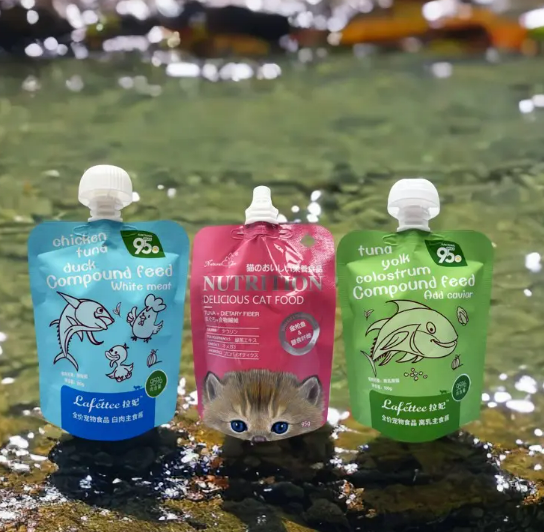
Modern consumers demand packaging that fits their busy lifestyles. Flexible designs deliver superior functionality across various liquid categories. We must evaluate these features carefully to match specific product behaviors.
Spout diameter dictates flow control. You cannot use a universal spout for every product. Thin beverages like fruit juices or electrolyte waters require smaller diameters. An 8.5mm spout offers smooth, controlled drinking. Thick, particulate-heavy products require much wider openings. A hearty pasta sauce or marinades might need a 22mm spout to prevent clogs. Matching the geometry to the product viscosity ensures a frustration-free dispensing experience.
Flexible packaging offers distinct structural advantages for on-the-go consumption. Rigid bottles feel heavy and bulky in bags. Glass bottles pose a shattering hazard at pools or gyms. Flexible pouches feature shatter-proof materials. They conform easily to the shape of backpacks or lunchboxes. Their lightweight profiles make them ideal for active consumers who prioritize portability.
Trapped product frustrates consumers. Everyone knows the struggle of shaking a rigid ketchup bottle to extract the last drops. The squeezable nature of flexible packaging solves this issue permanently. Consumers can easily flatten or roll the packaging as they consume the product. This yields near-total product recovery. Evacuation rates often exceed 99%. This minimizes food waste and increases perceived product value.
Resealable caps play a crucial role in product longevity. Once opened, exposure to air accelerates spoilage. Tamper-evident, threaded caps prevent oxidation. They allow consumers to use a portion of the product and save the rest safely. This reliable reclosability maintains freshness and extends the usable life of the product inside domestic refrigerators.
Liquid packaging requires rigorous material engineering. You must protect the product from external elements while preventing internal chemical reactions.
Long shelf life relies entirely on barrier films. Manufacturers construct these packages using multi-layer laminations. Common structures combine Polyethylene Terephthalate (PET), Aluminum Foil (AL), Nylon (NY), and Polyethylene (PE). These layers work together to block oxygen, moisture, and ultraviolet light. Ethylene Vinyl Alcohol (EVOH) serves as an excellent clear barrier for brands wanting a transparent window. Blocking these elements safeguards flavor profiles and prevents premature degradation.
Many liquids require thermal processing for food safety. Hot-fill, pasteurization, and retort processing demand extreme thermal resistance. If you manufacture a soup packaging pouch, high heat tolerance becomes mandatory. Retort applications subject the packaging to temperatures up to 121°C (250°F) under high pressure. You must specify specialized retort-grade adhesives and cast polypropylene (CPP) inner layers. Standard films will delaminate or melt under these harsh conditions.
Aggressive liquids aggressively attack sealant layers. Highly acidic products like tomato paste, citrus juices, or vinegar-based dressings break down weak internal films. High-oil-content liquids cause similar degradation. You must use specialized sealant resins engineered for chemical resistance. Failing to address product acidity leads to flavor scalping, where the packaging absorbs the food's flavor, or worse, catastrophic seal failure.
Food safety compliance is non-negotiable. You must verify your manufacturing partners adhere to recognized global standards. Always request documentation proving FDA compliance for direct food contact. Ensure your converter operates out of a GFSI or BRC-certified facility. These certifications guarantee strict hygiene, traceability, and quality control protocols during the converting process.
Adopting new formats requires an upfront assessment of your existing manufacturing infrastructure. You must understand how flexible materials behave on the production floor.
Operations teams must choose between two primary filling methods. You can fill through the spout, or you can fill through the top before the final seal. Filling through the spout relies on specialized rails holding the package by its neck. It works well for pre-made formats but can slow down production speeds for highly viscous liquids. Filling through the top (leaving the pouch open, then sealing it) allows for rapid filling of thick sauces. However, top-filling risks splashing the seal area. Product trapped in the seal zone causes leaks. You must evaluate your liquid's viscosity to choose the optimal filling mechanism.
Applying the cap correctly involves delicate physics. Cap torque represents a critical technical challenge. If the torque is too low, liquids will leak during transit or high-altitude shipping. If the torque is too high, you create consumer frustration. Elderly consumers or children will struggle to break the tamper-evident band. Maintaining consistent cap torque requires precision capping heads and frequent calibration on your packaging line.
Manufacturers rarely run a single SKU. You might package a 100ml single-serve drink and a 1-liter family-sized sauce on the same day. Equipment changeover times impact overall equipment effectiveness (OEE). Rotary machines handling pre-made formats often require rail adjustments and filler nozzle swaps. Inline Form-Fill-Seal (FFS) machines require film roll changes and seal bar recalibrations. Assess these changeover realities to ensure your production schedule remains scalable and efficient.
Evaluating your return on investment requires looking beyond the initial per-unit price. You must map out the holistic financial impact across the supply chain.
The per-unit cost of a flexible package might occasionally match a cheap plastic bottle. However, the operational savings generate massive ROI. You must incorporate freight savings from lighter outbound shipments. Calculate the reduction in spoilage and breakage. Furthermore, factor in potential capital expenditures (CapEx) for new filling equipment or retrofit kits. While new machinery requires upfront capital, the long-term material and logistical savings typically deliver a rapid payback period.
Sustainability requires a balanced view. Traditional multi-layer laminations combine different polymers and metals. This makes them notoriously difficult to recycle in standard municipal streams. However, their overall life cycle assessment remains highly competitive. They require significantly less energy to manufacture than glass or aluminum. The dramatic reduction in shipping weight slashes carbon emissions during transport. Furthermore, the packaging industry is rapidly developing mono-material PE and PP structures. These emerging materials allow for store-drop-off recycling, bridging the gap between carbon reduction and circularity.
Selecting the right converter ensures a smooth transition from rigid formats. You need a partner capable of advanced engineering and reliable production.
Prototyping and Compatibility Testing: Never skip the testing phase. Require physical prototypes before committing to full-scale production. Conduct burst testing to ensure the seals withstand compression. Perform drop testing to simulate consumer mishandling. Run transit simulations to verify the packaging survives the vibrational stress of cross-country trucking.
Customization Capabilities: Your product demands unique structural engineering. Evaluate a manufacturer’s ability to customize spout placements. Top spouts work perfectly for beverages. Corner spouts often perform better for pouring bulk liquids or refills. Ask about bottom gusset designs. A well-engineered bottom gusset ensures the package stands upright on retail shelves, maximizing brand visibility.
Supply Chain Reliability: Vendor selection hinges on supply chain stability. Define minimum order quantities (MOQs) early. High MOQs tie up cash flow; low MOQs might increase per-unit costs. Clarify lead times for custom printed films. Finally, assess domestic versus international manufacturing risks. Offshore suppliers might offer lower costs but introduce longer transit times and geopolitical vulnerabilities.
Shifting from heavy, fragile rigid containers to modern flexible formats represents a strategic operational upgrade. This transition successfully bridges consumer demand for on-the-go convenience with measurable supply chain efficiencies. You reduce storage space, slash freight emissions, and virtually eliminate transit breakage. Simultaneously, consumers enjoy better portion control, portability, and maximum product evacuation.
The next steps require decisive action. Audit your current rigid packaging freight costs to identify potential savings. Map out your exact product requirements, noting viscosity, acidity, and processing temperatures. Finally, request material compatibility testing and physical prototypes from specialized flexible packaging converters. Taking these steps ensures a seamless, profitable transition to flexible packaging.
A: Shelf life ranges from a few months to over a year. It depends entirely on the barrier films and filling methods used. Clear structures using EVOH offer moderate protection. Multi-layer foil laminations provide ultimate oxygen and light barriers, maximizing longevity. Hot-filling or aseptic processing also significantly extends shelf life compared to ambient filling.
A: Yes, they can handle extreme thermal processing. However, you must specify retort-grade materials. Standard films will melt or delaminate. Manufacturers use specialized cast polypropylene (CPP) sealant layers and high-performance adhesives to withstand temperatures up to 121°C (250°F) during commercial sterilization.
A: Traditional multi-layer structures containing aluminum and nylon are difficult to recycle. However, the industry is shifting rapidly. Mono-material structures made entirely of Polyethylene (PE) or Polypropylene (PP) are increasingly available. Consumers can recycle these specific structures through designated store-drop-off recycling streams.
A: You must evaluate your existing infrastructure. Some older inline liquid fillers can accept retrofit kits to handle flexible formats. However, many brands invest in dedicated rotary or inline pouch-filling machinery. Rotary machines effectively handle pre-made formats, while Form-Fill-Seal equipment offers high-speed production from roll stock.

