
Views: 0 Author: Site Editor Publish Time: 2026-08-15 Origin: Site


A minor seal defect discovered after manufacturing 100,000 units results in product recalls, wasted capital, and damaged retail relationships. Packaging failures at scale carry immense financial and reputational risks. While flat bottom bags offer superior shelf stability and premium branding real estate, their structural complexity introduces high risks. These pouches require five distinct panels and multiple intersecting seal points. This design creates vulnerabilities for leaks, gusset blowouts, and filling line jams.
To transition safely from prototype to mass production, brands must execute a multi-phase testing protocol. You cannot rely on assumptions when launching a new packaging format. This guide outlines the mandatory mechanical, barrier, thermal, machinability, and usability tests required. You will learn how to validate packaging integrity before authorizing high-volume manufacturing.
Structural vulnerability is highest at the seals: The intersecting points of the bottom gusset and side panels require rigorous burst and drop testing, particularly for heavier 1–5 kg flat bottom bags.
Barrier testing must use the actual product: Oxygen and moisture transmission rates (OTR/MVTR) mean little if the film degrades when exposed to the specific oils, acids, or off-gassing of your product.
Machinability dictates unit economics: A bag that survives physical testing but jams automated filling equipment or requires excessively slow seal times will destroy production margins.
Thermal calibration is non-negotiable: Precise temperature, dwell time, and pressure profiling prevent micro-leaks in the thick transition zones where multiple layers of film overlap.
Prototyping does not equal production: Final validation must occur using bags manufactured on the actual production equipment, not hand-sealed prototypes.
Defining what constitutes a passing grade forms the foundation of your testing protocol. Success criteria might include zero seal failures at 1.5 times the standard drop height. You might also set specific OTR and MVTR thresholds. Filling line efficiency must exceed 99 percent to maintain operational margins. We establish these baselines to ensure production runs smoothly without unexpected downtime.
The physics of the quad-seal structure demand specific attention. Unlike standard stand-up pouches, the multiple folds and rigid bottom create stress concentrators. These areas remain highly susceptible to failure under pressure. The transition zones where two layers of film become four layers require exact heat and pressure during manufacturing. If the sealing jaws lack proper calibration, micro-channels form in these overlapping sections.
Testing parameters must scale based on the product's bulk density. High kinetic energy generates massive force during transit. This is especially true for heavier formats. You must calibrate your testing equipment to match the exact weight-to-volume ratio of your product. A bag holding dense powder behaves differently than one holding whole bean coffee when dropped from a pallet.
To properly evaluate these structures, we rely on a combination of static and dynamic testing. Static testing involves applying constant pressure over time. Dynamic testing simulates sudden impacts. Both methods expose different weaknesses in the film lamination and seal integrity. We document every failure point to adjust the manufacturing specifications accordingly.
Material selection heavily influences the testing outcomes. PET, AL, and PE laminations offer different tensile strengths. When we test these materials, we look for elongation before rupture. A film that stretches slightly absorbs impact energy better than a rigid film. However, too much stretch compromises the barrier layers.
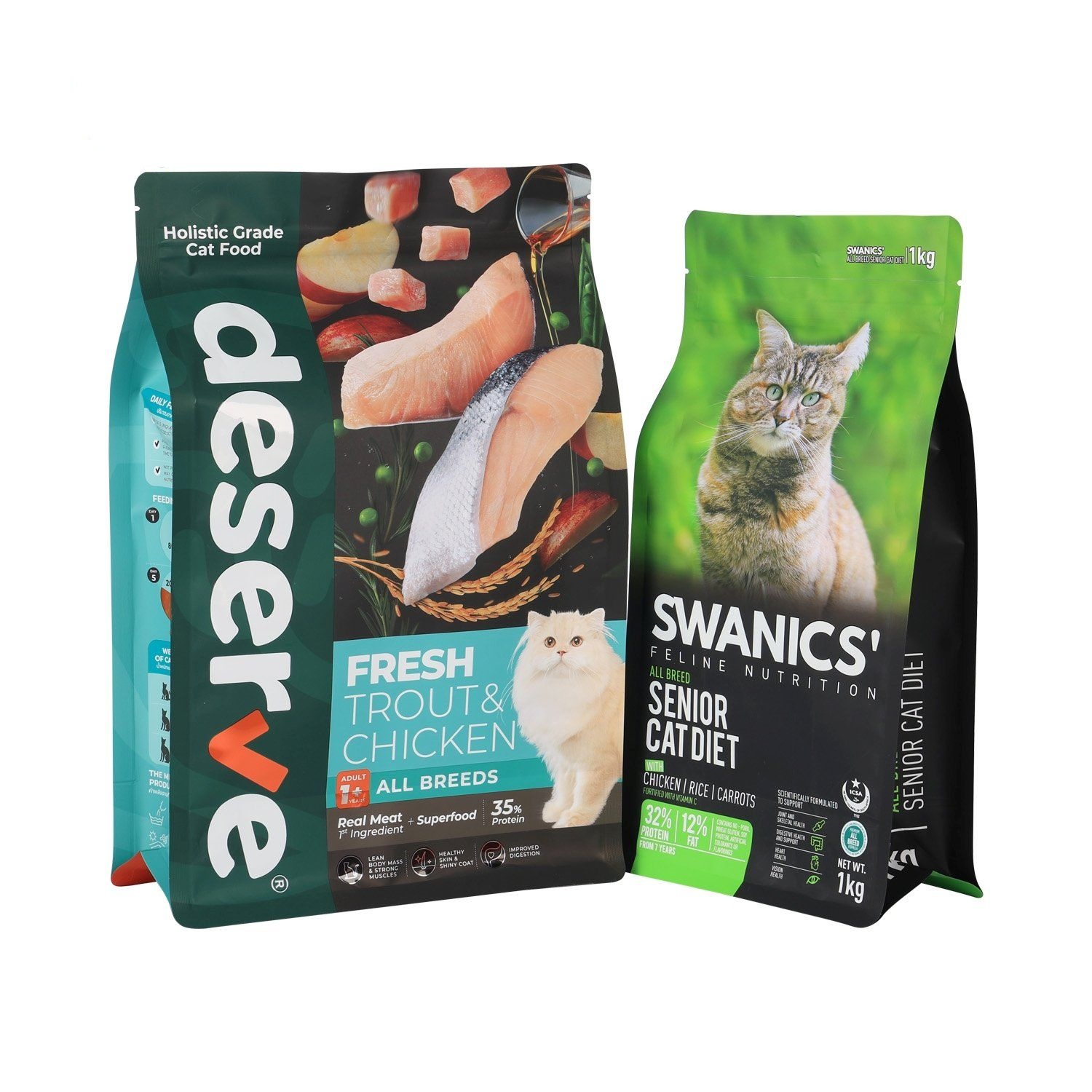
Physical durability determines whether your product survives the supply chain. You must subject the packaging to forces that exceed normal handling conditions. We use standardized testing methods to ensure repeatable and accurate results across different production batches.
Simulate real-world handling drops from conveyor belts, retail shelves, or consumer hands. This testing is critical for 1–5 kg Flat Bottom Bags due to their mass. The kinetic energy generated by a 5 kg bag dropping three feet will instantly rupture weak seals.
Fill the sample bags with the actual product to the target weight.
Condition the bags in the testing environment for 24 hours.
Drop the bags flat on the front face from a height of 36 inches.
Drop the bags directly on the bottom gusset to test the quad-seal intersections.
Drop the bags on the side seals to evaluate edge impact resistance.
Record the exact point of rupture to identify structural weak points.
Palletization places immense static weight on the bottom layers of a pallet. You must replicate this pressure in a controlled environment. We use compression testers to apply specific loads over designated timeframes.
Apply static weight to simulate warehouse stacking over extended periods.
Use pneumatic burst testing to identify the weakest seal point under internal pressure.
Document the exact PSI at which the bag loses hermetic integrity.
Evaluate the creep resistance of the seals under sustained load.
Measure the exact force required to separate the heat seals using the ASTM F88 standard. Evaluate the hot tack strength. This represents the strength of the seal immediately after heating. Hot tack strength remains critical for high-speed vertical form-fill-seal or pre-made pouch filling lines. If the hot tack is too low, the product weight will pull the bottom seal apart before it cools.
Implement precision thermocouple temperature sensors to map heat distribution across the sealing jaws. Identify and eliminate cold spots. These typically occur at the intersection of the gusset folds. The machine must seal through four layers of film instead of two in these transition zones. We adjust the jaw pressure and dwell time to compensate for the extra material thickness.
Test Type | Standard/Method | Primary Objective | Acceptable Threshold |
|---|---|---|---|
Drop Test | ASTM D5276 | Evaluate impact resistance on gussets and seals. | Zero ruptures at 36 inches |
Burst Test | Pneumatic Inflation | Identify weakest seal under internal pressure. | > 15 PSI hold for 30 seconds |
Tensile Seal Strength | ASTM F88 | Measure force required to separate heat seals. | > 45 N/15mm |
Thermal Profiling | Thermocouple Mapping | Eliminate cold spots in quad-seal transition zones. | +/- 2°C variance across jaw |
Compression Test | Static Load | Simulate pallet stacking weight. | No deformation at 200 lbs for 24h |
A bag that survives a drop test still fails if the product inside goes stale or rancid. Barrier testing ensures the film structure protects the contents throughout the intended shelf life. We measure the transmission rates of gases and vapors through the lamination.
Test the film's Oxygen Transmission Rate and Moisture Vapor Transmission Rate. Conduct these tests under specific temperature and humidity conditions relevant to your supply chain. A product shipped to a tropical climate requires different barrier properties than one sold in a dry region. We use specialized permeation analyzers to get precise readings down to the cubic centimeter.
Conduct accelerated aging tests by storing the actual product inside the bags at elevated temperatures. Monitor for delamination, discoloration, or degradation of the inner sealant layer. Essential oils, fats, and acidic components can aggressively attack substandard sealant films. We place the filled bags in environmental chambers set to 40°C and 75% relative humidity for 12 weeks.
For coffee or fermenting products, test the one-way degassing valves. Ensure they release internal pressure at the correct threshold. They must vent gas without allowing oxygen ingress. A faulty valve leads to ballooning bags or oxidized product. We test the opening and closing pressure of the valves using a flow meter and pressure gauge setup.
We also evaluate the adhesive used to attach the valve to the film. The adhesive must withstand the same environmental stresses as the film itself. If the adhesive fails, the valve detaches, destroying the hermetic seal. We perform pull tests on the valves after the accelerated aging process to verify adhesion strength.
Packaging must perform on the production floor. A bag that requires constant machine adjustments drains profitability through downtime and wasted material. We run extensive trials on the actual filling equipment to validate the physical specifications.
Measure the Coefficient of Friction of the bag's exterior. Bags with too much friction will jam in the magazine. Bags with too little friction will slide off conveyors. The surface finish directly impacts how the bags feed into automated equipment. We use a slip tester to measure both static and kinetic friction against metal and against another bag.
Determine the operational window for sealing the top of the bag after filling. A narrow temperature window increases the risk of burnt film. It also causes weak, unsealed patches during minor machine fluctuations. You need a forgiving sealant layer to maintain high line speeds. We test seals at 5-degree increments to find the optimal range.
Run a pilot batch of 1,000 to 5,000 units through the actual filling equipment. Monitor for issues with the bag opening cleanly. Verify suction cup compatibility. Watch how the product settles inside the flat bottom structure during the filling cycle. If the product bridges or clumps, it will contaminate the top seal area.
Load the magazine with the sample bags and check for feeding issues.
Engage the suction cups and verify the bags open fully without sticking.
Dispense the product and monitor the settling dynamics.
Observe the top sealing process for wrinkles or misalignments.
Inspect the final sealed bags for cosmetic defects or seal contamination.
Conduct case pack trials to solve the volumetric layout problem. Ensure filled Flat Bottom Bags pack tightly and efficiently into shipping master cartons. Prevent side-wall deformation or seal rupture during tight case packing. We calculate the exact dimensions required for the corrugated boxes to minimize wasted space while protecting the primary packaging.
Consumer experience and retail presentation drive repeat purchases. The physical bag must look flawless on the shelf and function perfectly in the consumer's kitchen. We evaluate the tactile and visual elements of the packaging.
Cycle-test the pocket zippers or standard press-to-close zippers for longevity. Ensure tear notches propagate cleanly across the top. Consumers should not require excessive force to open the bag. The tear must not travel diagonally into the product zone. We use tensile testers to measure the exact force required to open and close the zipper.
Fill the bags to the target weight and place them on a flat surface. Verify that the bottom gusset deploys fully. The bag must stand upright without leaning, tipping, or slouching. This preserves the premium box-like retail presentation that justifies the packaging format. We check the center of gravity to ensure the bag remains stable even when partially empty.
Subject the printed surfaces to rub testing using the Sutherland Rub Test. Ensure matte, gloss, or soft-touch finishes do not degrade during transit vibration. Use spectrophotometer color calibration to verify digital brand assets. Colors must print accurately across different light sources, including LED, fluorescent, and natural retail light. We also test the barcode readability on curved surfaces.
Usability Feature | Testing Method | Pass Criteria |
|---|---|---|
Tear Notch | Manual Propagation | Straight tear, no scissors required |
Zipper Retention | Cycle Testing | Functions after 50 open/close cycles |
Display Stability | Incline Plane Test | Remains upright at 15-degree tilt |
Scuff Resistance | Sutherland Rub Test | No ink transfer after 100 strokes |
Every packaging decision involves balancing performance against production realities. You must weigh the benefits of enhanced materials against their impact on your operational budget. We analyze the physical properties of the films to optimize the structure.
Thicker multi-layer laminations improve barrier and puncture resistance. However, they reduce filling line speeds due to longer heat-penetration times. You must find the exact thickness that provides safety without destroying line efficiency. We often test three different thickness profiles to find the sweet spot.
Transitioning to recyclable, compostable, or mono-material structures often alters seal strength, friction, and barrier properties. Sustainable materials behave differently under heat and pressure. Implementing eco-friendly films requires a complete reset of your thermal and mechanical testing protocols. PE-based mono-materials, for example, have a much narrower heat seal window than traditional PET/PE laminations.
Weigh the cost of custom tooling for unique dimensions against utilizing standard manufacturer sizes. Custom sizes optimize pallet configurations but carry longer lead times. We calculate the volumetric efficiency of standard sizes before recommending custom tooling.
Testing failures often stem from flawed methodologies rather than bad materials. You must control the testing environment to gather actionable data. We establish strict protocols to eliminate variables during the evaluation process.
Testing hand-made prototypes instead of machine-made samples guarantees inaccurate results. Always demand a short run of unprinted, machine-made sizing samples for physical testing. Approve the final mass-production run only after validating these machine-made units. Hand-sealing cannot replicate the pressure and dwell time of automated equipment.
Ignoring environmental variables during transit leads to unexpected blowouts. Include altitude testing in a vacuum chamber if the product will ship via air freight. High-elevation trucking routes also cause bags to expand and burst if not properly tested. We simulate pressure drops equivalent to 10,000 feet of elevation.
Misalignment between the packaging supplier and the co-packer causes severe production delays. Mandate a joint sign-off on bag specifications. Both the bag manufacturer and the filling facility must agree on friction levels, seal margins, zipper placement, and thermal settings. We facilitate technical meetings between all parties to ensure compatibility.
Request detailed material data sheets for all proposed film laminations to verify barrier properties.
Order 50 to 100 unprinted machine-made samples specifically for drop and burst testing.
Schedule a comprehensive pilot run with your co-packer to validate machinability and line speeds.
Establish clear, measurable success criteria for seal strength and friction coefficients before signing purchase orders.
A: For a comprehensive evaluation including drop, burst, barrier, and initial machinability testing, brands should request between 100 and 500 machine-made, unprinted samples. This quantity provides enough statistical data to identify consistent failure points.
A: Due to the high volume-to-weight ratio, drop testing and tensile seal strength testing are the most critical. You must specifically target the bottom gusset seals during drop tests to prevent catastrophic failure during heavy transit.
A: Physical and machinability testing can be completed in 1 to 2 weeks. However, accelerated aging and product compatibility testing typically require 4 to 12 weeks to yield accurate data regarding barrier degradation.
A: They feature four vertical seals and a complex folded bottom gusset. Where these seals intersect, the film layers multiply. This creates thick transition zones highly susceptible to micro-leaks if heat sealing pressure and temperature are not perfectly calibrated.
A: No. Hand-sealed prototypes do not accurately replicate the seal strength, stiffness, or Coefficient of Friction of bags produced on automated pouch-making machinery. Always use machine-made samples for line trials.
A: The ideal window depends entirely on your specific film lamination. However, a wider temperature variance tolerance is preferred. This prevents weak seals during minor machine temperature fluctuations on high-speed lines.

