
Views: 0 Author: Site Editor Publish Time: 2026-07-30 Origin: Site


Consumer expectations for extended product freshness often clash with the mechanical limitations of flexible packaging closures. When a premium product sits on the shelf, buyers expect the packaging to maintain peak quality long after the initial opening. However, premature packaging failure—specifically broken closures or compromised barrier integrity—directly degrades brand trust, increases product waste, and reduces repeat purchase rates for premium goods packaged in flat bottom bags.
Selecting the correct closure mechanism is not merely a cosmetic choice; it is a structural engineering decision. The zipper dictates how well the bag handles repeated use, how effectively it protects the contents, and how easily consumers interact with the product. This article analyzes how different zipper technologies dictate the functional lifespan, structural integrity, and overall reusability of these packaging formats, providing actionable insights for packaging engineers and procurement teams.
Reusability hinges on structural synergy: A zipper is only as effective as the bag's heat seals and gusset construction; poor integration leads to track separation and barrier failure.
Closure selection dictates product compatibility: Fine powders and high-fat products require specific zipper profiles (e.g., hook-and-loop or specialized powder-proof tracks) to prevent track clogging and seal degradation over time.
Stress distribution matters: Flat bottom bags handle mechanical stress differently than standard pouches; evaluating abrasion resistance and tear strength at the zipper's termination points is critical for multi-use applications.
Cost vs. Lifetime Value: Integrating premium closures (like slider or pocket zippers) increases unit costs but is mathematically justified for high-yield, slow-consumption products where prolonged freshness drives customer retention.
Successful multi-use packaging relies on maintaining specific performance metrics over time. The primary criteria include Oxygen Transmission Rate (OTR) maintenance, Moisture Vapor Transmission Rate (MVTR) stability, and mechanical open/close cycle limits. A high-quality closure must prevent oxygen and moisture ingress after repeated use. If the zipper fails to seal completely, the barrier properties of the bag film become irrelevant. Cycle limits determine how many times a consumer can open and close the bag before the tracks deform or the seal weakens.
To accurately measure reusability success, packaging engineers look at several distinct factors during the prototyping phase:
Initial seal integrity before the first opening.
Track retention force after 10, 20, and 50 open/close cycles.
Barrier degradation mapping around the zipper termination points.
Consumer ergonomic feedback regarding the force required to separate the tracks.
Adding a resealable feature increases production costs. Brands must determine the threshold where this investment becomes necessary. Rapid-consumption or single-use products do not require resealing features, allowing brands to optimize unit costs. However, for products consumed over weeks or months, a reliable zipper is essential for maintaining freshness and ensuring customer satisfaction. The cost of the zipper must align with the product's lifespan and retail positioning.
The five-panel structure of flat bottom bags interacts uniquely with top-mounted closures. The rigid base provides stability, which affects the user's handling and opening mechanics. When a consumer pulls the zipper apart, the force is distributed down the side gussets. The box-like structure requires the zipper to be integrated seamlessly into the top seal without compromising the bag's overall rigidity or creating weak points at the corners.
Structural Component | Function in Reusability | Common Failure Point |
|---|---|---|
Top Seal | Secures the zipper to the film | Delamination from poor heat bonding |
Side Gussets | Distributes opening force | Tearing at the zipper termination point |
Bottom Gusset | Provides rigid base stability | Puncture from sharp product edges |
Zipper Tracks | Creates the resealable barrier | Clogging from particulates or track deformation |
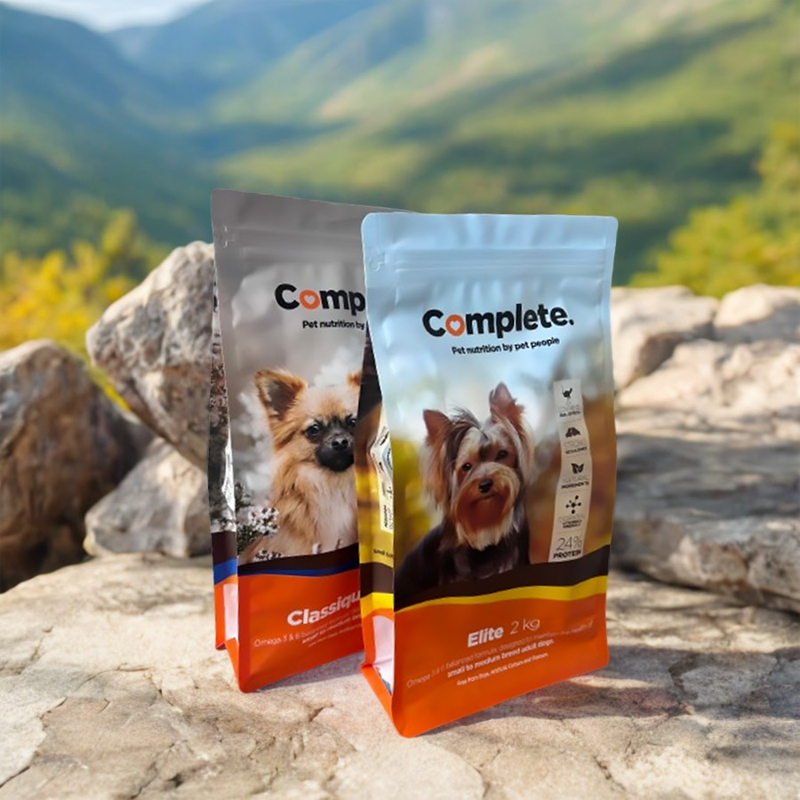
Standard interlocking plastic tracks form the basis of Press-to-Close (PTC) zippers. They are best suited for dry goods, snacks, and applications requiring medium-cycle reusability. While cost-effective, PTC zippers are susceptible to track misalignment. They also struggle with fine particulates, which can clog the tracks and prevent a secure seal. In field applications, PTC zippers require precise calibration on the filling line to ensure the tracks are not crushed during the top-sealing process.
Pocket zippers feature a concealed zipper behind a tear-away strip. This design allows for easy top-filling without zipper interference during the manufacturing process. They are ideal for coffee, pet food, and premium retail products requiring tamper evidence. The tear-away strip provides a clean opening experience, while the hidden zipper ensures reliable resealability. Because the zipper is protected during filling, the tracks remain free of product dust, ensuring a perfect initial seal.
Slider zippers utilize a plastic slider that forces the tracks together or apart. This system includes a bottom stop to impede complete separation and prevent derailment. Slider zippers are best for large-format packaging, bulky items, and demographics requiring high accessibility and ergonomics. The slider mechanism simplifies the opening and closing process, especially for larger, heavier bags holding 5 to 10 pounds of product.
Hook-and-loop closures use micro-hooks that engage without requiring precise alignment. They are highly effective for powders, such as protein or flour, where traditional tracks would fail due to clogging. The hook-and-loop design allows the closure to function even when contaminated with product dust, ensuring a consistent seal. This technology has revolutionized the packaging of fine particulates, drastically reducing consumer complaints about faulty zippers.
Non-zipper options include tin ties, adhesive tape/labels, and standard heat-seals. Tin ties offer basic mechanical closure but provide minimal barrier retention. Adhesive tapes degrade quickly with repeated use. Compared to zipper closures, these alternatives offer lower barrier retention and shorter mechanical lifespans, making them less suitable for premium multi-use applications.
The volumetric efficiency of Flat Bottom Bags surpasses traditional Stand Up Pouches with Zippers. The box-like structure provides superior shelf stability and maximizes interior volume relative to the shelf footprint. This design allows for better branding opportunities on all five panels while maintaining a secure, upright position. When comparing the two, a flat bottom design can often hold 15% more product in the same vertical footprint as a standard pouch.
The side gussets of flat bottom bags distribute opening force differently than the bottom-gusset design of stand up pouches. When opening a flat bottom bag, the stress is concentrated at the top corners where the gussets meet the zipper. Stand up pouches distribute this stress more evenly across the top seal. This difference requires precise engineering of the zipper termination points in flat bottom bags to prevent tearing.
Feature | Flat Bottom Bags | Stand Up Pouches with Zippers |
|---|---|---|
Base Structure | Flat, rigid five-panel design | Bottom gusset, two-panel design |
Shelf Stability | Excellent, resists tipping | Good, but can tip if top-heavy |
Zipper Stress Points | High stress at top gusset corners | Evenly distributed across top seal |
Volumetric Efficiency | High (box-like shape) | Moderate (tapered top) |
Flat bottom bags often require thicker laminate structures to maintain their shape. This added rigidity impacts the flexibility and sealing of the zipper area. The transition from the rigid bag body to the flexible zipper tracks must be carefully managed during manufacturing to ensure a strong, leak-proof seal without causing the film to crack or delaminate. Thicker films require higher heat and longer dwell times during the sealing process to ensure the zipper bonds correctly.
Repeated opening and closing causes micro-abrasions near the zipper ends. Evaluating abrasion resistance is critical for multi-use applications. High-stress points often require double-stitched areas or reinforced heat-seals and extra laminate layers to prevent premature failure. The structural integrity of the zipper termination points dictates the overall lifespan of the closure. If the film at the edge of the zipper track weakens, the entire bag will tear down the side seam.
Incorrect sealing execution, including improper temperature, pressure, or dwell time during manufacturing, leads to zipper failure. Faulty stitching on heavy-duty options can also compromise the closure. Bonding directly affects stress distribution and long-term durability. A weak bond between the zipper and the bag film will result in track separation under normal use. Packaging engineers must calibrate sealing jaws specifically for the thickness of the zipper flange and the bag film.
Repeated manipulation of the zipper area can compromise the foil or EVOH barrier layers, a phenomenon known as "flex cracking." The mechanical stress of opening the zipper can cause film delamination near the seal line. This degradation leads to premature product staling, negating the benefits of the high-barrier film used in the bag construction. To combat this, manufacturers often use specialized tie layers in the laminate to increase the bond strength between the barrier film and the sealant web.
Understanding how zippers fail in the field allows teams to engineer better solutions. The most frequent issues encountered include:
Track Separation: The zipper detaches from the bag film due to weak thermal bonding during manufacturing.
Side-Gusset Tearing: Excessive force required to open poorly calibrated PTC zippers causes the film to tear at the gussets.
Slider Derailment: Failure of the bottom stop or top termination points on slider zippers allows the slider to slip off, rendering the closure unusable.
Flange Curling: The edges of the zipper flange warp during heat sealing, creating micro-leaks.
Product compatibility directly impacts zipper performance. Oils and fats can degrade the zipper adhesive over time, leading to track separation. Fine powders can clog interlocking tracks, rendering standard PTC zippers useless. Selecting the correct closure profile based on the product's physical characteristics is essential for maintaining reusability. For example, roasted coffee beans release oils that can weaken standard polyethylene zipper flanges if not properly specified.
Procurement teams must implement rigorous QA tests to ensure field reliability. Recommended protocols include:
Burst testing to verify seal strength under pressure.
Drop testing to simulate handling stress and check for zipper pop-open.
Delamination testing to check film integrity around the heat seals.
Cycle testing to measure the force required to open and close the bag after 50 or more iterations.
Dye penetration testing to identify micro-leaks at the zipper termination points.
Integrating zippers increases unit costs. Standard PTC zippers offer a cost-effective resealable option. Premium slider or pocket zippers command a higher price due to complex manufacturing and material requirements. The cost delta between non-zippered bags and premium closures must be weighed against the expected return on investment. Brands must evaluate if the extended freshness provided by a premium zipper will translate into higher customer loyalty and repeat purchases.
Zipper selection affects filling line efficiency. Standard PTC zippers require specialized filling equipment to open, fill, and seal the bag. Pocket zippers, however, allow for seamless open-top filling, as the zipper remains concealed during the process. This can reduce filling time and equipment costs, offsetting the higher unit price of the pocket zipper. Slider zippers often require slower line speeds to ensure the slider mechanism is not damaged during the top-sealing phase.
A clear decision matrix helps buyers align closure costs with product value. High-margin, slow-consumption goods justify premium zippers, as prolonged freshness drives customer retention. Low-margin, fast-consumption goods should default to standard PTC or no zipper, optimizing unit costs without sacrificing necessary functionality. The goal is to match the mechanical lifespan of the zipper with the expected consumption timeline of the product.
The reusability of flexible packaging depends entirely on matching the correct zipper technology to the product's physical characteristics and the consumer's usage habits. Selecting the wrong closure leads to premature failure, product waste, and brand damage.
Request physical samples of different zipper profiles to evaluate tactile performance and track retention force.
Conduct cycle testing with the actual product payload to simulate real-world usage and identify clogging risks.
Check the integrity of bottom stops and end-seals under stress using burst and drop testing.
Verify the manufacturer's heat-seal tolerances and dwell times before committing to a full production run.
A: No. Flat bottom bags can be manufactured with open tops for heat sealing (single-use), tin ties, or various integrated zipper options depending on the required shelf life and reusability.
A: Failures typically stem from poor heat-seal or stitching execution during manufacturing, track clogging from product particulates, or excessive mechanical stress tearing the film at the zipper's termination points.
A: A bottom stop is employed on closed-end zipper systems to impede the complete separation of the two tracks and halt the slider's movement at the base, preventing derailment.
A: Hook-and-loop (Velcro-style) closures or specialized powder-proof tracks are optimal, as standard press-to-close zippers easily clog with fine particulates, preventing a secure seal.
A: A pocket zipper is built into the front panel of the bag and hidden behind a tear-away strip. This allows the bag to be filled from the top without the zipper tracks interfering with the filling machinery.
A: Structurally, flat bottom bags utilize a five-panel design and a flat base, offering superior stability and often utilizing thicker laminates, which can translate to higher overall durability and abrasion resistance compared to standard stand up pouches.
A: No. Once the heat seal bonding the zipper to the bag film fails, or the tracks permanently deform, the barrier integrity is compromised and cannot be repaired by the end-user.

