
Views: 0 Author: Site Editor Publish Time: 2026-08-07 Origin: Site


In a saturated specialty coffee market, packaging serves as the primary physical touchpoint and immediate indicator of product quality before the consumer ever tastes the roast. Roasters struggle to balance aesthetic differentiation, structural integrity on retail shelves, and strict barrier requirements for freshness preservation. Standard pouches often warp, tip over, or lack the printable surface area needed for modern compliance and brand storytelling. Transitioning to quad seal bags offers a structural and visual upgrade, providing a rigid, multi-panel canvas that signals premium positioning while meeting the rigorous technical demands of coffee preservation. We see many brands fail simply because their packaging looks cheap and unstable on the shelf. Upgrading your pouch structure solves this immediately, giving your product the physical presence required to compete in high-end retail environments.
Five-Panel Branding: Quad seal architecture eliminates the traditional back-center seal, providing five uninterrupted panels for origin storytelling, roast data, and compliance information.
Structural Integrity & Transit Durability: Reinforced four-corner seals prevent shape distortion, ensuring the product stands vertically and uniformly during shipping, rough transit, and retail display.
Technical Compatibility: Easily integrates with one-way degassing valves and high-barrier laminates required to halt oxygen ingress, block UV light, and manage CO2 off-gassing.
Implementation Trade-offs: Upgrading to this format requires auditing current filling equipment compatibility and weighing slightly higher per-unit packaging costs against increased perceived retail value.
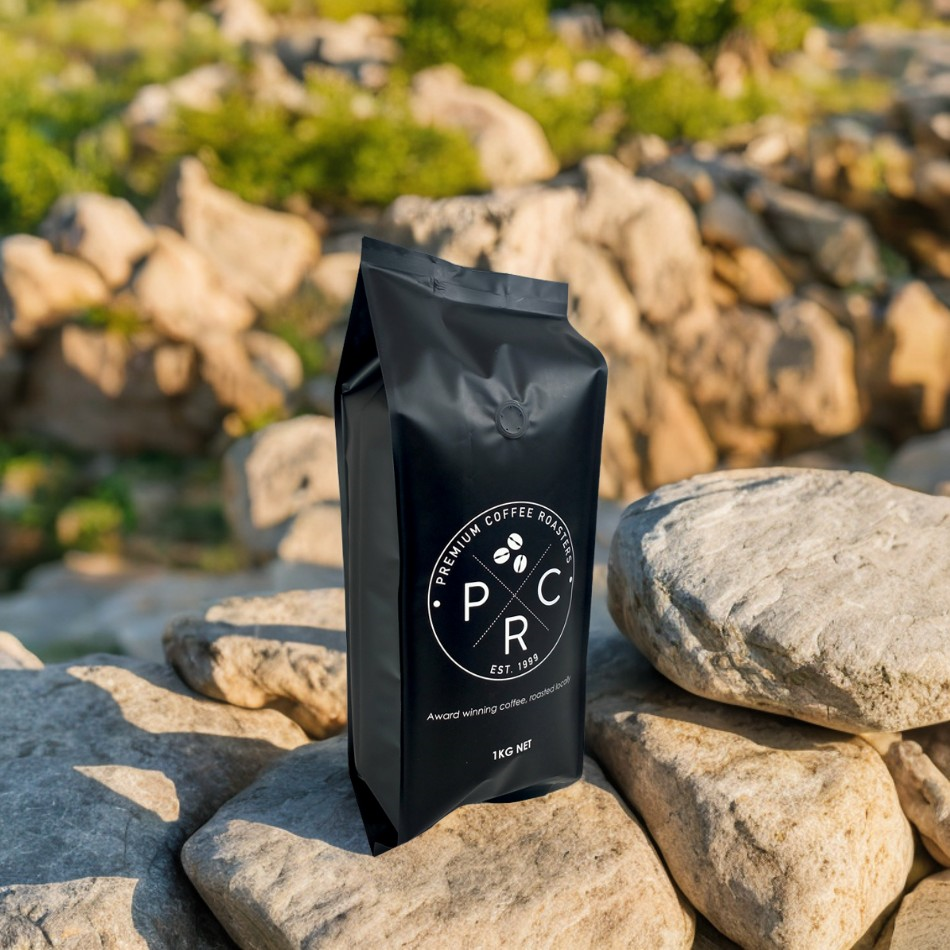
The mechanics of the four-sided seal design combined with deep side gussets create a highly robust container. By sealing all four vertical corners of the pouch, the packaging gains significant vertical column strength. This structural reinforcement at all four corners creates a rigid, brick-like shape once filled with coffee beans or grounds. The fold-over or sealed bottom mechanics reinforce weight distribution to prevent bottom sagging, a common issue with cheaper packaging formats. When coffee settles inside the bag, the outward pressure pushes against the gussets, but the four corner seals hold the shape firm. This design provides superior weight distribution and stability against standard pillow pouches and traditional stand-up pouches (Doypacks), which tend to bulge in the middle and tip over on wire retail racks.
To understand the physical differences on the packing line and the retail shelf, we must look at how these bags handle the physical load of dense products like coffee. A standard Doypack relies entirely on a single bottom gusset to hold the bag upright. If the coffee settles unevenly, the bag leans. The quad seal format forces the product into a vertical column. This makes a massive difference when you are packing cases for freight. The brick-like shape allows for tighter packing in corrugated shippers, reducing the amount of dead air in the box and preventing the bags from crushing each other during transit.
Packaging Format | Structural Stability | Printable Panels | Shelf Footprint |
|---|---|---|---|
Standard Pillow Pouch | Poor (Requires outer carton) | 2 (Front, Back) | Lays flat, poor display |
Stand-Up Pouch (Doypack) | Moderate (Prone to bulging) | 2 (Front, Back) | Wide base, takes up horizontal space |
Quad Seal Bag | Excellent (Brick-like rigidity) | 5 (Front, Back, 2 Sides, Bottom) | Compact vertical footprint |
There is a distinct technical difference on the manufacturing floor between these two formats. Quad seal bags typically feature a fold-over or sealed bottom, whereas true Flat Bottom Coffee Bags feature a completely flat, separate bottom gusset glued or sealed into the base. Retail shelving use cases vary for each. If your retail partners use wire racks, a flat bottom bag might sit slightly better, but a well-filled quad seal bag performs exceptionally well on solid shelving. Manufacturing differences impact minimum order quantities, tooling costs, and production lead times. Flat bottom bags require specialized pouch-making machines that insert that separate bottom piece, which generally increases the minimum order quantity and the lead time. Quad seal formats can often be run on modified vertical form fill seal machines, making them slightly more accessible for mid-sized roasting operations.
When choosing between the two, you have to look at your filling operation. If you are hand-filling, flat bottom bags stand wide open on the table. Quad seal bags might need a slight tap to open the base fully before the coffee drops in. However, once sealed, both offer that premium, squared-off look that specialty coffee consumers expect.
Eliminating the back-center fin seal provides a massive aesthetic benefit. On a standard pillow pouch, the back panel is split down the middle by a thick seal, forcing designers to cram text into two narrow columns. Continuous artwork across the front and back panels allows for cleaner typography, larger logos, and unobstructed regulatory, nutritional, or organic certification information. You get a clean canvas. This is where you put your high-impact graphics. When a consumer picks up the bag and turns it over, they aren't met with an ugly plastic seam; they see a continuation of your brand's visual identity.
This uninterrupted space is critical for compliance labeling as well. Depending on your market, you may need to include fair trade logos, organic certifications, roasting dates, and detailed weight information. Having a full, flat back panel means you don't have to shrink these mandatory elements down to unreadable sizes just to dodge a center seal.
Strategies for utilizing the side gussets include high-value copy like precise roast profiles, grind recommendations, harvest dates, and farm-to-cup origin stories. Because the bag stands tall and square, these side panels are highly visible even when bags are packed tightly together on a shelf. Color-blocking, pattern continuity, or matte/gloss contrasts across gussets create a premium, 360-degree visual identity that stands out on crowded grocery shelves.
Dedicate the left gusset to technical roast data: altitude, varietal, processing method, and tasting notes.
Dedicate the right gusset to the farm origin story or your roasting philosophy.
Use a contrasting finish—like a high-gloss side gusset against a soft-touch matte front panel—to create tactile interest when the customer picks up the bag.
Degassing valves are a non-negotiable requirement for freshly roasted coffee to release CO2 without allowing oxygen ingress. Freshly roasted beans release significant amounts of carbon dioxide for days after roasting. Without a valve, the bag will inflate like a balloon and eventually rupture the seals. Valve placement strategies on Quad Seal Bags require careful planning. Placing the valve on the front panel is standard, but hiding it in the side gusset maintains aesthetic integrity without compromising functionality or automated packing efficiency. If you hide it in the gusset, you must ensure your filling equipment's valve applicator can reach that specific zone without slowing down the line speed.
Standard material structures include foil laminates, metalized PET (VMPET), and emerging high-barrier recyclable mono-materials (PE/PE). Light and UV barriers, alongside Oxygen Transmission Rate (OTR) and Water Vapor Transmission Rate (WVTR) specifications, prevent oil oxidation and flavor degradation. Coffee oils go rancid quickly when exposed to oxygen and UV light. A standard clear plastic bag will ruin specialty coffee in a matter of days. You need a multi-layer structure.
Balancing corporate sustainability goals with strict shelf-life requirements requires a structured decision framework. Foil provides the absolute best barrier but is impossible to recycle. VMPET offers a great middle ground, providing excellent barrier properties while being slightly lighter. Mono-material PE structures are the future for recyclable packaging, but you must verify their OTR numbers with your packaging supplier to ensure they meet your specific shelf-life targets.
Integration of closure systems suitable for quad seal formats is a major factor in user experience. The user experience and freshness retention of pocket zippers (front-pull zippers) versus traditional tin ties and adhesive tape closures differ significantly. Tin ties are cheap and easy to apply, but they do not provide an airtight seal once the bag is opened. Pocket zippers are built directly into the front panel of the bag, allowing the user to tear off the top header and use a plastic zipper to reseal the pouch tightly.
Tear notches and cross-seal integrity at the bag's header prevent tearing failures and channel leaks at the corner intersections. Because a quad seal bag has four layers of film coming together at the top corners, the sealing jaws on your equipment must apply enough pressure and heat to melt all layers together without scorching the outer film. If the cross-seal is weak, oxygen will leak in through the corners.
The primary operational risk is assessing whether current automated vertical form fill seal (VFFS) machines or semi-automatic volumetric fillers can handle quad seal formats. Tooling adjustments, specialized sealing jaws, or gusset tuckers are required to transition from standard pouches. If you are currently running standard pillow bags on a VFFS machine, you cannot simply switch to a quad seal roll stock without buying a new forming tube and adding gusset tucking mechanisms. The machine needs to physically punch the gussets inward before the horizontal sealing jaws clamp down.
For semi-automatic operations where operators hold the bag under a filler, the transition is easier, but you still need a heavy-duty band sealer capable of melting through the thick four-corner folds at the top of the bag. Standard tabletop impulse sealers will often fail to create a hermetic seal on these thicker bags.
The structured, uniform shape of filled quad seal bags improves palletization and space utilization. This leads to a reduction in transit damage, pouch bursting, and wasted shipping volume compared to the irregular shapes of standard stand-up pouches. When you pack Doypacks into a master carton, their wide bottoms and narrow tops create awkward, unstable layers. Quad seal bags pack like bricks. You can fit more units per carton and more cartons per pallet.
Structural performance under transport vibrations and atmospheric pressure changes during shipping is also enhanced. The four corner seals act like a roll cage for the coffee inside. If a box is dropped, the impact is distributed along the rigid vertical seals rather than blowing out a weak bottom gusset.
The higher per-unit cost of quad seal manufacturing requires a realistic breakdown. You are paying for more complex pouch-making machinery time and slightly more material due to the deep gussets and corner seals. The ROI evaluation involves weighing packaging expenditure against the potential for higher retail price points, increased shelf velocity, and improved brand equity in the premium tier. If moving to a quad seal format allows you to position your coffee alongside top-tier specialty roasters, the slight increase in packaging cost is easily absorbed by the premium positioning.
Audit your current filling hardware with packaging engineers to determine if your sealing jaws can handle four-layer corner seals.
Request physical material samples of different barrier structures (Foil, VMPET, PE/PE) to test against your specific shelf-life requirements.
Conduct valve placement testing to ensure the degassing valve does not interfere with your front panel artwork or automated filling lines.
Evaluate your master carton dimensions to take advantage of the brick-like shape for optimized palletization and shipping density.
A: Yes, quad seal bags generally cost more due to the complex manufacturing process and additional material required for the four corner seals. The specialized machinery needed to form and seal the four vertical edges runs slower than standard pouch machines, increasing production time and overall unit cost.
A: Yes, many manufacturers now offer quad seal bags using high-barrier recyclable mono-materials or compostable films. However, you must verify that these eco-friendly materials meet the strict Oxygen Transmission Rate requirements needed to keep specialty coffee fresh.
A: Unlike flat bottom bags, quad seal bags often require support during the filling process until the product weight provides stability. Operators or automated baggers must ensure the bottom gusset is fully pushed out before the coffee drops into the pouch.
A: Ensuring cross-seal integrity at the header and using specialized sealing jaws during manufacturing prevents channel leaks at corner intersections. The sealing equipment must apply precise heat and pressure to melt all four layers of film together without burning the exterior.
A: Quad seal bags have a fold-over or sealed bottom, while flat bottom bags feature a completely flat, separate bottom gusset glued into the base. This structural difference affects how the bag stands on wire retail racks and changes the manufacturing process.
A: Valves can be placed on the front panel or hidden in the side gusset, depending on aesthetic preferences and packing efficiency. Hiding the valve in the gusset keeps the front panel clean for branding but requires precise alignment on the filling line.
A: Pocket zippers, traditional tin ties, and adhesive tape closures are common, with pocket zippers offering superior resealability and freshness retention. Pocket zippers are built into the front panel, allowing the user to tear the top and seal the bag tightly.

