
Views: 0 Author: Site Editor Publish Time: 2026-08-16 Origin: Site


Regulatory pressures and consumer demand are forcing manufacturers to audit their packaging supply chains for excess waste, but reducing material often risks compromising product protection and shelf life. Traditional packaging formats—specifically bag-in-box designs or standard stand-up pouches—frequently rely on redundant secondary packaging, suboptimal volume-to-weight ratios, and multi-layer laminates that complicate end-of-life recycling. Transitioning to flat bottom bags offers a structural alternative. This analysis evaluates how the specific geometry and material composition of these bags eliminate secondary packaging, optimize freight density, and support the integration of recyclable materials. By removing the outer cardboard shell and utilizing advanced polymer blends, packaging engineers can significantly reduce the total weight of materials entering the waste stream while maintaining the barrier properties required for long-term product preservation.
Secondary Packaging Elimination: The rigid, gusseted structure of flat bottom bags removes the need for external cardboard cartons, directly reducing total packaging weight and material usage.
Supply Chain Efficiency: A square footprint maximizes pallet density and shelf space, lowering the carbon footprint associated with shipping and warehouse storage.
Material Downgauging: Advanced film technologies allow for thinner gauges that maintain puncture resistance, minimizing the volume of plastic required per unit.
Recyclability Integration: Flat bottom designs are increasingly compatible with mono-material structures, making them a viable option for highly regulated sectors requiring recyclable pet food packaging or food-grade barriers.
Extended Product Lifespan: Integrated resealability options reduce food and product spoilage, mitigating consumer-side waste and decreasing reliance on single-use secondary storage.
The traditional approach of using a flexible inner liner housed within a rigid cardboard exterior generates massive inefficiencies on the production line and at the end of the product lifecycle. This method creates dual waste streams: the outer cardboard shell and the non-recyclable inner plastic film. Consumers are forced to separate these materials, which rarely happens in practice, leading to higher landfill diversion rates. The cardboard adds unnecessary weight and bulk to every shipment, while the inner liner, often constructed from complex multi-layer laminates, resists standard recycling processes. This dual-component system requires manufacturers to source, transport, and assemble multiple packaging components, driving up material consumption and operational complexity.
The five-panel design of a flat bottom pouch mimics the stability of a rigid box without the added bulk. It features a front panel, a back panel, two side gussets, and a completely flat base. This geometry allows the package to stand perfectly upright on retail shelves. The structural mechanics rely on the weight of the product inside acting as the stabilizing force. As the bag fills, the flat base pushes outward, creating a solid foundation that renders the outer cardboard shell obsolete. Comparing the total packaging weight of a traditional bag-in-box against a single flat bottom pouch holding the exact same product volume reveals a drastic reduction in raw material usage.
Packaging Metric | Traditional Bag-in-Box | Flat Bottom Pouch |
|---|---|---|
Material Components | Cardboard outer, plastic inner liner | Single flexible structure |
Waste Streams Generated | Two (Cardboard recycling, plastic landfill) | One (Potentially recyclable plastic) |
Structural Support | External rigid box | Internal product weight and flat base |
Overall Packaging Weight | High (due to heavy cardboard) | Low (flexible film only) |
Integrating advanced closure systems transforms flexible packaging into reusable storage containers. Modern pouches utilize press-to-close zippers, pocket zippers, and hook-to-hook closures to provide an airtight seal after the initial opening. Built-in resealability extends product shelf life and prevents premature spoilage of bulk goods like coffee, snacks, and dry ingredients. Oxygen and moisture are kept out, maintaining product freshness for longer periods. This inherent reusability eliminates consumer reliance on secondary storage accessories. Shoppers no longer need to transfer products into rigid plastic tubs or use disposable storage bags to keep the original packaging closed. By keeping the product in its original container, brands reduce the overall volume of household plastic waste.
Flexible packaging must maximize internal volume while minimizing external material. The side gussets on a flat bottom pouch expand significantly during the filling process, allowing the pouch to hold up to 30% more product volume compared to standard stand-up pouches of the exact same height and width. The square bottom provides a larger internal cavity without increasing the overall footprint of the bag. This structural efficiency drastically improves the volume-to-weight ratio. Manufacturers use less raw plastic to enclose a larger amount of goods, reducing the overall environmental impact of the packaging lifecycle.
Downgauging involves reducing the gauge thickness of the film without sacrificing structural integrity. Historically, thinner films meant weaker bags prone to tearing. Today, advanced polymer blends allow manufacturers to use less raw plastic while maintaining high burst strength. These engineered materials perform exceptionally well in drop-test evaluations. The multi-layered extrusion of advanced polymers creates a tough, puncture-resistant barrier that ensures the product remains protected during transit and handling. Downgauging directly reduces the volume of plastic entering the waste stream while maintaining strict performance standards.
Analyze current film thickness and identify opportunities for gauge reduction.
Test advanced polymer blends for puncture resistance and burst strength.
Conduct drop-test evaluations to ensure structural integrity during transit.
Implement downgauged films on the production line and monitor performance.
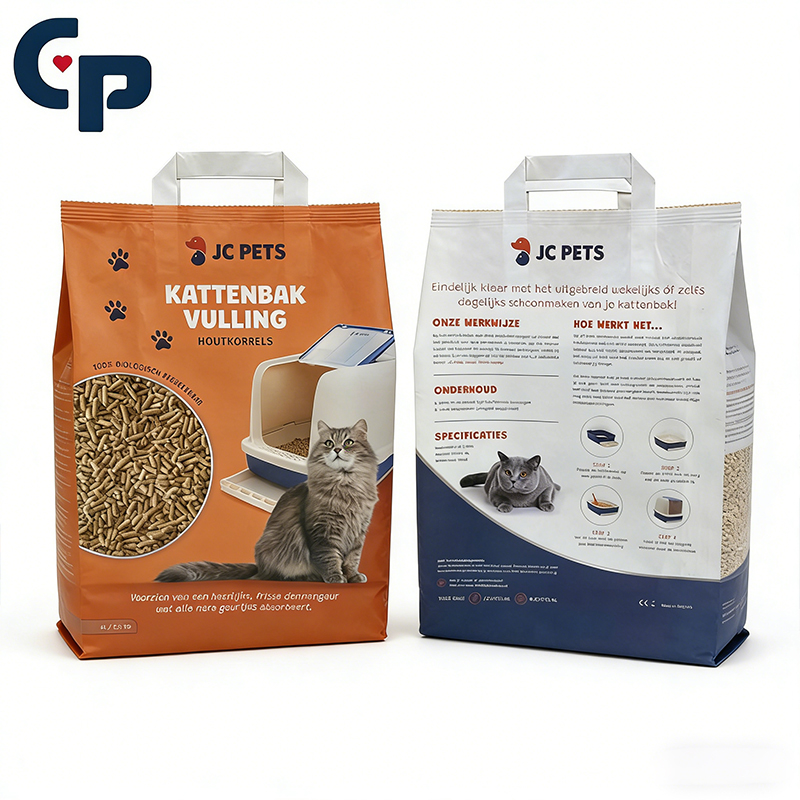
The uniform, brick-like shape of filled flat bottom pouches revolutionizes pallet configuration. Traditional pillow pouches create irregular shapes that do not stack well, leading to dead space and air gaps inside secondary shipping cartons. The flat base and square edges of a box pouch eliminate this wasted space. Cartons can be packed tighter, and pallets can be stacked more efficiently. This geometric advantage yields measurable improvements in logistics. Fitting more units onto a single pallet directly reduces the number of pallets required for a shipment, leading to a subsequent reduction in freight trips.
Logistics Metric | Standard Stand-Up Pouch | Flat Bottom Pouch |
|---|---|---|
Pallet Utilization | 70-80% (Irregular stacking) | 95%+ (Brick-like stacking) |
Dead Space in Cartons | High (Air gaps between pouches) | Low (Uniform fit) |
Units Per Pallet | Baseline | Up to 20% Increase |
Pallet density connects directly to Scope 3 emissions reductions. Transporting air and dead space is a massive source of supply chain waste. By maximizing the number of units per truckload, companies reduce the total number of vehicles on the road. Fewer trucks mean lower greenhouse gas emissions associated with product distribution. Furthermore, the lighter overall packaging reduces the gross weight of each shipment. Eliminating heavy cardboard boxes means the transport vehicles burn less fuel. Lighter loads require less energy to move, shrinking a brand's carbon footprint.
Retail environments demand efficient use of available space. The upright stability and flat base of these pouches prevent product toppling. Standard pouches often slump or fall over, creating a messy display and wasting vertical space. The rigid structure of a box pouch ensures it stands perfectly straight on the shelf. This stability allows retailers to stock more units per linear foot. The uniform shape makes facing and organizing products much easier and reduces the need for excess merchandising materials, such as custom display trays or rigid shelf dividers.
Flexible packaging has historically relied on mixed-material laminates combining PET, aluminum foil, and polyethylene to provide excellent oxygen and moisture barriers. These barriers are essential for preserving sensitive products. However, these mixed materials are notoriously difficult to recycle. Separation of the distinct layers is practically impossible in standard municipal recycling facilities. Consequently, these multi-layer laminates typically end up in landfills or incinerators, contributing heavily to global plastic waste.
The industry is rapidly shifting toward mono-material structures. Engineers are developing pouches made entirely of PE/PE or PP/PP laminates. These mono-material designs retain the rigidity required for the flat bottom format and meet Store Drop-Off or curbside recycling standards. Because the entire bag consists of a single polymer family, it can be melted down and repurposed without complex separation processes. This innovation is particularly vital for highly regulated applications. For example, creating Recyclable Pet Food Packaging requires maintaining strict grease and odor barriers. Advanced mono-material films now achieve these barrier properties.
Exploring compostable or biodegradable films presents another avenue for waste reduction. Materials such as Polylactic Acid (PLA), Polyhydroxyalkanoates (PHA), or certified paper-based laminates offer a departure from traditional fossil-fuel plastics. They can be engineered into flexible packaging formats, including box pouches. However, biodegradable films often struggle to match the barrier performance of conventional plastics. Shelf-life limitations are a real concern for moisture-sensitive goods. Proper disposal requires access to industrial composting infrastructure. If placed in a standard landfill, these materials may not degrade as intended.
Incorporating Post-Consumer Recycled (PCR) plastics into the packaging structure reduces reliance on virgin fossil fuels. Manufacturers can extrude PCR resins into the middle layers of the bag structure, sandwiching the recycled material between layers of virgin plastic. It provides a practical way to reuse existing plastic waste while maintaining the structural integrity of the pouch. Strict compliance requirements govern the use of PCR in food-contact applications. The inner layer touching the product must typically remain virgin material to ensure safety and prevent contamination.
A major hurdle in flexible packaging recycling is stream contamination. Product residue left inside the bag can ruin a batch of recycled plastic. Oils and fats found in pet food and roasted coffee are particularly problematic. If a pouch is heavily soiled, recycling facilities will often reject it, sending it to the landfill instead. Packaging design solutions can mitigate this risk. Easy-rinse inner liners and clean-release materials help consumers empty the bag completely. Clear instructions on the packaging must encourage proper washing and drying before disposal.
Transitioning packaging formats introduces primary implementation risks. Flat Bottom Bags often require specific filling equipment. Standard form-fill-seal (FFS) machinery designed for pillow pouches may not handle the complex gussets and flat bases. Modifications to existing lines are frequently necessary to ensure smooth operation and proper sealing. Manufacturers must choose between purchasing pre-made pouches versus running rollstock. Pre-made pouches require less complex filling machinery but involve different handling processes. Rollstock requires advanced, specialized FFS equipment capable of forming the five-panel structure on the fly.
The per-unit cost of an empty flat bottom pouch may be higher than a standard pillow pouch. The complex manufacturing process and advanced film structures require a larger initial material investment. Procurement teams must acknowledge this reality when evaluating new packaging formats. However, this initial investment must be weighed against long-term waste reduction and operational savings. The higher unit cost is frequently offset by the complete elimination of outer cardboard cartons. Reduced freight expenses, driven by improved pallet density, further balance the equation. Lower waste disposal fees and improved supply chain efficiency make the transition highly advantageous over the long term.
Request material samples from packaging suppliers to evaluate structural rigidity and film thickness.
Conduct a comprehensive pallet-density audit with your logistics provider to calculate potential freight reductions.
Test mono-material barrier films with your specific product to ensure compatibility and shelf-life requirements are met.
Evaluate your current filling equipment to determine the necessary modifications for handling five-panel pouch designs.
A: It depends on the material structure. Traditional multi-layer bags combining PET, aluminum, and PE are generally not recyclable. However, modern mono-material designs made entirely of PE or PP are recyclable and often qualify for Store Drop-Off programs.
A: A flat bottom pouch eliminates the outer cardboard carton entirely. This consolidation reduces the total packaging weight significantly, often cutting material usage by more than half compared to a dual-component bag-in-box system.
A: Yes. The flat base and reinforced side gussets provide excellent structural integrity. They are highly suitable for heavy weights ranging from 1kg to over 15kg, making them ideal for bulk goods and pet nutrition products.
A: Downgauging is the process of utilizing advanced polymer blends to create thinner packaging films. This reduces the total volume of plastic used while maintaining the necessary puncture resistance and burst strength required for product protection.
A: Transitioning from standard pillow pouches to flat bottom formats often requires equipment modifications. Standard form-fill-seal machinery may need upgrades to handle the complex gussets, or manufacturers may need to switch to equipment designed for pre-made pouches.
A: Their uniform, square geometry eliminates dead space inside shipping cartons. This maximizes pallet density, allowing more units per truckload. Transporting more product per trip directly reduces fuel consumption and associated freight emissions.

