
Views: 0 Author: Site Editor Publish Time: 2026-08-01 Origin: Site


Roasted coffee is exceptionally fragile. The moment beans leave the roaster, they begin releasing volatile organic compounds (VOCs) that define their unique aroma and flavor profile. Simultaneously, exposure to oxygen initiates lipid oxidation, rapidly degrading freshness and introducing stale, rancid notes. For roasters, preserving this delicate chemistry from the production line to the consumer's cup is a constant operational challenge.
The logistical realities of coffee distribution complicate this preservation effort. Fluctuating temperatures during transit, physical compression on pallets, high-altitude air freight, and extended warehousing all accelerate staling and threaten the structural integrity of the packaging. When packaging fails, the final cup profile is compromised, damaging brand reputation.
Engineered packaging solutions are required to mitigate these risks. flat bottom bags have emerged as a premier choice, designed to balance structural integrity, advanced barrier protection, and automated filling efficiency. They provide commercial and specialty roasters with a reliable defense mechanism against the harsh realities of the supply chain.
Barrier Defense: Multi-layered laminates in flat bottom bags drastically reduce Oxygen Transmission Rates (OTR) and Water Vapor Transmission Rates (WVTR), preventing lipid oxidation.
Structural Integrity: The box-like design prevents physical crushing of beans during palletization and transit, preserving bean integrity better than standard pouches.
Controlled Degassing: Integrated one-way valves allow CO2 to escape without permitting ambient oxygen to enter, crucial for freshly roasted batches.
Operational Scalability: Flat bottom designs offer superior stability on automated filling lines and maximize cubic space efficiency during shipping.
Coffee beans undergo a complex chemical breakdown post-roast. The primary threats are oxygen, moisture, and UV light. When exposed to oxygen, the lipids and oils within the coffee beans oxidize, leading to rancidity and the loss of delicate floral or fruity notes. Moisture ingress causes the beans to absorb water, diluting flavor compounds and potentially encouraging mold growth in humid warehouse environments. UV light accelerates photo-oxidation, further degrading the aromatic oils. Protecting against these elements requires a multi-layered approach to packaging.
Degradation Factor | Chemical/Physical Effect | Impact on Cup Profile |
|---|---|---|
Oxygen (O2) | Lipid oxidation, breakdown of VOCs | Stale, cardboard-like, rancid flavors |
Moisture (H2O) | Hygroscopic absorption, structural softening | Muted acidity, flat body, potential mold |
UV Light | Photo-oxidation of surface oils | Harsh, bitter, and metallic notes |
Temperature Swings | Condensation inside packaging | Accelerated staling, localized moisture damage |
Freshly roasted coffee releases significant amounts of carbon dioxide (CO2). A single kilogram of dark roast coffee can release up to 10 liters of CO2 over several weeks. This off-gassing process is necessary, but it presents a packaging paradox. If the CO2 is trapped inside a completely sealed bag, the internal pressure will build until the packaging ruptures or the seals fail. Conversely, if the bag is simply vented or left open, ambient oxygen easily enters, immediately staling the coffee. Effective packaging must manage this gas exchange precisely, allowing pressure to vent without compromising the oxygen barrier.
The journey from roastery to retail shelf involves severe environmental variables. Freight transport often subjects coffee to extreme temperature swings. A shipping container sitting in a port can reach internal temperatures exceeding 120°F, which can cause condensation inside inadequate packaging when temperatures drop at night. Warehouses may have high humidity levels, testing the moisture barrier of the bags over extended storage periods. Furthermore, barometric pressure changes during air freight or high-altitude transport over mountain passes can stress seals and valves, risking sudden oxygen exposure if the packaging components are not rated for such pressure differentials.
Palletization and Loading: Bags are subjected to vertical compression forces as cartons are stacked.
Overland Freight: Vibrations from trucks cause abrasion between bags and can settle the product, altering the center of gravity.
Maritime Shipping: Prolonged exposure to high humidity and salt air requires exceptional WVTR barriers.
Air Freight: Rapid drops in atmospheric pressure test the burst strength of the bag and the venting capacity of the valve.
Warehousing: Long-term storage demands sustained barrier performance against ambient oxygen and light.
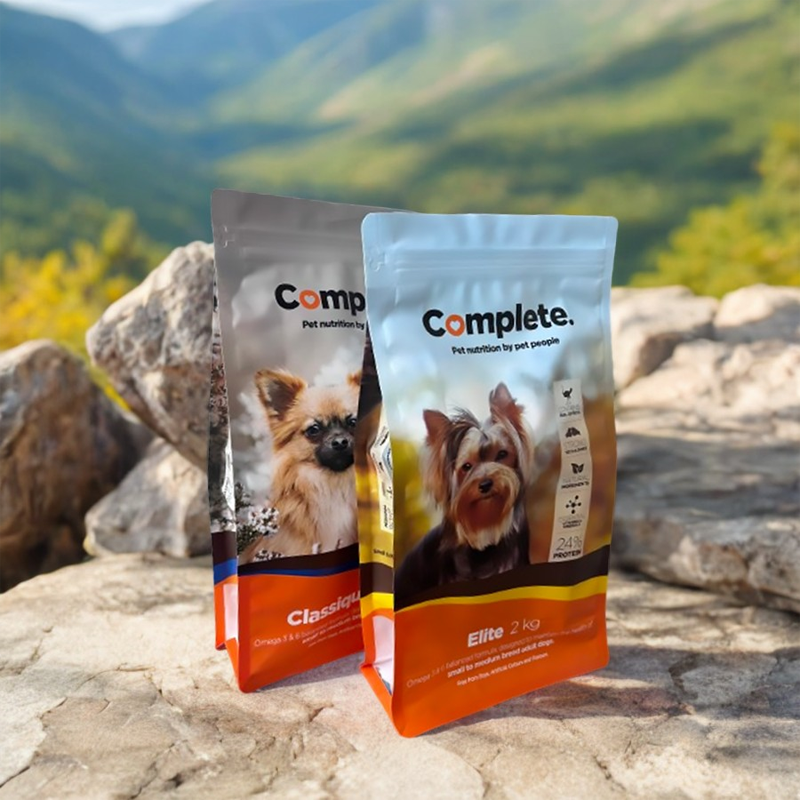
The flat, reinforced base of these bags creates a rigid structure that mimics a box. This stability ensures the bags stand upright securely, both on retail shelves and during transit. This shape optimizes secondary packaging, allowing bags to fit snugly into corrugated master cartons with minimal dead space. Efficient carton packing translates directly to optimized pallet stacking. When bags do not bulge or shift, the cartons maintain their structural integrity, allowing for higher stacking without the risk of pallet collapse. This maximizes freight volume and significantly lowers shipping costs per unit.
When evaluating packaging structures, the 5-panel construction of flat bottom bags offers distinct advantages over the 4-panel architecture of Quad Seal Bags and traditional side-gusseted pouches. While Quad Seal Bags feature four-corner vertical seals that provide good shape retention, they often join at a fold or seam at the base. This can cause them to lean or become unstable when filled with heavier volumes. Flat bottom bags, or box pouches, possess a completely flat bottom, preventing bulging or tipping over during transit vibrations.
In terms of volume-to-weight efficiency, flat bottom bags utilize shelf space exceptionally well. They can hold the same volume of coffee while occupying up to 30% less space compared to traditional lay-flat or stand-up pouches. This compact footprint is highly advantageous for retail display and dense shipping configurations.
Bag Type | Base Structure | Display Stability | Pallet Efficiency |
|---|---|---|---|
Flat Bottom Bag | Completely flat, 5-panel | Excellent (stands independently) | High (box-like packing) |
Quad Seal Bag | Folded/seamed base, 4-panel | Good (relies on product weight) | Medium-High |
Stand-Up Pouch (Doypack) | Bottom gusset | Moderate (can tip if top-heavy) | Medium (tapered top wastes space) |
Side Gusset Bag | Folded flat bottom | Poor (often requires support) | Low (prone to shifting) |
Roasted coffee beans are brittle and susceptible to physical damage. The reinforced edges and rigid structure of flat bottom bags distribute physical shock effectively. When a carton is dropped or jostled during loading, the four vertical seals and the rigid base act as a structural exoskeleton. This impact resistance protects the beans from being crushed into dust during rough handling, ensuring the consumer receives intact, high-quality whole beans rather than broken fragments that extract unevenly during brewing.
The core defense of flat bottom bags lies in their multi-layer laminate construction. Common structures include PET/ALU/PE (Polyester/Aluminum/Polyethylene), high-barrier EVOH, or metalized polyester. These specific layers are engineered to block oxygen and moisture ingress. The aluminum or metalized layers provide exceptional barriers, drastically lowering Oxygen Transmission Rates (OTR) and Water Vapor Transmission Rates (WVTR), the two primary catalysts for aroma degradation. For example, a standard foil laminate can achieve an OTR of less than 0.1 cc/m2/day, whereas a standard polyethylene bag might exceed 100 cc/m2/day.
To maximize shelf life, many roasters employ Modified Atmosphere Packaging (MAP), specifically nitrogen flushing. The rigid, open-mouth structure of flat bottom bags facilitates high-speed nitrogen flushing on automated lines. Displacing ambient air with nitrogen drops residual oxygen levels to below 1%. This process drastically extends the shelf-life of volatile aromatics, keeping the coffee fresh for months.
Bag Opening: Automated suction cups pull the rigid mouth of the bag open.
Dosing: The precise weight of roasted coffee is dropped into the bag.
Nitrogen Injection: A lance injects food-grade nitrogen gas into the bottom of the bag, displacing the lighter oxygen upward.
Headspace Clearing: A secondary flush clears the remaining headspace just before sealing.
Hermetic Sealing: Heated jaws clamp the top of the bag, trapping the nitrogen and the beans inside.
The integrated one-way degassing valve is a critical component. Typically utilizing a rubber disc or filter-type mechanism, the valve maintains a slight positive pressure inside the bag. It opens to push out excess CO2 generated by the roasted beans, then seals tightly to create an impenetrable barrier against ambient air. This mechanism resolves the CO2 paradox effectively. High-quality valves are coated with a thin layer of silicone oil to ensure the rubber disc reseats perfectly after every venting cycle, preventing micro-leaks of oxygen.
Photo-oxidation degrades coffee oils rapidly, turning them rancid even if the oxygen barrier is intact. Opaque barrier layers, such as aluminum foil or metallized films used in flat bottom bags, block harmful UV light. This protection ensures the chemical stability of the beans, maintaining their intended flavor profile regardless of lighting conditions in warehouses, under harsh supermarket fluorescent lights, or near windows in retail environments.
Selecting the right material architecture directly impacts shelf life. Foil-lined bags offer maximum barrier protection, extending shelf life up to 12 months, making them ideal for international distribution. Nylon or metalized structures might provide 3 to 6 months of protection, suitable for regional distribution timelines. Roasters must map material choices to their specific supply chain requirements to avoid over-packaging or under-protecting their product.
Material Structure | Barrier Level | Expected Shelf Life (Whole Bean) | Best Use Case |
|---|---|---|---|
PET / ALU / PE (Foil) | Ultra-High | 9 - 12 Months | International export, long-term retail |
PET / VMPET / PE (Metalized) | High | 4 - 6 Months | National distribution, grocery shelves |
PET / EVOH / PE (Clear/Opaque) | Medium-High | 3 - 5 Months | Regional distribution, specialty shops |
Kraft / PLA (Compostable) | Low-Medium | 1 - 2 Months | Local delivery, immediate consumption |
Maintaining freshness after the consumer breaks the initial heat seal is vital. Integrated reclosure features like pocket zippers, press-to-close zippers, and tin-ties are common. The flat top area of flat bottom bags accommodates resealable zippers more securely and cleanly than the pinched top closures of traditional Quad Seal Bags. A pocket zipper, which requires the consumer to tear away a front strip to access the seal, provides tamper evidence while maintaining a clean, uniform top edge for retail display.
For commercial roasters, packaging must perform reliably on Form-Fill-Seal (FFS) machines and automated dosing lines. Flat bottom bags offer excellent stability on these lines. Uniform bag dimensions are critical for preventing line jams, ensuring accurate dosing, and achieving consistent, airtight heat seals during high-speed production. The rigid structure allows the mechanical arms of the packaging equipment to grip and maneuver the bags with high precision, reducing waste and downtime.
The demand for sustainable packaging is growing. However, roasters must analyze the trade-offs. Recyclable or compostable flat bottom bags often utilize mono-material plastics, such as PE-only structures, or plant-based films. While environmentally preferable, these materials currently have barrier limitations compared to traditional foil-lined bags, potentially reducing overall shelf life. Roasters must balance their environmental goals with the reality of their distribution network; a compostable bag is ineffective if the coffee stales before reaching the consumer.
Improper heat sealing parameters can lead to micro-leaks, particularly at the gusset folds and corner seams where multiple layers of film overlap. To mitigate this risk, roasters should implement rigorous quality control protocols on the production floor.
Burst Testing: Inflating sealed bags until they burst to determine the weakest point in the seal.
Water Bath Vacuum Testing: Submerging sealed bags in a vacuum chamber filled with water to visually identify escaping air bubbles from micro-leaks.
Dwell Time Calibration: Adjusting the time the heated jaws clamp the bag to ensure heat penetrates all layers without melting the outer film.
Temperature Profiling: Regularly checking the actual temperature of the sealing jaws against the machine's digital readout.
Extreme pressure drops during air freight or high-altitude transport over mountain ranges can cause valve failure or continuous venting, leading to oxygen ingress upon descent. Roasters utilizing these shipping methods must specify high-performance valves rated for air freight. Conducting altitude simulation testing in a vacuum chamber prior to bulk ordering ensures the selected valves can withstand the specific pressure differentials of the intended freight route.
Delays in custom-printed multi-layer film production can disrupt operations, leaving roasters without packaging for freshly roasted batches. Mitigate this risk by establishing minimum inventory thresholds based on historical usage rates and projected growth. Additionally, utilizing domestic suppliers for emergency stock of unprinted, generic bags ensures production can continue during unforeseen global supply chain disruptions or shipping delays.
Request technical data sheets detailing exact OTR and WVTR metrics from your packaging supplier to verify barrier claims.
Order sample runs of unprinted bags to conduct seal testing and compatibility checks on your specific automated filling equipment.
Perform controlled shelf-life cupping tests across a 12-week period to validate the packaging's performance before committing to full procurement.
Audit your current pallet configuration to calculate potential freight savings by switching to a more space-efficient box-pouch design.
A: Flat bottom bags offer superior structural stability, preventing physical damage to the beans. They possess a better volume-to-surface-area ratio and allow for more efficient, stable pallet stacking compared to standard stand-up pouches, protecting the product better during transit.
A: Yes, valves are necessary for whole bean freshly roasted coffee to allow CO2 to escape and prevent the bag from bursting. Exceptions exist for pre-degassed ground coffee, which may not require a valve.
A: Flat bottom bags feature a completely flat, box-like base with gussets and a 5-panel shape, offering maximum stability. Quad Seal Bags feature four side corner seals but often join at a fold or seam at the base, which can impact display stability.
A: Recycling traditional multi-layer barrier films is complex. However, the industry is seeing an emergence of PE-only mono-material flat bottom bags designed specifically for easier recycling, though they may offer lower barrier protection.
A: Standard industry tests include the water bath vacuum test, where bags are submerged under vacuum to spot escaping bubbles, and compression testing to ensure seals withstand physical pressure without bursting.
A: For long-haul international freight, higher mil thickness is required to prevent punctures, withstand rough handling, and maintain the barrier integrity over extended periods.


