
Views: 0 Author: Site Editor Publish Time: 2026-08-15 Origin: Site


The transition of bulk goods from rigid containers and traditional woven sacks to premium flexible packaging represents a major shift in modern packaging engineering. Brands are moving toward flexible solutions to reduce packaging weight, improve shelf appeal, and optimize logistics. However, scaling flexible packaging to accommodate heavy loads presents distinct physical challenges. While standard flexible pouches easily handle 1 to 5 kg, scaling up to 10 kg or more introduces significant structural integrity risks. These risks include bottom seal blowouts, gusset tearing, and palletization instability during transit. Standard films and standard seal configurations simply cannot withstand the downward gravitational force and internal pressure exerted by a 10 kg mass. Determining whether heavy-duty pouches are a viable, safe solution for high-weight product lines requires a strict technical evaluation. We must examine the material science, structural engineering, and testing protocols necessary to ensure these bags perform flawlessly under stress.
Standard flat bottom bags are engineered for 500 g to 5 kg capacities; exceeding 10 kg is possible but requires purpose-built multi-layer lamination and reinforced seals.
The viability of 10–20 kg flat bottom bags depends heavily on product density, material substrate choice, drop-test performance, and the integration of load-bearing handles.
Transitioning to heavy-duty flat bottom pouches offers superior retail shelf appeal compared to woven polypropylene (WPP) sacks, but requires strict alignment with automated filling equipment capabilities.
Procurement decisions must factor in the increased cost of high-barrier, puncture-resistant films against the logistical savings of lightweight flexible packaging.
Standard retail pouch capacities typically max out at 5 kg. The flat, box-like structure of these pouches is inherently stable for lighter weights because the flat base provides a wide footprint. This allows the bag to stand upright independently on a retail shelf. The five-panel design creates a rigid shape that mimics a carton, offering excellent presentation. However, the physics change dramatically as the internal mass increases. You cannot simply take a 5 kg bag design and double its dimensions.
We categorize weight capacity thresholds based on packaging design and materials. The 500 g to 5 kg range represents highly common, standard retail construction using basic laminate structures. Moving into the 5 kg to 10 kg range is entirely possible with correct design parameters and minor substrate adjustments, such as increasing film thickness. Capacities above 10 kg require specialized, highly engineered multi-layer laminate or composite structures to prevent catastrophic failure on the production line or during transit.
Understanding the physics of load distribution is essential for heavy-duty applications. Weight is distributed across the five panels: the front, the back, the two side gussets, and the bottom. The primary stress concentration points occur at the bottom four corners where the seals intersect. When the bag is lifted or dropped, the kinetic energy forces the product downward and outward. This places immense strain on these specific intersection points. If the seals are not engineered for this force, they will fail.
Analyzing common structural failures in overloaded pouches reveals several distinct failure modes. You must design against these specific risks when engineering flat bottom bags for heavy loads.
Side-seal delamination occurs when internal pressure forces the layers of the laminate apart.
Bottom gusset separation happens when the heat seal cannot withstand the downward force of the product.
Material elongation, or stretching, occurs when the film substrate lacks the tensile strength to hold the weight.
Puncture failures happen when sharp product edges pierce the inner sealant layer under pressure.
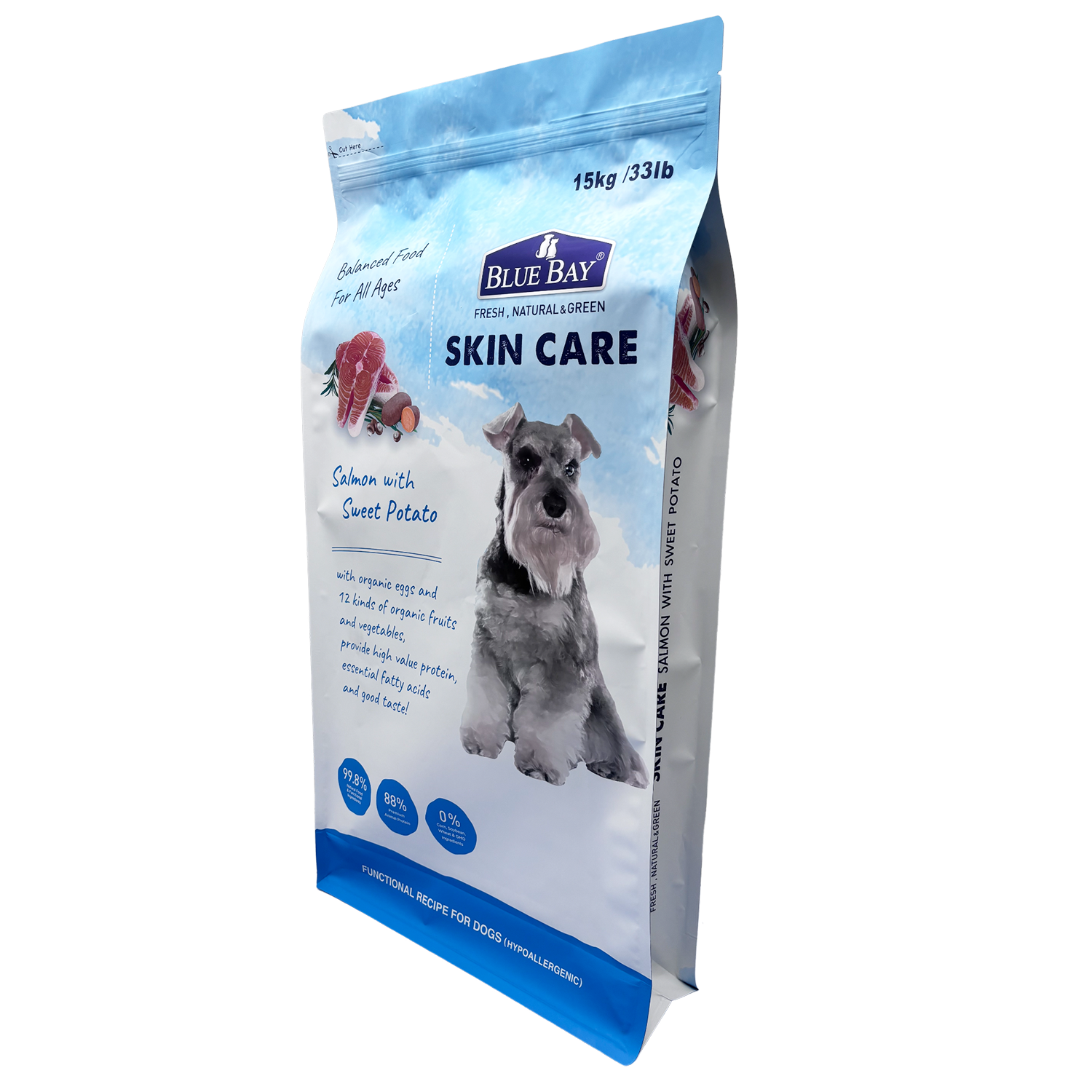
Heavy loads require specific film structures. A standard single-layer or basic two-layer film will fail under a 10 kg load. Engineers typically specify heavy-duty laminates such as PET/AL/NY/PE or utilize heavy-gauge linear low-density polyethylene (LLDPE) for the sealant layer. The outer layer provides printability and heat resistance. The middle layers offer barrier protection and strength. The inner layer ensures a robust hermetic seal.
When evaluating paper versus plastic options, heavy-duty multi-wall Kraft paper bags can safely support up to 10 kg if they are properly glued with reinforced pinch-bottom adhesive. However, for capacities reaching 10–20 kg, co-extruded plastic laminates are generally superior due to their higher tensile strength and flexibility. Plastic laminates can stretch slightly without tearing. They absorb impact energy better than rigid paper structures.
Biaxially oriented nylon (BOPA) plays a critical role in these heavy-duty structures. BOPA provides the necessary puncture resistance and tensile strength required for capacities exceeding 10 kg. It acts as a structural backbone within the laminate. It prevents sharp products from piercing the film and stops tears from propagating if a small puncture does occur.
Thickness requirements must scale with the weight. Standard pouches usually utilize films between 100 and 120 microns thick. Transitioning to heavy-duty applications requires moving to 150 to 200+ micron structures. This added thickness increases the overall stiffness of the bag. It improves puncture resistance and provides more material mass for the heat-sealing process, resulting in stronger weld seams.
Standard dimensions do not scale linearly when transitioning to heavy capacities. A typical pouch might be 8 to 12 inches wide. Simply doubling the dimensions for a heavier load often results in an unstable package. The footprint must increase proportionally to support the vertical height. This prevents the bag from becoming top-heavy and tipping over on the pallet or retail shelf.
Determining the ideal dimensional ratios—width to height to gusset depth—is critical for 10–20 kg Flat Bottom Bags. A wider bottom gusset provides a lower center of gravity. If the bag is too tall and narrow, the product will settle unevenly, causing the bag to lean. Engineers must calculate the settled volume of the specific product to design a bag that remains perfectly rectangular when fully loaded.
Reinforced bottom seals are an absolute necessity to support downward gravitational force. Standard straight seals are insufficient for heavy weights. K-seals or plow-bottom designs distribute the stress away from the sharp corners. They spread the force across a wider area of the film. This geometric reinforcement prevents the corners from acting as weak points where tears typically originate.
Seal width and heat-seal strength requirements must be strictly evaluated. Heavy-duty bags require wider seal margins, often exceeding 10 mm, to ensure adequate bonding. The sealing equipment must apply precise temperature, pressure, and dwell time to fuse the thick laminate layers completely. Weak seals will inevitably lead to burst failures during transit or warehouse handling.
Standard die-cut handles fail at 10 kg. The thin film around a standard punched hole will stretch and tear almost immediately when a consumer attempts to lift a heavy bag. The stress is concentrated entirely on a few millimeters of plastic. This exceeds the material's tensile limits.
Ergonomic lifting and structural safety require specialized handle integration. Rigid plastic handle inserts distribute the lifting force across a wider area of the top seal. Reinforced patch handles add an extra layer of thick film specifically around the die-cut area. Alternatively, side-gusset handle placements allow consumers to lift the bag with two hands. This significantly reduces the stress on any single point of the packaging.
The bulk density of the product directly dictates the required bag dimensions. Ten kilograms of a dense product occupies significantly less space than ten kilograms of a low-density product. You must design the bag around the volume, not just the weight. Failing to account for bulk density results in bags that are either overfilled and stressed or underfilled and sloppy.
Consider the volumetric requirements of 10 kg of dense powder, such as whey protein or cement, versus 10 kg of low-density product, like large kibble pet food. The pet food will require a substantially larger bag to hold the same weight. Headspace requirements must also be calculated accurately. Sufficient empty space at the top of the bag is necessary to allow the sealing jaws to close without catching the product. Catching product in the seal area compromises the seal integrity.
Product Type | Bulk Density (Estimated) | Volume Required for 10 kg | Bag Size Requirement |
|---|---|---|---|
Cement Powder | 1.5 g/cm³ | Low | Compact / Small |
Granular Fertilizer | 0.9 g/cm³ | Medium | Standard / Medium |
Large Kibble Pet Food | 0.4 g/cm³ | High | Oversized / Large |
Agricultural Seeds | 0.7 g/cm³ | Medium-High | Large |
Rigorous drop testing is mandatory for heavy-duty packaging. Protocols for evaluating bags holding 10 kg or more often follow ISTA (International Safe Transit Association) testing standards. These tests involve multi-angle drops from heights of 1 to 1.5 meters. They simulate the impacts that occur during shipping, warehouse handling, and retail stocking. The bag must survive these drops without any seal rupture or material tearing.
Burst and compression testing simulates the pressure of pallet stacking. A pallet of 10 kg bags places immense static weight on the bottom layers. Compression testing applies mechanical force to the bag to ensure the bottom gusset and side seals do not blow out under the weight of the upper layers. This ensures stability throughout the supply chain.
Puncture resistance testing is a critical evaluation for products with sharp edges. Certain agricultural seeds, granular fertilizers, or frozen items can act like tiny knives against the inside of the film. Specialized testing measures the force required to pierce the laminate. This ensures the selected material structure can withstand the internal abrasion and external hazards.
Branding and shelf appeal strongly favor flexible pouches. They offer 360-degree high-definition printing capabilities. This allows for complex graphics, matte finishes, and spot gloss effects. This creates a premium retail footprint that commands attention. In contrast, WPP bags suffer from print distortion due to their woven texture. They generally present a commoditized, industrial appearance.
Barrier properties also differentiate the two formats. Laminated pouches provide superior moisture, oxygen, and light barriers. This extends the shelf life of sensitive products like premium pet food or specialized agricultural chemicals. Standard WPP sacks are inherently breathable and offer much lower barrier protection. They are unsuitable for products that degrade upon exposure to humidity or oxygen.
It is important to acknowledge the higher per-unit cost of heavy-duty laminated pouches. The complex multi-layer films, specialized seal designs, and high-definition printing processes make them more expensive to manufacture than basic woven sacks or multi-wall paper bags. This upfront cost must be justified by operational and retail advantages.
These initial costs are often offset through logistical efficiency. Flexible packaging is significantly lighter than rigid alternatives, reducing overall shipping weight. The rectangular shape of filled pouches improves pallet efficiency. This allows more product to fit into a standard shipping container. Furthermore, the upgraded premium packaging often enables brands to command a higher retail price point, improving overall margins. Utilizing Flat Bottom Bags effectively balances these factors.
Standard form-fill-seal (FFS) or pre-made pouch filling machines pose a significant risk when handling heavy loads. These machines may lack the mechanical grip strength required to hold a bag containing 10 kg or more of product before sealing. If the grippers slip, the bag will drop. This causes product spillage and line downtime.
Mitigating this risk requires auditing your current machinery. You must install heavy-load support conveyors beneath the filling station to bear the weight of the product. Do not rely solely on the bag grippers. Upgrading to heavy-duty gripper jaws with aggressive texturing can also prevent slippage. For initial rollouts, considering semi-automated filling processes allows for closer quality control before investing in fully automated heavy-duty lines.
A major risk with heavy flexible packaging is pallet instability. Bags containing 10 kg or more can shift or slump if the product settles unevenly during transit. Trapped air inside the bag acts like a balloon, preventing the bags from stacking flat. This leads to leaning pallets and potential collapse in the warehouse or inside the shipping container.
Implementing micro-perforations or one-way degassing valves mitigates this issue. These features expel trapped air, allowing the product to settle densely. This ensures the bags stack like rigid bricks. Additionally, utilizing anti-slip coatings on the outer film layer increases the coefficient of friction between the bags. This prevents them from sliding off one another during transport.
Container loading optimization is crucial for overseas freight transport. You must calculate the exact stack density and stability to optimize container volume. Proper pallet patterns, combined with stretch wrapping and corner boards, minimize shifting and maximize payload efficiency. This ensures the product arrives at its destination safely.
Request material data sheets (MDS) for heavy-gauge films from potential suppliers to verify tensile strength and puncture resistance.
Order unprinted prototypes to conduct internal drop and fill testing with your actual product to validate seal integrity.
Audit your filling line's weight capacity and gripper strength to ensure your equipment can handle the physical demands of processing heavy bags.
Calculate the exact bulk density of your product to determine the precise volumetric requirements for your custom bag dimensions.
A: Standard retail flat bottom bags are typically engineered to hold between 500 grams and 5 kilograms safely. Exceeding 5 kg requires upgrading the material thickness and reinforcing the bottom seals to prevent structural failure.
A: While possible, holding 10–20 kg of liquid in a flexible pouch is extremely challenging due to hydraulic pressure. It requires highly specialized fitments, exceptional seal strength, and often an outer rigid container for safe transport.
A: Yes, multi-wall Kraft paper bags can hold 10 kg if engineered correctly. They require reinforced pinch-bottom adhesive and multiple layers of heavy-duty paper to provide the necessary tensile strength and prevent bottom blowouts.
A: Preventing bottom seal breakage requires using K-seals or plow-bottom designs to distribute stress away from the corners. Additionally, increasing the seal width and utilizing heavy-gauge sealant films ensures a stronger weld.
A: Biaxially oriented nylon (BOPA) is the preferred material for puncture resistance. When laminated with heavy-gauge LLDPE, it provides excellent tensile strength and prevents sharp products from piercing the packaging.
A: Recycling depends on the material structure. Traditional multi-material laminates are difficult to recycle. However, newer mono-material PE structures designed for heavy loads are becoming available and are fully recyclable at store drop-off locations.
A: Yes, heavy-duty bags require sealing equipment capable of applying higher pressure and maintaining precise temperatures for longer dwell times. The equipment must also have mechanical support conveyors to hold the bag's weight during sealing.

