
Views: 0 Author: Site Editor Publish Time: 2026-07-31 Origin: Site


The flexible packaging industry faces an aggressive mandate to transition away from landfill-bound plastics. Achieving true recyclability without sacrificing product protection remains a complex engineering challenge. Traditional multi-layer laminates provide exceptional oxygen and moisture barriers but are fundamentally incompatible with current recycling infrastructure. Brands must find sustainable alternatives that prevent product spoilage, maintain shelf life, and run efficiently on existing filling lines.
This guide evaluates the current landscape of recyclable materials for a flat barrier pouch. We analyze mono-material structures, barrier coatings, PCR integration, bio-based alternatives, machinability trade-offs, and compliance standards. Packaging engineers and buyers can use this data to make evidence-based sourcing decisions, upgrade their packaging portfolios, and navigate the transition to sustainable materials without compromising operational efficiency.
Mono-Material Dominance: True recyclability in flexible packaging currently relies on mono-material structures (primarily All-PE or All-PP) that are compatible with mechanical recycling streams.
Post-Consumer Recycled (PCR) Integration: Incorporating PCR resin into a flat barrier pouch reduces virgin plastic usage and carbon footprint, though mechanical performance and FDA food-contact compliance must be carefully managed.
Paper and Bio-Based Alternatives: Kraft paper laminates and compostable biopolymers (like PLA and PHA) offer alternative eco-friendly profiles but require specialized barrier coatings to match plastic performance.
Barrier Coating Innovations: High-barrier requirements can now be met using recyclable-compatible coatings like EVOH (under specific percentage thresholds), AlOx, or SiOx, replacing non-recyclable aluminum foil layers.
Machinability Trade-Offs: Transitioning to recyclable materials often narrows the thermal sealing window, requiring equipment audits or retrofitting to prevent film distortion during production.
Infrastructure Realities: "Recyclable" typically means "Store Drop-Off" (PE film streams) rather than curbside, requiring strict adherence to certification guidelines (e.g., How2Recycle) to avoid greenwashing claims.
Standard multi-material laminations combine layers with vastly different melting points and chemical structures. A typical legacy structure might consist of a Polyethylene Terephthalate (PET) outer layer for printability and heat resistance, a middle layer of Aluminum Foil (ALU) or Metallized PET (VMPET) for barrier properties, and an inner layer of Linear Low-Density Polyethylene (LLDPE) for heat sealing. When these disparate materials are laminated together using polyurethane adhesives, they become impossible to separate and recycle mechanically at scale.
Aluminum foil provides absolute barrier properties. It drops oxygen transmission rates (OTR) and water vapor transmission rates (WVTR) to virtually zero. However, integrating foil into a plastic laminate renders the entire pouch unrecyclable. Mechanical recycling facilities shred and melt plastics; the presence of aluminum contaminates the polymer melt, causing equipment damage and degrading the quality of the recycled resin.
Understanding the difference between technically recyclable and practically recyclable dictates material selection. A multi-layer structure might be technically recyclable in a specialized chemical recycling laboratory. However, if municipal or commercial recovery facilities cannot process it at scale, it is not practically recyclable. Brands must design packaging for the infrastructure that actually exists today, which primarily consists of mechanical recycling streams for polyethylene (PE) and polypropylene (PP).
Structure Type | Material Composition | Barrier Performance | Recyclability Status |
|---|---|---|---|
Legacy Multi-Layer | PET / ALU / PE | Absolute (OTR/WVTR near 0) | Non-Recyclable (Landfill) |
Legacy Metallized | PET / VMPET / PE | High | Non-Recyclable (Landfill) |
Mono-Material PE | MDO-PE / EVOH / PE | High (with EVOH < 5%) | Store Drop-Off (PE Stream) |
Mono-Material PP | BOPP / CPP | Medium | Limited (PP Stream) |
Mono-material PE structures dominate the recyclable flexible packaging market. These structures utilize Machine Direction Oriented PE (MDO-PE) laminated to Linear Low-Density Polyethylene (LLDPE). The MDO process stretches the PE film in the machine direction, aligning the polymer chains to increase stiffness, clarity, and heat resistance. This allows the MDO-PE to act as the printable outer web, replacing traditional PET.
This single-polymer structure is highly compatible with existing Store Drop-Off recycling streams. It offers excellent puncture resistance and seal strength. However, standard PE has inherently poor oxygen and heat resistance compared to legacy PET layers. Engineers must carefully manage sealing temperatures to prevent the outer MDO-PE layer from melting and sticking to the seal jaws.
Combinations of Biaxially Oriented Polypropylene (BOPP) and Cast Polypropylene (CPP) create mono-material PP structures. BOPP provides the printable, heat-resistant outer layer, while CPP acts as the sealant web. PP structures offer higher heat resistance than PE, providing better machinability on standard sealing bars without immediate retrofitting.
PP films deliver excellent clarity and stiffness, making them ideal for stand-up applications or products requiring a premium look. However, PP is less universally accepted in flexible film recycling streams compared to PE. Additionally, PP can be prone to cold-temperature brittleness, making it unsuitable for frozen food applications.
Integrating chemically or mechanically recycled PE or PET content into the core structural layers drastically lowers the carbon footprint of the packaging. This aligns with circular economy goals without compromising the mechanical integrity of the outer film. PCR integration typically ranges from 30% to 50% of the total pouch weight.
Sourcing clean, food-grade PCR resins remains difficult. Mechanical recycling often leaves trace contaminants, resulting in minor aesthetic gel-specks or a slight yellowing of the film. For direct food contact, brands must utilize chemically recycled PCR or ensure the mechanically recycled resin has received a Letter of No Objection (LNO) from the FDA.
Natural Kraft paper laminated with high-barrier biopolymers like Polylactic Acid (PLA) or Polyhydroxyalkanoates (PHA) provides a renewable, bio-based origin. This combination delivers a premium organic aesthetic popular in the specialty coffee and natural foods sectors. Compostable options are available for specific end-of-life streams, provided the local infrastructure supports industrial composting.
Limitations include low puncture resistance and reduced moisture barrier properties compared to pure synthetic polymers. Paper-based structures carry a higher risk of tearing on high-speed filling lines. Furthermore, applying water-based barrier coatings to paper requires precise application to ensure uniform coverage without compromising the paper's repulpability.
Achieving high barrier performance in mono-material structures requires advanced technologies. Co-extruding a thin layer of Ethylene Vinyl Alcohol (EVOH) provides a high oxygen barrier. To maintain PE-stream recyclability, the EVOH layer must remain under 5% of the total structure weight. This ensures the EVOH disperses harmlessly during the mechanical recycling process.
Evaluating aluminum oxide (AlOx) and silicon oxide (SiOx) clear coatings applied to mono-materials helps achieve high moisture and oxygen barriers. These microscopic ceramic coatings are applied via physical vapor deposition. They provide barrier properties approaching those of aluminum foil without disrupting the recycling process, as the coating volume is negligible.
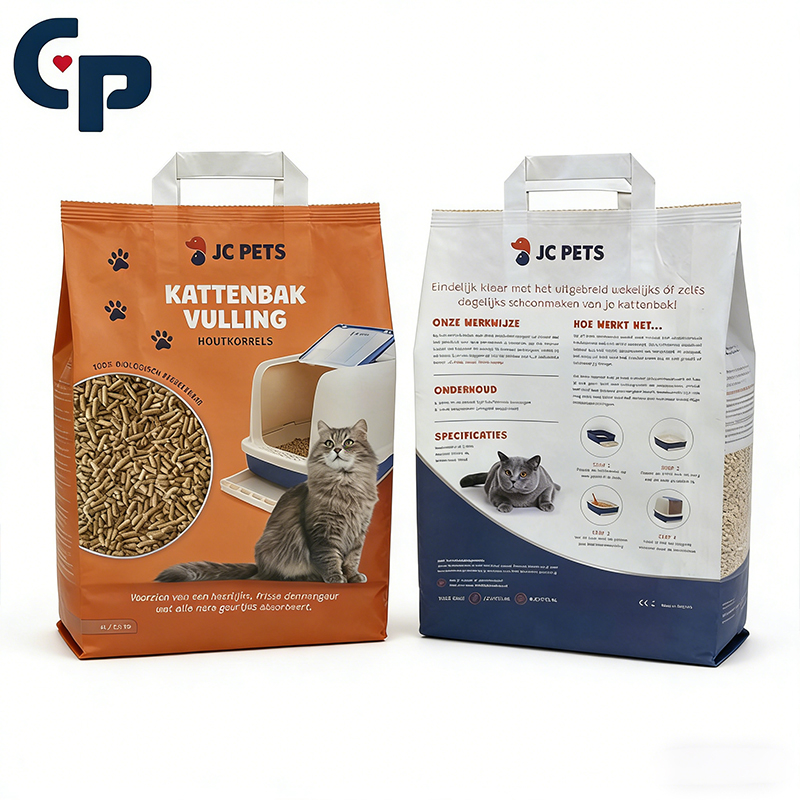
A pouch is only recyclable if every component aligns with the target recycling stream. Traditional multi-polymer zippers ruin pouch recyclability. If a PE pouch features a PET zipper, the entire unit becomes a contaminant. The shift to all-PE or all-PP zipper profiles is mandatory for certification.
One-way degassing valves impact recyclability. Coffee and fermented food packaging require these valves to release built-up gases while preventing oxygen ingress. Incorporating polyethylene-compatible valves ensures the entire package can enter the PE recycling stream without requiring the consumer to cut the valve out before disposal.
Designing laser-scored tear notches and punch-outs requires precision. Mechanical scoring can compromise the physical strength of recyclable mono-materials, leading to premature tearing during transit. Laser scoring precisely weakens only the outer layer of the film, ensuring a clean tear for the consumer while maintaining the structural integrity of the pouch.
Comparing the OTR of traditional PET/Foil structures against MDO-PE/EVOH and clear-coated structures reveals the maximum shelf-life expectations for oxygen-sensitive products. A foil-based pouch might offer an OTR of 0.01 cc/m2/day. A high-barrier recyclable MDO-PE/EVOH structure typically achieves an OTR between 0.5 and 1.0 cc/m2/day.
While this represents a numerical increase in oxygen transmission, it is often more than sufficient for a 12-to-18-month shelf life for dry goods, snacks, and pet treats. Packaging engineers must conduct real-time and accelerated shelf-life testing to validate that the recyclable structure meets the specific degradation thresholds of the product.
Analyzing moisture barrier capabilities of recyclable Flat Barrier Pouches dictates material thickness and coating selection. High-humidity storage environments severely impact mono-material and paper-based barrier integrity. Standard PE offers a decent natural moisture barrier, but products highly sensitive to clumping or staling require AlOx or SiOx coatings to drive the WVTR below 1.0 g/m2/day.
Addressing the specific challenge of retaining oils in pet food and treats without using non-recyclable multi-layer films is key for Recyclable Pet Food Packaging. Kibble contains high levels of fats and oils that can migrate through standard PE films, causing unsightly grease stains and compromising the seal integrity.
Ensuring mono-materials can withstand the sharp edges of kibble and the physical stress of transport requires optimizing the LLDPE sealant layer for maximum puncture resistance. Evaluating the effectiveness of EVOH and advanced coatings in preventing odor migration in premium pet food applications ensures the product remains appealing to consumers while preventing pest attraction in retail environments. Meeting FDA requirements for direct food and pet food contact when utilizing PCR content in the packaging matrix requires rigorous documentation and supply chain traceability.
Mono-materials pose a severe shrinkage risk during the sealing process. Traditional laminates rely on the high melting point of the outer PET layer (around 250°C) to withstand the heat of the sealing jaws, while the inner PE layer melts (around 120°C) to form the seal. In a mono-material PE structure, both the inner and outer layers share similar melting points.
Transitioning to recyclable materials narrows the thermal sealing window. If the jaws are too hot, the outer layer melts and sticks to the equipment. If they are too cold, the inner layer fails to hermetically seal. This requires equipment audits and retrofitting.
Conduct a Thermal Audit: Map the temperature consistency across all sealing jaws on the filling line.
Upgrade Sealing Jaws: Replace standard steel jaws with Teflon-coated or heat-pipe integrated jaws to ensure even heat distribution and prevent sticking.
Adjust Dwell Times: Increase the dwell time (the duration the jaws are closed) while lowering the overall temperature to achieve a hermetic seal without distorting the outer film.
Implement Cooling Bars: Install cooling bars immediately after the sealing station to rapidly set the seal and prevent the mono-material from stretching or warping under tension.
Transitioning to recyclable flat barrier pouches requires systematic testing and equipment optimization. Follow these steps to execute a successful material transition:
Audit your current packaging specifications to identify all non-recyclable layers, adhesives, and accessories.
Run pilot tests with MDO-PE/EVOH structures on your existing filling lines to map the new thermal sealing window.
Retrofit sealing jaws with Teflon coatings and optimize dwell times to prevent mono-material shrinkage.
Execute accelerated shelf-life testing to verify that the new barrier coatings meet your product's OTR and WVTR requirements.
A: A flat barrier pouch is truly recyclable when manufactured from a single polymer family, such as all-polyethylene (PE) or all-polypropylene (PP). This mono-material construction allows the pouch to be shredded, melted, and re-pelletized in existing mechanical recycling streams without the need to separate incompatible chemical layers.
A: Recyclable pouches cannot achieve the absolute zero transmission rates of aluminum foil. However, integrating advanced technologies like co-extruded EVOH layers or applying microscopic AlOx and SiOx clear coatings provides high oxygen and moisture barriers that easily meet the 12-to-18-month shelf-life requirements for most consumer goods.
A: No. Most Kraft paper pouches utilize inner plastic laminations or non-repulpable barrier coatings to protect the product, rendering them unrecyclable in standard paper streams. To be recyclable, paper pouches must use specialized, certified repulpable water-based coatings that separate easily during the paper milling process.
A: Mono-materials lack the heat-resistant outer PET layer found in traditional laminates, resulting in a significantly narrower thermal sealing window. This often causes film shrinkage or sticking, requiring operators to lower sealing temperatures, increase dwell times, and potentially retrofit equipment with Teflon-coated jaws and rapid cooling bars.
A: Post-Consumer Recycled (PCR) material is safe for direct food contact only if it undergoes advanced chemical recycling or rigorous mechanical decontamination processes. The specific PCR resin must receive a Letter of No Objection (LNO) from the FDA, verifying it meets strict safety thresholds for food and beverage applications.

