
Views: 0 Author: Site Editor Publish Time: 2026-08-12 Origin: Site


Increasing regulatory mandates and consumer demand force brands away from traditional multi-material flexible packaging. Extended Producer Responsibility laws require high-performance, circular options. Brands rely heavily on the structural stability, source reduction, and premium shelf presence of quad seal bags. Legacy formats use non-recyclable mixed laminates like PET/ALU/PE to achieve necessary barrier properties and seal strength. This creates a significant compliance issue. Evaluating modern mono-material structures is essential. We must determine if these recyclable options can meet strict technical requirements. They need to provide excellent barrier protection, heavy fill-weight durability, and reliable machine runnability. They must do this without compromising the brand's premium positioning. Transitioning requires careful engineering and precise machinery calibration.
Material Shift: Transitioning to recyclable quad seal bags requires moving from mixed-material laminates to mono-material structures (typically PE/PE or PP/PP) designed for store drop-off programs.
Performance Trade-offs: While mono-materials offer high recyclability, they require precise heat-sealing calibration to prevent package distortion, creasing, and seal failures, particularly at the corner seals.
Application Viability: Recyclable quad seal bags are highly viable for premium ground coffee, dry goods, and recyclable pet food packaging, provided the structural integrity supports the specific fill weights.
Aesthetic & Physical Durability: Modern recyclable formulations must be engineered to resist grease, dents, and punctures, ensuring the package maintains its premium shelf presence.
Compliance Verification: True sustainability requires prequalification with recognized recycling standards (e.g., How2Recycle, CEFLEX) rather than relying on generic "eco-friendly" claims.
Establishing baseline requirements dictates the success of any packaging transition. You must maintain product shelf life and match current fill rates on the production line. Achieving certified recyclability cannot come at the expense of physical performance. Brands must balance aesthetic appeal against new material limitations. When moving away from rigid polyester, the new films must still run efficiently on vertical form-fill-seal (VFFS) equipment.
Preserving premium aesthetics requires specific film engineering when switching substrates. Quad Seal Bags offer five printable surfaces. These include the front, back, two side gussets, and the bottom panel. Mono-material films must accept high-quality flexographic or rotogravure printing. They need specialized outer layers, often utilizing Machine Direction Orientation (MDO) PE, to prevent ink smearing and maintain visual impact. MDO-PE provides the necessary stiffness and heat resistance to act as the print web, mimicking the properties of legacy PET films.
Brands choose quad structures for premium product tiers. Specialty coffee and premium kibble require shelf-standing stability. Simpler lay-flat pillow bags lack this structural rigidity. Four corner seals provide a rigid frame. This frame prevents sagging and ensures superior branding visibility on crowded retail shelves. The corner seals act as structural pillars. When filled with dense products, these pillars keep the package upright and prevent the "slumping" effect common in standard stand-up pouches.
Transitioning to flexible formats inherently reduces material usage. Flexible structures lower transport emissions compared to rigid containers. They optimize pallet density and reduce warehousing space. Source reduction remains a primary environmental benefit. It complements the shift toward fully circular mono-materials. By eliminating heavy rigid plastic jugs or metal cans, companies significantly cut down on inbound freight weight. A single pallet of unfilled flexible pouches can replace up to twenty pallets of rigid containers.
Analyzing structural composition ensures recycling compatibility. Polyethylene (PE) and polypropylene (PP) mono-structures dominate the circular packaging landscape. These materials align with current recycling streams. They replace complex, multi-polymer laminations. Engineering these structures requires a deep understanding of polymer rheology and co-extrusion techniques.
Mono-material laminates use a single polymer family. A PE/PE structure might use high-density polyethylene (HDPE) or MDO-PE for the outer print web. Linear low-density polyethylene (LLDPE) serves as the inner sealant web. This unified composition allows mechanical recyclers to process the film without delamination. The challenge lies in creating enough of a melting point differential between the outer and inner layers. You need the inner layer to melt and seal before the outer layer distorts against the heated sealing jaws.
Blending PCR resins into film structures lowers the overall carbon footprint. You must maintain food-safe contact layers when using PCR. Often, PCR is sandwiched between virgin polymer layers in a co-extruded structure. This prevents any potential contaminants in the PCR from migrating into the food product. Renewable, bio-based PE or PP polymers offer an alternative pathway. Derived from sugarcane or other renewable feedstocks, they close the loop without compromising physical performance. They function identically to fossil-fuel-derived polymers on the packaging line.
Legacy PET/Foil/PE structures cause severe issues in municipal recycling facilities. MRFs cannot separate these distinct material layers mechanically or chemically. The melting temperatures of PET and PE are vastly different. If mixed into a PE recycling stream, the PET acts as a contaminant, creating hard gels and weak spots in the recycled plastic. These mixed plastics contaminate recycling bales. Consequently, they face heavy penalties under modern Extended Producer Responsibility fee structures.
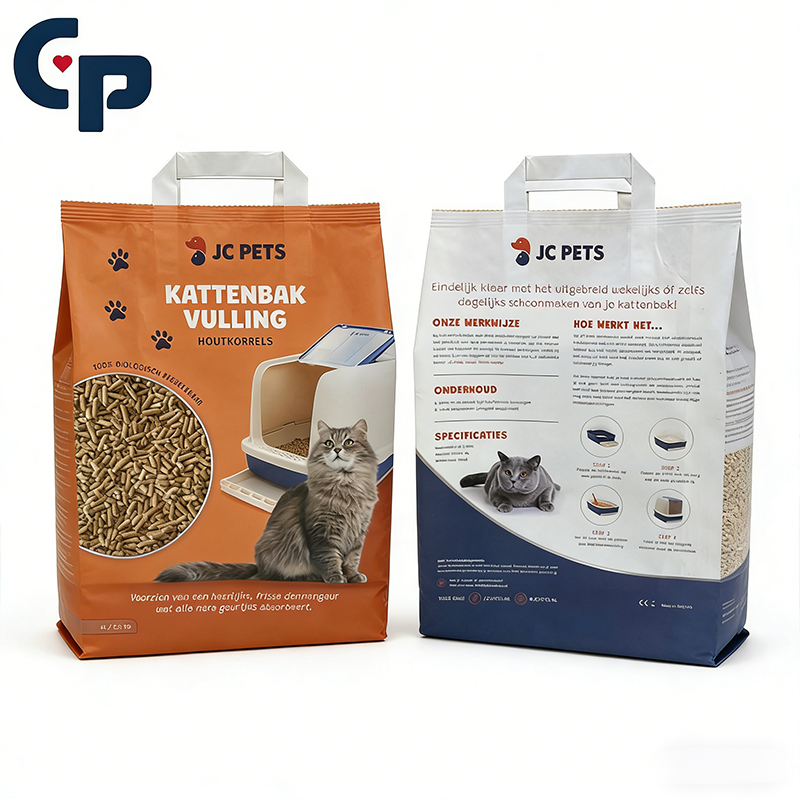
Evaluating performance metrics ensures product safety and shelf life. Mono-materials must protect against oxygen, moisture, and grease. This is critical for high-fat products like pet kibble and oily coffee beans. Modern EVOH or SiOx/AlOx coatings provide necessary barrier properties within recycling tolerances. The Association of Plastic Recyclers (APR) generally allows up to 5% EVOH in a PE structure before it degrades the recycling stream.
Mono-material films face transport and handling stresses. They are more prone to stretching than rigid PET films. Minimizing pinholing, denting, and severe creasing is essential. Specialized co-extruded outer layers enhance stiffness. This maintains both the barrier layer and the premium retail presentation. Operators must handle rolls of mono-PE carefully to avoid edge damage, which can lead to web breaks on high-speed packaging lines.
Evaluating gusset strength and drop-test performance is non-negotiable. Puncture resistance must meet or exceed legacy materials. Large Format Quad bags require special technical considerations. They are frequently used in bulk Recyclable Pet Food Packaging applications. These bags hold 10 to 40 lbs of product. The corner seals bear immense kinetic energy during transport and drops. Drop testing protocols, such as ASTM D5276, must be executed rigorously. Bags are dropped from specific heights onto their faces, edges, and corners to ensure the seals do not rupture under impact.
User-friendly features must align with current recycling guidelines. Press-to-close zippers, slider closures, and one-way degassing valves add convenience. These components must be manufactured from compatible mono-materials. An all-PE zipper on a PE bag avoids contaminating the recycling stream. If a PP zipper is used on a PE bag, it will fail certification. Every component, including the adhesive used to apply the degassing valve, must be vetted for recycling compatibility.
Performance Metric | Testing Protocol | Target Standard for Mono-PE |
|---|---|---|
Oxygen Transmission Rate (OTR) | ASTM D3985 | < 0.1 cc/100in2/day |
Water Vapor Transmission Rate (WVTR) | ASTM F1249 | < 0.1 g/100in2/day |
Seal Strength | ASTM F88 | > 3000 g/in |
Drop Impact Resistance | ASTM D5276 | Pass at 36 inches (40lb fill) |
Puncture Resistance | ASTM F1306 | > 15 lbs force |
Transitioning materials impacts manufacturing operations directly. Heat sealing presents the most significant challenge. Mono-materials have a narrower sealing window. Operators face risks of film shrinkage or weak seals if temperatures fluctuate. Unlike PET, which has a high melting point and acts as a thermal buffer, PE will melt and stick to the sealing jaws if the temperature is even slightly too high.
Managing the transition across different film thicknesses is difficult. The front panel consists of two film layers. The side gussets contain four layers. Sealing this junction requires precise energy application. You must avoid under-sealing the four-layer section and over-heating the two-layer section. This transition point, often called the "T-seal" or "cross seal," is the most common failure point for leaks. Specialized jaw designs with relieved sections can help apply even pressure across varying thicknesses.
Runnability often decreases during the initial transition. Heat-sensitive mono-PE requires longer dwell times to push heat through the structure without burning the outside. Throughput reductions occur when moving away from heat-tolerant PET/PE laminates. Line operators must optimize machine settings to regain lost speed. This often involves lowering the sealing temperature but increasing the pressure and dwell time. Finding the exact balance requires extensive trial and error on the production floor.
Machinery upgrades are frequently necessary. Processing recyclable films efficiently requires specialized equipment. You may need new sealing jaws with advanced Teflon coatings to prevent sticking. Upgraded temperature control systems provide tighter thermal management. Standard cartridge heaters may not respond fast enough; advanced PID controllers are required. Cooling plates help set the seal quickly, preventing distortion as the heavy bag drops from the filling tube.
Audit existing sealing jaws for wear and replace with optimized serration patterns designed for PE films.
Install advanced PID temperature controllers to maintain jaw temperatures within a strict +/- 2 degree variance.
Integrate air-cooling blasts or water-cooled plates immediately below the sealing station to set the hot tack seal.
Adjust web tension controls to accommodate the higher stretchability of mono-PE films compared to rigid laminates.
Achieving true sustainability requires rigorous compliance verification. Generic eco-friendly claims expose brands to greenwashing risks. You must understand testing protocols for flexible pouches. Certifications like How2Recycle or CEFLEX validate your packaging design. These organizations require physical samples to be tested in independent laboratories to confirm they can be processed by standard recycling equipment without causing blockages or contamination.
Flexible films rarely process well in standard curbside bins. They tangle in MRF sorting screens, causing equipment jams and facility downtime. Store drop-off programs handle these materials effectively. Prequalifying your structure ensures it meets the specific criteria for these dedicated recycling streams. The film must be clean, dry, and free of incompatible labels or heavy ink coverage that could degrade the recycled pellet quality.
Clarifying infrastructure limitations is vital. Set accurate consumer disposal expectations directly on the pack. Clear labeling prevents wish-cycling. It guides consumers to the correct store drop-off locations for flexible films. Printing a standard recycling triangle is no longer sufficient and often illegal if the local infrastructure cannot process the material. Specific, localized instructions are required to ensure the package actually enters the circular economy.
Measuring the true carbon footprint reduction is a critical step. Compare the new lightweight structures against legacy formats. LCAs quantify energy savings, emission reductions, and material efficiency. This data supports your corporate sustainability reporting. A proper LCA looks at the extraction of raw materials, the extrusion process, transportation, and end-of-life processing. Even if a mono-material bag is slightly thicker than a mixed laminate, the ability to recycle it often results in a lower overall environmental impact.
Request mono-material film samples from your packaging suppliers immediately to begin physical evaluation.
Schedule pilot line trials to test seal integrity, focusing heavily on the gusset transitions and cross seals.
Initiate compatibility testing with recognized certification bodies to verify recyclability claims before printing full production runs.
Calibrate your packaging machinery's temperature controls to accommodate narrower sealing windows and prevent film distortion.
A: No. Traditional quad seal bags use mixed-material laminates like PET, aluminum, and PE. These cannot be recycled together. Only bags specifically engineered from mono-materials, such as 100% PE or 100% PP, are suitable for modern recycling programs.
A: They are primarily constructed from mono-material polyethylene (PE) or polypropylene (PP). They often utilize specialized barrier coatings like EVOH or ultra-thin metalized layers. These are kept within allowable limits to provide barrier protection without disrupting the recycling stream.
A: Yes. Quad seal bags are the industry standard for premium pet food due to their structural strength. Recyclable versions use heavy-duty, puncture-resistant mono-materials designed to withstand high fill weights and resist grease.
A: Modern high-barrier PE structures achieve oxygen and moisture transmission rates comparable to traditional foil laminates. They maintain standard shelf life for sensitive products like coffee, overcoming the barrier limitations of early mono-materials.
A: Not if specified correctly. To maintain full recyclability, the zipper, degassing valve, and pouch film must all be manufactured from the same base polymer family. An all-PE structure ensures they can be processed together without contamination.
A: Mono-material PE films are more ductile than stiff PET films. They can be more susceptible to stretching and creasing. However, modern structures are co-extruded with specialized outer layers to enhance stiffness, resistance to denting, and overall shelf appeal.
A: Yes, but they typically require adjustments. Mono-materials have a lower heat tolerance and narrower seal window. Operators must recalibrate sealing temperatures, dwell times, and pressure. Sometimes, installing specialized sealing jaws is necessary to prevent film distortion.

