
Views: 210 Author: Site Editor Publish Time: 2025-09-19 Origin: Site


Coffee is one of the most traded commodities in the world, and how it is packaged plays a defining role in its freshness, flavor, and consumer appeal. From farm to cup, coffee beans go through several transformations, and packaging ensures that the product remains aromatic, safe, and market-ready. The evolution of coffee packaging has been driven not only by technological innovation but also by consumer demand for sustainability and premium experiences.
Coffee is highly sensitive to external elements such as oxygen, light, heat, and moisture. Without proper packaging, beans or grounds can quickly lose their flavor and aroma. Freshly roasted coffee releases carbon dioxide, meaning packaging must also manage gas release without letting oxygen in. This delicate balance is why the coffee industry invests in specialized packaging solutions. Good coffee packaging safeguards freshness, extends shelf life, and influences consumer purchasing decisions through design and sustainability. In many cases, packaging is the difference between a stale cup and a memorable coffee experience.
Coffee packaging is not one-size-fits-all. Roasters select packaging based on product type, target market, and logistics. Below are the most common formats:
| Packaging Type | Description | Common Use |
|---|---|---|
| Flat-bottom bags | Rigid base, stand-up design | Retail shelves, premium coffee |
| Pillow bags | Economical, flat pouches | Mass-market ground coffee |
| Side gusset bags | Expandable sides, large capacity | Whole bean packaging, bulk coffee |
| Tin tie bags | Paper bags with resealable tie | Local roasters, small batches |
| Cans or tins | Metal packaging, airtight | Specialty or gift coffee |
Each option balances functionality, cost, and presentation. Flat-bottom and gusset bags dominate retail because they combine storage efficiency with brand visibility, while tins add a premium touch.

The choice of material is as important as the bag style. Coffee packaging materials are engineered to block oxygen, UV rays, and moisture.
Foil laminates: Excellent barrier properties, often combined with plastic layers.
Kraft paper: Eco-friendly appearance, but usually lined with plastic for durability.
Biodegradable films: Plant-based materials designed for compostability.
Tinplate: Strong and airtight, but heavier for shipping.
| Material | Benefits | Limitations |
|---|---|---|
| Foil | Superior protection | Non-recyclable in most cases |
| Kraft paper | Sustainable look | Limited barrier on its own |
| Bioplastics | Compostable | Shorter shelf life |
| Metal tins | Premium branding | High production cost |
Brands increasingly combine layers of materials to achieve both durability and sustainability while meeting consumer expectations for eco-conscious coffee packaging.
Modern coffee packaging incorporates features beyond simple containment. Roasters and brands now integrate technologies that enhance convenience and freshness.
Degassing valves: One-way valves allow CO₂ to escape while preventing oxygen from entering. This feature is essential for freshly roasted beans.
Zip closures: Resealable zippers allow customers to maintain freshness at home.
Transparent windows: Provide visual appeal by showing the beans, though they reduce light protection.
Nitrogen flushing: Some packaging systems replace oxygen with nitrogen to preserve flavor longer.
These specialty features transform packaging from passive containers into active freshness-preserving tools. They also differentiate premium coffee packaging from lower-cost alternatives.
Sustainability has become a leading priority in coffee packaging. Consumers increasingly demand eco-friendly materials and responsible waste practices. Roasters and brands respond by adopting solutions such as recyclable plastics, compostable pouches, and reusable containers.
Key approaches include:
Monomaterial packaging: Single-type plastics designed for easier recycling.
Compostable bags: Made from PLA (polylactic acid) or other plant-based films.
Refillable jars or tins: Encouraging bulk coffee purchases and reducing waste.
Lightweight designs: Reducing material use and shipping emissions.
While these innovations address environmental concerns, they must still meet the essential requirement of protecting coffee from oxygen, moisture, and light. The challenge is achieving both sustainability and performance without driving up costs dramatically.
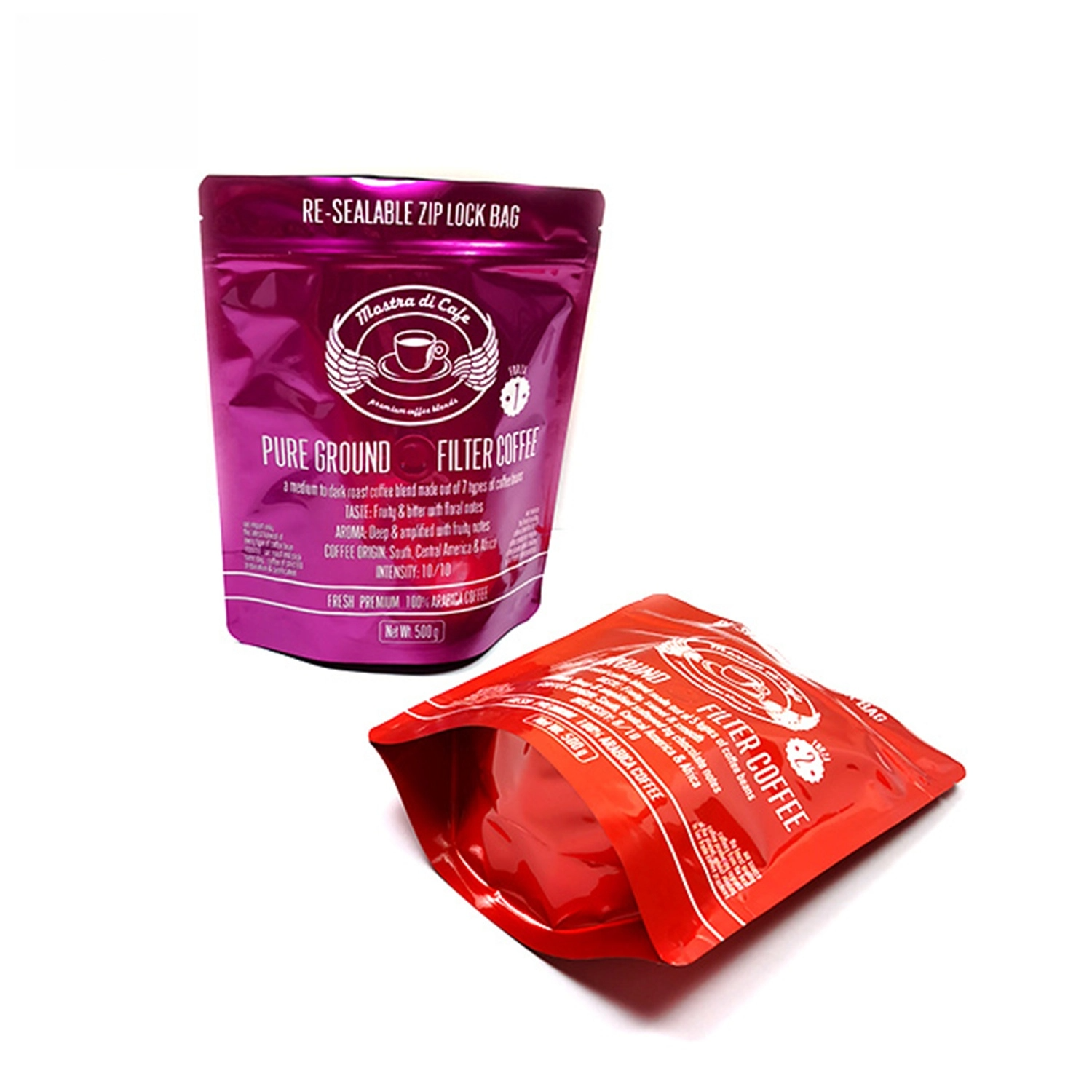
Whole beans and ground coffee require different levels of protection. Whole beans have a longer shelf life and are less prone to rapid flavor degradation. Ground coffee, on the other hand, has increased surface area, making it highly vulnerable to oxygen and moisture.
| Coffee Form | Packaging Needs | Common Choice |
|---|---|---|
| Whole beans | Strong oxygen barrier, degassing valve | Foil-laminated gusset bags, flat-bottom bags |
| Ground coffee | Airtight seal, nitrogen flushing, smaller pack sizes | Pillow bags, tins, vacuum packs |
This distinction influences packaging design. For ground coffee, brands often opt for smaller formats with airtight seals to minimize exposure after opening. For whole beans, flexible pouches with valves strike the right balance between function and presentation.
Beyond functionality, coffee packaging is a key marketing tool. A well-designed bag communicates quality, origin, and brand identity. Colors, typography, and material choices all influence consumer perception. Premium packaging, such as matte finishes, metallic accents, or embossed designs, signals value and exclusivity. Sustainable materials communicate social responsibility.
In a crowded retail environment, coffee packaging acts as silent advertising, capturing attention on shelves and online platforms. Brands that align packaging design with storytelling—such as highlighting single-origin beans or direct trade practices—create stronger connections with their customers.
The coffee packaging industry continues to evolve in response to consumer behavior, sustainability goals, and technological advances. Emerging trends include:
Smart packaging: QR codes or NFC tags linking customers to roast profiles, brewing guides, or farmer stories.
Minimalist packaging: Simplified designs using fewer inks and dyes, appealing to eco-conscious buyers.
Reusable systems: Partnerships with refill stations and circular packaging solutions.
Advanced barrier films: Lighter yet more effective multilayer films reducing waste.
These innovations reflect a shift toward packaging that is not only functional but also aligned with digital engagement and environmental responsibility.
Coffee packaging is far more than a protective shell—it is an essential element of preserving flavor, supporting logistics, and shaping consumer experience. From traditional gusset bags to compostable films and smart packaging technologies, the industry has developed a diverse toolbox to meet both freshness and sustainability goals. Choosing the right type of coffee packaging depends on product format, brand positioning, and environmental priorities. As coffee culture continues to grow globally, packaging will remain central to ensuring every cup delivers the intended aroma and taste.
1. What is the most common type of coffee packaging?
Flat-bottom and gusset bags dominate retail shelves because they provide strong barrier protection, stand up well, and allow ample branding space.
2. Why do coffee bags have valves?
Degassing valves let carbon dioxide escape without allowing oxygen to enter, keeping freshly roasted beans fresh longer.
3. Is paper packaging enough to protect coffee?
Pure paper is not sufficient for long-term storage. Most paper-based bags include plastic or foil linings to improve barrier properties.
4. What packaging is best for ground coffee?
Vacuum-sealed or nitrogen-flushed pillow bags and tins are best for ground coffee, as they limit oxygen exposure.
5. How is coffee packaging becoming more sustainable?
Brands are adopting recyclable plastics, compostable films, and refillable container systems to reduce environmental impact while maintaining freshness.

