
Views: 0 Author: Site Editor Publish Time: 2026-04-26 Origin: Site


There is often a steep disconnect between paper math and packaging reality. A basic geometric formula might give you an estimated cubic centimeter count easily. However, it will never guarantee your product actually fits or seals correctly inside the bag.
Miscalculating pouch volume directly leads to critical failures at the bottom of the funnel. You might face wasted packaging materials, blown seals on the production line, or under-filled bags. These functional issues ultimately leave your brand looking unappealing on crowded retail shelves.
To accurately size a Food Stand Up Pouch or an industrial equivalent, procurement and operations teams must look beyond basic length-times-width math. You must factor in material thickness, product bulk density, and specific machinery constraints. We will explore how to calculate actual usable space to ensure flawless production runs.
Physical dimensions do not equal fill capacity: Zippers, tear notches, and seal borders consume usable space.
Density dictates sizing: 8oz of whole coffee beans requires a significantly larger volume than 8oz of fine powder.
Math requires correction: Pure geometric formulas overestimate volume; apply an engineering correction factor of 0.6 to 0.8 depending on product flow.
Automation changes everything: Transitioning from manual to automated filling typically requires adding 1 to 1.5 inches to the pouch dimensions to accommodate machinery.
Physical validation is mandatory: Theoretical calculations must always close with a water displacement or fill test before bulk ordering.
Procurement teams often fall into the trap of purchasing packaging based on standardized volume labels. This creates a dangerous sizing illusion. Sourcing a container based purely on a supplier catalog label of "10 oz bag" represents a high-risk strategy. Industry naming conventions frequently rely on a specific baseline product, such as water or roasted coffee beans.
Weight relies entirely on product density. Ten ounces of dehydrated marshmallows will demand vastly more physical space than ten ounces of dense sea salt. If you buy a generic 10 oz bag for a fluffy, aerated product, it will overflow before you can seal it.
To understand actual capacity, you must define the usable boundary. Measurements cannot be taken from the extreme top edge of the packaging. The area above the re-closable zipper forms a lip. This lip plays no part in holding the product. You must also strictly exclude the side seal margins from your volume calculations. A bag measuring six inches wide externally might only offer five inches of internal, usable width.
Furthermore, you must account for the tapering reality of flexible packaging. Closed pouches form a tapered 3D shape. They are wide at the bottom gusset and completely flat at the top seal. Because they form this wedge-like profile, they cannot be calculated as perfect rectangular prisms. Treating them as perfect boxes will drastically overestimate the available room inside.
Common Mistake: Measuring the total height of a bag from the bottom fold to the absolute top edge. Always stop your height measurement right below the zipper or the intended heat-seal line.
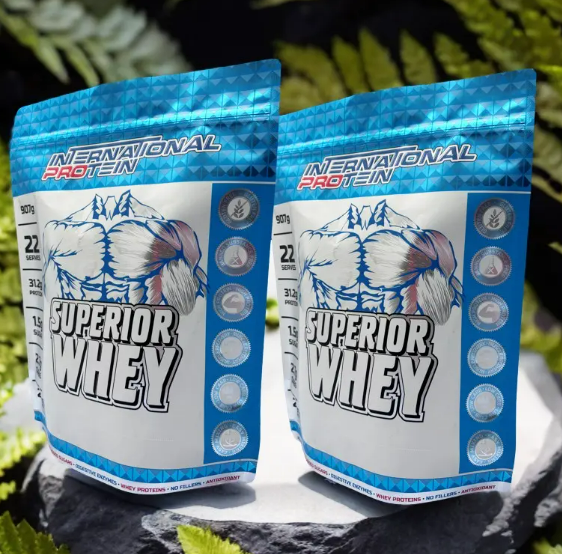
You need a starting point before applying complex engineering variables. The foundational math requires three internal measurements: width, usable height, and the depth of the fully opened gusset. You calculate the base volume by multiplying these three dimensions together.
Volume ≈ Width × Usable Height × Fully Opened Gusset Depth
This simple equation treats the bag as a rectangular block. It provides your absolute maximum theoretical space. However, because flexible films bulge outward and taper upward, this base number is never your final answer.
You must introduce a shape correction multiplier. This multiplier accounts for the natural oval-cylinder expansion of flexible materials. Since the bag tapers and curves, it loses a percentage of its theoretical rectangular volume. We apply specific coefficients based on how the product flows and settles.
Product Flow Type | Example Products | Correction Factor Multiplier |
|---|---|---|
Powders & Particulates | Flour, protein powder, spices | 0.60 – 0.65 |
Viscous Liquids | Lotions, sauces, gels | 0.65 – 0.70 |
Free-Flowing Liquids | Water, juices, thin oils | 0.70 – 0.75 |
To find a realistic internal capacity, multiply your base geometric volume by the appropriate factor from the chart. This instantly brings your paper math closer to reality.
Engineers approach packaging by looking at microscopic details. Flexible films have inherent thickness. Multi-layer foil composites or heavy-duty kraft paper structures occupy space. You must subtract this film thickness from the length, width, and height before calculating.
If your film measures 0.2mm per side, it removes 0.4mm from the total internal width. While this sounds negligible for a single unit, ignoring it causes microscopic shortages. When scaling up to automated runs of ten thousand units, this slight dimensional loss compounds. It can cause bulk-filling operations to spill over.
You should never fill a bag to its absolute brim. Defining optimal fill targets ensures both structural integrity and aesthetic appeal. Aim to occupy 70% to 90% of the total internal volume.
You must specify a 10% to 15% minimum headspace. This empty zone allows the jaws of a heat sealer to close without crushing the product. It accommodates thermal expansion if the product sits in a hot warehouse. For liquids, this void prevents catastrophic leaks during transit impacts.
Your packing process strongly dictates your required dimensions. Manual packaging allows operators to squeeze out trapped air. Human hands can physically force product down into the bottom gusset. They can adjust the bag shape dynamically. Automated lines do not offer this luxury.
This reality introduces the automation sizing penalty. Machinery operates on rigid parameters. Automated fillers require excess material to function without jamming or spilling.
Funnels: Dosing equipment needs vertical clearance. Funnels must drop product directly into the center without bridging across the opening or spilling over the lip.
Mechanical Grippers: Automated arms require physical material edges. They need sturdy side margins to grab, open, and transport the bag down the conveyor belt.
Sealing Bars: Thermal jaws demand flat, uncompromised space. They must apply intense heat without accidentally melting the product or trapping crumbs in the seal layer.
Best Practice Rule of Thumb: If you plan to upgrade from manual packing to an automated line, prepare to redesign your packaging. You should expect to increase the width and height by 1 to 1.5 inches. This extra material maintains your exact fill volume while preventing costly machinery jams.
Paper math has undeniable limits. Irregular, bulky, or aerated products will always defy flat formulas. Items like chunky granola, dehydrated snacks, or oddly shaped dog treats create internal air pockets. These gaps artificially inflate the space required.
You must close the sizing loop by performing a physical trial. We call this the water displacement method, or a fill test.
Source a structurally similar sample from your packaging supplier. Ensure the material flexibility matches your intended order.
Fill the pouch with your actual product. Stop at the ideal visual and functional headspace line.
Transfer the contents directly into a graduated cylinder or a large measuring cup. If using liquids, you can measure them instantly. If using solids, you can substitute the exact volume of water to extract the precise cubic centimeters (cc) or fluid ounces.
Once you extract this physical volume, you apply density conversion. You check the tested volume against the specific bulk density of your product. This finalizes your exact weight-to-volume ratio. It tells you definitively how many grams of your unique formula fit into that specific cubic space.
Volume distribution directly affects your retail presentation. Center of gravity plays a crucial role in shelf stability. Tall, narrow bags with large internal volumes risk tipping over. A falling product looks messy and damages brand perception. Wide-bottom configurations with shorter heights offer superior stability. They sit proudly on the shelf, keeping your branding front and center.
Accurate volume calculation directly connects to supply chain economics. Over-sizing your packaging by just 10% severely impacts your Total Cost of Ownership (TCO). It increases the raw material costs per unit. It reduces the total number of units you can pack into a shipping carton. Consequently, it inflates freight logistics expenses because you are paying to ship empty air.
When finalizing a custom Stand Up Pouch, you should shortlist your next steps carefully. Advise your purchasing team to request physical samples of three adjacent sizes from manufacturers. Run operational line tests with your exact filling equipment. Doing this validation before committing to expensive custom tooling saves thousands of dollars in wasted materials.
Calculating the exact space inside a flexible container demands a blend of geometry, engineering foresight, and practical testing. You must calculate conservatively by measuring only the usable space below the zipper. Apply specific correction factors to account for the tapering nature of flexible films. Account for your specific packaging machinery, adding dimensional buffers if you use automated grippers and funnels.
Never skip the physical fill test. Real-world validation remains the ultimate proof of concept. Moving forward, actively engage with a packaging supplier that asks detailed questions about your filling equipment and product density. Avoid partners who simply hand over a generic dimension chart without understanding your operational constraints.
A: Industry terms are usually based on a specific baseline, such as water or roasted coffee beans. Bulk density dictates actual capacity. Because products vary wildly in weight per cubic centimeter, 16 oz of light tea leaves requires much more space than 16 oz of dense sugar.
A: Flat bottom pouches, often called box pouches, utilize side gussets and a completely flat square base. This structural design eliminates the top taper found in standard pouches. They can hold up to 30% more volume while maintaining the exact same frontal footprint on a retail shelf.
A: You must measure the bottom gusset while it is un-filled and laid flat. Measure the distance from the bottom fold edge to the inner top fold. Keep in mind it will spread to roughly double that measured depth once you fill it with product.

