Introduction
Many coffee drinkers focus only on flavor or origin when choosing beans, yet the bag itself carries important meaning. Coffee Packaging protects delicate aromas, preserves freshness during transport, and guides buyers during quick purchase decisions. In competitive retail spaces, it becomes the first message a brand sends to customers. Color, structure, and printed information all influence how people interpret quality and taste before brewing. In this article, you will discover how Coffee Packaging preserves coffee quality, communicates flavor expectations, and helps brands build trust and value in the specialty coffee market.
Why Coffee Packaging Matters More Than Most Consumers Realize
Coffee Packaging Protects Aroma, Freshness, and Shelf Life
Coffee contains delicate aromatic oils. They degrade quickly when exposed to oxygen, light, or moisture. Effective Coffee Packaging acts as a protective barrier that keeps these elements away from roasted beans. Many modern bags include multilayer materials designed to block light and slow oxygen transfer. This protection preserves the coffee’s original aroma and flavor complexity during transport and storage. Without reliable packaging, coffee could lose its character before reaching the consumer. For roasters and retailers, the bag therefore becomes the final stage of quality control that maintains freshness from the roasting facility to the customer’s cup.
Coffee Packaging Influences First Impressions and Buying Decisions
Consumers often see dozens of coffee brands on store shelves. They cannot smell or taste the product before purchase. In that moment, Coffee Packaging becomes the primary source of information and visual appeal. Colors, typography, and layout create instant impressions about flavor style and product positioning. A minimalist bag may suggest specialty craftsmanship. A bold design may signal vibrant flavor profiles. Because buyers often choose within seconds, packaging acts as a silent salesperson that communicates quality, identity, and taste expectations without human interaction.
Coffee Packaging Communicates Product Quality and Brand Value
Beyond aesthetics, Coffee Packaging signals professionalism and attention to detail. High-quality printing, structured bag formats, and thoughtful design elements suggest that similar care exists in sourcing and roasting. When customers see consistent and well-crafted packaging, they often associate it with premium coffee. This perception strengthens brand credibility and encourages repeat purchases. For roasters competing in a saturated market, packaging therefore becomes a powerful business asset that helps differentiate products and reinforce brand reputation.
What Coffee Packaging Actually Tells You About the Coffee Inside
Roast Date, Origin, and Processing Information on Coffee Packaging
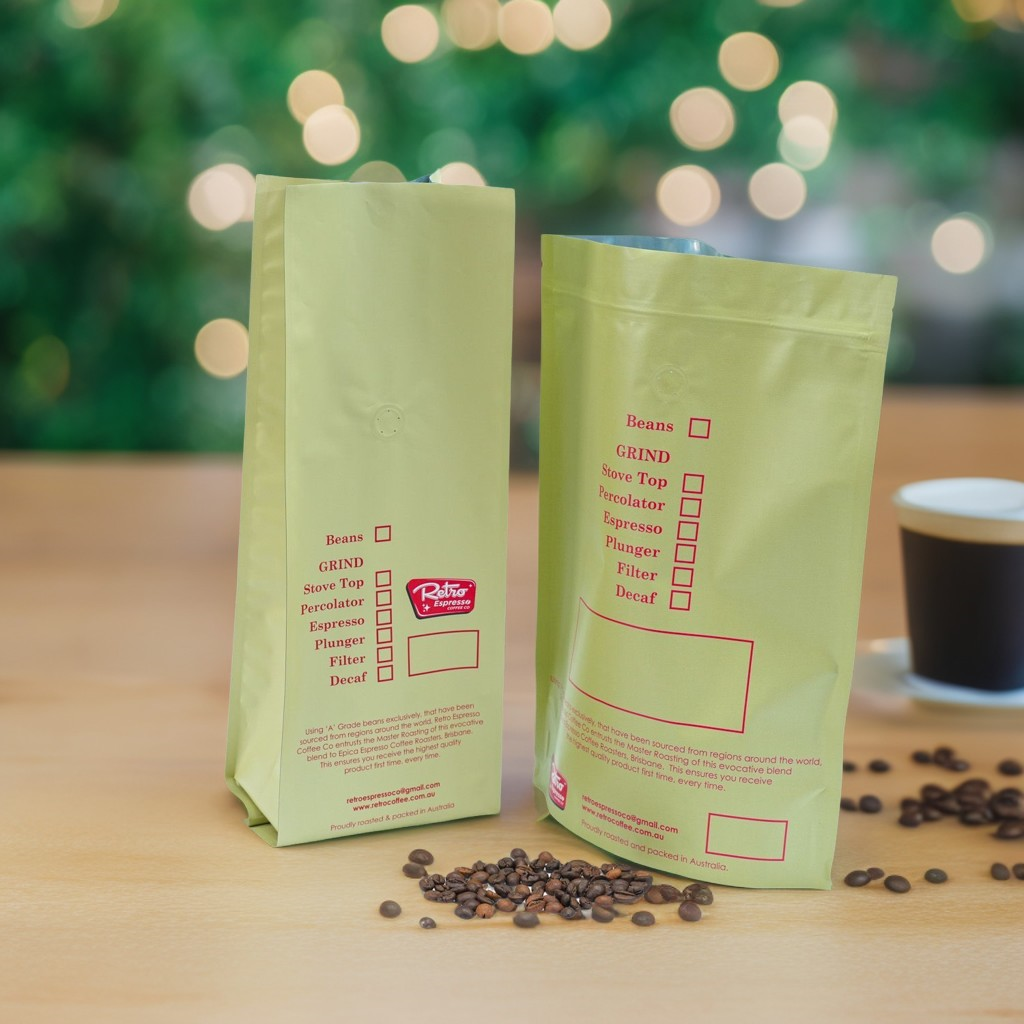
Key information printed on Coffee Packaging helps buyers quickly evaluate freshness, origin quality, and flavor potential. Professional packaging usually includes standardized details related to roasting time, geographic origin, and processing method. These indicators guide brewing decisions and purchasing confidence.
| Information Category | Typical Label Content | Technical Details / Parameters | Practical Application | Important Notes |
| Roast Date | Exact roasting day printed on package | Recommended consumption window: 7–28 days after roasting for whole beans | Helps consumers judge freshness and brewing performance | Avoid confusing with “best before” date |
| Degassing Period | Post-roast resting time before brewing | CO₂ release peak: first 24–72 hours after roasting | Determines optimal brewing time and flavor stability | Espresso often requires 3–7 days rest |
| Coffee Origin | Country or region of production | Common origin altitude: 1,200–2,200 meters above sea level | Indicates potential flavor complexity | Higher altitude often correlates with brighter acidity |
| Farm or Producer | Name of farm, cooperative, or estate | Micro-lot production often < 10 bags (~600 kg) | Improves traceability and brand transparency | Important in specialty coffee supply chains |
| Processing Method | Washed, Natural, Honey, or Anaerobic | Fermentation duration typically 12–72 hours | Influences sweetness, body, and acidity | Processing strongly affects flavor profile |
| Coffee Variety | Arabica varieties such as Bourbon, Typica, Geisha | Arabica species optimal altitude: 900–2,200 m | Provides insight into flavor characteristics | Certain varieties command premium prices |
| Roast Level | Light, Medium, Medium-Dark, Dark | Roast temperature range approx. 196–224°C | Helps consumers select suitable brewing method | Light roast often preferred for pour-over |
| Batch Identification | Lot number or roasting batch code | Batch sizes often 5–60 kg per roasting cycle | Supports quality control and traceability | Useful for defect tracking or recalls |
| Harvest Year | Year of coffee harvest | Coffee shelf stability: typically 9–12 months for green beans | Indicates crop freshness | Important for specialty buyers |
| Flavor Profile Label | Tasting notes such as citrus, chocolate, floral | Sensory evaluation based on cupping protocols (SCA standard) | Helps consumers anticipate taste | Should reflect actual cup characteristics |
Tip:Clear labeling of roast date, origin, and processing method helps consumers make informed choices and supports transparency across the coffee supply chain. Brands that present this information consistently often build stronger trust with specialty coffee buyers.
Flavor Notes and Visual Cues on Coffee Packaging
Flavor descriptions guide buyers who cannot taste the coffee beforehand. Many Coffee Packaging designs list tasting notes such as citrus, chocolate, or caramel. These notes provide sensory expectations and help customers select beans that match their taste preferences. Packaging design also reinforces these signals through visual cues. Bright colors may suggest fruit-forward profiles, while darker tones often represent bold or chocolate-like flavors. Together, these elements help translate complex coffee flavors into accessible information for everyday buyers.
Certifications and Traceability Indicators on Coffee Packaging
Certifications displayed on Coffee Packaging provide additional credibility. Labels such as organic, fair trade, or sustainability certifications indicate verified production standards. Some packages also include traceability data like farm names, altitude, or producer stories. These elements strengthen consumer confidence and demonstrate transparency within the supply chain. As ethical sourcing becomes more important to buyers, packaging plays a key role in communicating responsible practices and reinforcing trust between brands and consumers.
How Coffee Packaging Preserves Coffee Quality from Roaster to Cup
Degassing Valves and Oxygen Control in Coffee Packaging
Freshly roasted coffee releases carbon dioxide for several days after roasting. If trapped inside a sealed bag, this gas can damage packaging or alter flavor stability. Many modern Coffee Packaging solutions include one-way degassing valves. These small valves allow gas to escape while preventing oxygen from entering the bag. This simple technology helps maintain freshness and prevents flavor deterioration. For specialty coffee roasters, degassing valves represent a standard feature that ensures beans remain stable during distribution and storage.
Barrier Materials that Protect Coffee from Light, Air, and Moisture
Materials play a critical role in Coffee Packaging performance. Multi-layer laminates often combine paper, plastic films, and aluminum layers to block oxygen, light, and moisture. Each layer serves a specific purpose. One layer provides strength and printability. Another acts as a barrier to oxygen and light. The inner layer ensures food safety and sealing performance. This structure helps protect delicate coffee aromas during shipping and retail storage. By combining several materials, packaging can maintain freshness for longer periods.
Resealable Coffee Packaging for Long-Term Freshness
Once opened, coffee becomes vulnerable to air exposure. Resealable Coffee Packaging helps maintain freshness after the first use. Many coffee bags include zipper closures or fold-over seals that allow customers to close the package securely. This feature improves convenience and extends the life of the coffee at home. For consumers, it means better flavor retention between brewing sessions. For brands, it adds practical value and improves the overall user experience.
How Coffee Packaging Shapes Brand Identity and Storytelling
Coffee Packaging as a Visual Representation of Brand Personality
Brand identity often begins with visual design. Coffee Packaging provides a large canvas where companies express personality and positioning. Some brands choose minimalistic designs to convey craftsmanship and precision. Others adopt bold illustrations to express creativity and energy. Typography, layout, and color schemes work together to create a recognizable brand voice. Over time, consistent packaging visuals help customers identify a brand instantly on shelves or online stores.
Using Coffee Packaging to Tell the Origin Story of the Beans
Coffee has a rich global story that begins on farms across different continents. Coffee Packaging often shares these stories by highlighting origin regions, farmer relationships, and cultivation methods. Some packages include short narratives about producers or growing regions. These details help connect consumers with the people behind the coffee. When buyers understand the journey from farm to cup, they develop stronger emotional connections with the brand and product.
Illustrations and Design Elements that Build Emotional Connection
Illustrations add personality and narrative depth to Coffee Packaging. Drawings of landscapes, farms, or cultural elements can visually represent the origin of the beans. These graphics transform a simple product into a storytelling medium. When customers interact with thoughtful design, they feel a stronger connection to the brand. Emotional engagement can increase brand loyalty and encourage repeat purchases. In crowded markets, creative packaging illustrations help coffee stand out while reinforcing brand identity.
The Psychology Behind Coffee Packaging Design
Color Psychology in Coffee Packaging and Flavor Expectations
Color selection in Coffee Packaging should follow consistent visual coding to guide consumer expectations. Many specialty brands use color systems to indicate roast level or flavor style, helping customers quickly navigate product ranges. High-chroma colors often suggest brighter acidity and fruit-driven profiles, while deeper tones communicate heavier body and roasted flavors. Designers typically limit palettes to two or three dominant colors to maintain visual clarity. Consistent color mapping across product lines also improves SKU recognition and simplifies shelf navigation for repeat buyers.
Texture, Materials, and Finishes That Signal Premium Quality
Material engineering plays a key role in premium Coffee Packaging perception. Packages using thicker laminates, textured kraft papers, or soft-touch coatings often create stronger tactile feedback during handling. Finishing processes such as embossing, debossing, and spot UV printing help emphasize logos and design elements while adding dimensional depth. Structured formats like flat-bottom bags or rigid cartons further enhance stability and presentation. These physical cues collectively signal precision, craftsmanship, and brand reliability before the coffee is opened or brewed.
Shelf Impact: How Coffee Packaging Competes for Attention
In retail environments, coffee products must attract attention within seconds. Packaging structure, color contrast, materials, and printing techniques all influence shelf visibility. The following table summarizes the key technical and design factors that determine the shelf impact of Coffee Packaging.
| Design Dimension | Practical Application | Technical Parameters / Metrics | Functional Impact | Design Considerations |
| Packaging Structure | Stand-up pouch (doypack) | Typical capacity: 250 g / 500 g / 1 kg; bottom gusset width: 60–90 mm | Allows stable upright display and improves shelf visibility | Bottom structure must maintain rigidity during stacking |
| Packaging Height | Retail coffee bag dimensions | 250 g bag height: approx. 180–220 mm | Keeps brand logo within consumer eye level on shelves | Should align with shelf spacing |
| Shelf Eye-Level Zone | Retail display positioning | Optimal viewing height: 120–160 cm | Increases visual exposure and product recognition | Logo and key information should appear in this zone |
| Color Contrast | High-saturation packaging colors | Color contrast difference typically >60% (Pantone scale reference) | Improves visibility within 2–3 seconds | Avoid excessive color combinations |
| Logo Size Ratio | Brand identity placement | Logo recommended: 15–25% of front panel area | Strengthens brand recognition from distance | Oversized logos may disrupt layout balance |
| Typography Size | Product name and key text | Main title ≥18 pt for readability | Ensures readability from 1–2 m viewing distance | Use high contrast between text and background |
| Surface Finish | Matte lamination | Gloss level typically <10 GU | Creates premium tactile feel and reduces glare | Not ideal for reflective luxury designs |
| Printing Method | Digital or gravure printing | Print resolution typically ≥300 dpi | Maintains graphic clarity and color accuracy | Digital printing suits small-batch customization |
| Metallic Effects | Foil stamping / cold foil | Foil layer thickness: approx. 10–20 μm | Enhances premium perception and visual focus | Recommended coverage <30% of design area |
| Texture Design | Embossing or debossing | Typical emboss depth: 0.2–0.4 mm | Adds tactile engagement and visual depth | Material thickness should be ≥120 μm |
| Window Feature | Transparent viewing window | Window width typically 30–60 mm | Allows consumers to see bean quality | Should avoid prolonged UV exposure |
| Shelf Display Density | Product spacing on shelf | Recommended spacing: 3–5 cm between SKUs | Prevents visual crowding and improves recognition | Maintain consistent brand grouping |
Tip:Retail studies show that shoppers visually scan shelves in about 3–5 seconds. Clear branding, strong color identity, and recognizable packaging structure significantly improve shelf visibility and purchase likelihood.
How Coffee Packaging Can Increase Perceived Value
Premium Coffee Packaging That Justifies Higher Prices
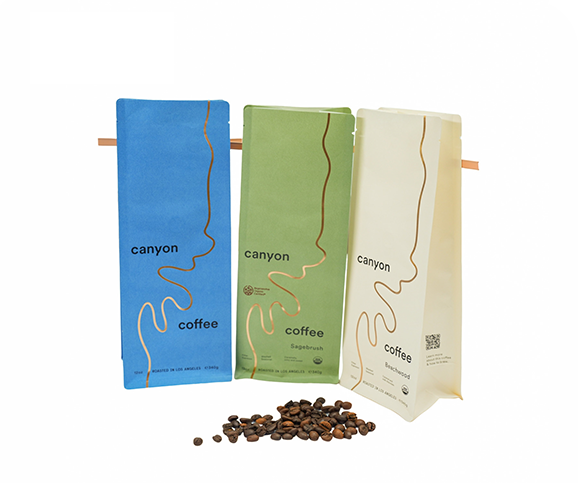
Luxury positioning often depends on material selection and finishing precision. Premium Coffee Packaging frequently uses multilayer barrier films, aluminum foil laminates, or thick kraft-paper structures to improve durability and visual depth. Advanced techniques such as hot foil stamping, embossing, and soft-touch coatings create tactile differentiation that consumers associate with craftsmanship. Structural formats like flat-bottom bags or rigid canisters also enhance stability and display presence. Together, these elements elevate the perceived value of the product and support higher retail pricing.
Custom Coffee Packaging That Strengthens Brand Recognition
Custom Coffee Packaging builds recognition through consistent visual systems rather than decoration alone. Successful brands standardize color palettes, typography hierarchies, and logo placement across all SKUs to create a unified identity. Distinctive structures such as block-bottom pouches or signature label formats further reinforce recognition on shelves and online platforms. When consumers repeatedly encounter the same visual language, brand memory strengthens. Over time, this consistency helps customers identify products instantly, even in highly competitive retail environments.
Sustainable Coffee Packaging That Builds Consumer Trust
Modern Coffee Packaging increasingly reflects environmental responsibility through material innovation and transparent communication. Many brands now adopt mono-material polyethylene structures that improve recyclability compared with traditional multilayer laminates. Others incorporate compostable films derived from renewable sources such as PLA or cellulose. Clear labeling about recyclability and disposal methods also improves consumer confidence. When sustainability claims align with verifiable materials and responsible design, packaging becomes a credible signal of environmental commitment and brand integrity.
Conclusion
So, does Coffee Packaging mean anything? The answer is yes. It protects aroma, preserves freshness, and communicates flavor, origin, and brand value. Effective Coffee Packaging also improves shelf visibility and strengthens consumer trust. In competitive markets, packaging becomes both a protective system and a marketing tool. Qingdao Colorful Printing Packaging Co., Ltd. provides professional Coffee Packaging solutions that combine strong barrier materials, custom printing, and attractive structural design, helping coffee brands maintain product quality, stand out on retail shelves, and enhance their overall brand value.
FAQ
Q: Does Coffee Packaging really affect coffee freshness?
A: Yes. Proper Coffee Packaging blocks air, light, and moisture, which helps preserve aroma and flavor during storage and transport.
Q: What information should Coffee Packaging include?
A: Good Coffee Packaging usually shows roast date, origin, processing method, and flavor notes to guide consumer expectations.
Q: Why is Coffee Packaging important for branding?
A: Coffee Packaging communicates brand identity through colors, design, and structure, helping products stand out on retail shelves.
Q: Does premium Coffee Packaging increase product value?
A: Yes. Premium Coffee Packaging with strong materials and refined finishes often improves perceived quality and supports higher pricing.
Q: How does sustainable Coffee Packaging benefit brands?
A: Sustainable Coffee Packaging using recyclable or compostable materials builds trust and aligns with modern environmental expectations.


